


The number of workers on unpaid leave in Taiwan decreased for the first time in the second half of this year, by 212 people, data released yesterday by the Ministry of Labor showed.
A total of 8,331 workers were placed on formal furlough programs, compared with 8,543 announced on Oct. 16.
Meanwhile, the number of employers with furlough programs increased from 432 to 455, data showed.
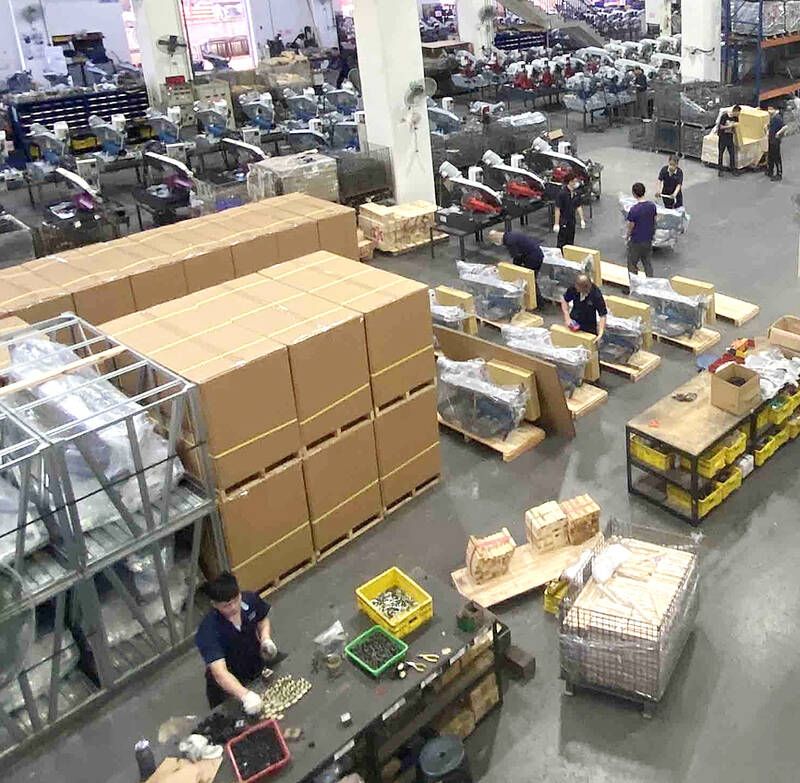
Photo: Huang Hsu-lei, Taipei Times
Department of Labor Standards and Equal Employment Director Huang Chi-ya (黃琦雅) told a news conference that the decrease in furloughed workers resulted from 18 firms ending their furlough programs early, as their orders rebounded.
Three of the firms, all in the machinery and equipment manufacturing industry, accounted for 563 employees returning to work.
In general, 372 firms in the manufacturing sector reported a total of 7,849 furloughed workers, accounting for about 95 percent of all the workers on paid leave, Huang said.
The metal electromechanical industry constituted the majority in the sector, with 293 firms and 6,019 furloughed workers, she added.
A total of 370 firms, with a total of 7,575 furloughed workers, cited US tariffs as the main reason for the furlough programs. That was 16 more firms but 348 fewer workers from the middle of last month, Huang said, adding that firms that shortened their furlough programs were mainly large companies.
She said that 418 of 455 firms with furlough programs had fewer than 50 employees, while 17 firms had more than 100 employees.
The ministry said that 329 of the firms, or 72.3 percent, were eligible for employment stability measures, meaning that 6,782 of the workers (81.4 percent) can apply for wage subsidies.
In related news, funds managed by the Ministry of Labor’s Bureau of Labor Funds posted the fourth-highest gains in history in September as global stock markets enjoyed significant performance in the month.
The bureau said that the labor funds it managed recorded NT$216.7 billion (US$7.03 billion) in September, only trailing NT$277.8 billion in August, NT$242.2 billion in March last year and NT$240.2 billion in November 2020.
Accumulated gains, which reflect increases in the value of assets in the funds’ portfolios and/or increases in income on investments, rose to NT$558.8 billion in the first nine months of this year after the strong showing in September, the bureau said.
The TAIEX, the weighted index on the Taiwan Stock Exchange, surged 12.09 percent, and the MSCI World Index jumped 18.44 percent largely on a boom of artificial intelligence development as well as a rate cut cycle initiated by the US Federal Reserve.
The bureau said that 57.67 percent of the investments made by the labor funds were made overseas, and the remaining 42.33 percent was invested domestically.
The combined value of the funds managed by the bureau, including the Labor Pension Fund, the Labor Retirement Fund, the Labor Insurance Fund, the Employment Insurance Fund and the Arrear Wage Payment Fund, which covers payouts for workers’ wages, pension and severances, totaled NT$7.44 trillion as of the end of September.
Based on that value, the NT$558.8 billion in gains represented a rate of return of 8.14 percent in the first nine months of this year, the bureau said.
The value of assets in the new Labor Pension Fund, launched in 2015, totaled NT$4.92 trillion at the end of September, the highest of any fund, and its rate of return was 7.69 percent, the bureau said.
The Labor Retirement Fund, which has been in place since 1984, had about NT$1.04 trillion in assets as of the end of September, with a rate of return of 12.57 percent, the bureau said.
Meanwhile, the Public Service Pension Fund Bureau yesterday said that the Public Service Pension Fund it managed recorded NT$78.87 billion in gains in the first nine months of this year, with a rate of return of 7.80 percent.

The Ministry of Finance this afternoon announced the winning numbers for the March-April uniform invoice lottery. The winning number for the NT$10 million (US$318,060) special prize is 19531471, and the winning number for the NT$2 million grand prize is 85941329. Three numbers were drawn for the NT$200,000 first prize: 07225810, 20231230 and 83518781. Those with receipts matching the last seven digits of any of the first-prize numbers will win the NT$40,000 second prize, while those matching the last six digits will win the NT$10,000 third prize. Those whose receipts match the last five digits of the first-prize numbers can claim the NT$4,000 fourth prize,

SIX SUBSIDIES: The monthly allowance for older farmers is to increase to NT$10,000, and NT$5,000 is to be given to homemakers under the national pension system, Lai said The government is to implement major welfare policies for disadvantaged groups, including raising the monthly allowance for older farmers to NT$10,000 and providing homemakers with NT$5,000 per month, President William Lai (賴清德) said yesterday. Lai made the remarks during a visit to Wangling Temple in Chiayi County, saying that the planned increases were being introduced amid economic growth and an increase in tax revenue. Touting a policy, in which the government plans to provide a monthly allowance of NT$5,000 for every child under the age of 18 in a bid to address Taiwan’s low birthrate, Lai said that if received for the
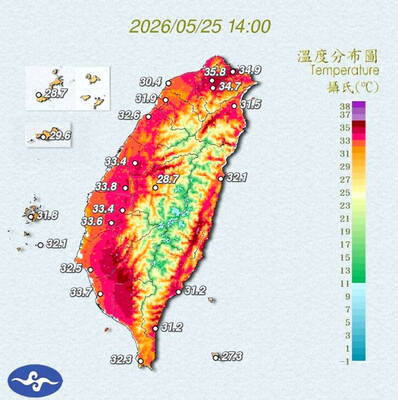
STAY COOL: The HPA recommended that people stay hydrated, use air-conditioning or fans while indoors, wear loose-fitting clothes and walk in the shade while outdoors Employers must implement measures such as installing cooling equipment, and providing drinking water and rest breaks for outdoor workers starting from Monday next week, the Taipei Department of Labor said on Sunday. Employers who fail to comply could face fines of NT$30,000 to NT$300,000 under the Occupational Safety and Health Act (職業安全衛生法), the department said. Businesses in Taipei employing fewer than 100 workers, as well as registered self-employed workers with labor insurance coverage, could receive on-site assessments and guidance from occupational safety consultants to help them apply for central government subsidies to implement or improve heat-protection measures, it said. Under the Ministry of

NATIONAL SECURITY: Authorities are working to confirm the identities of the military personnel involved and investigating possible illegal conduct and regulatory violations Authorities are probing possible national security implications after Kinmen police and immigration officers on Sunday found a Chinese woman allegedly posing as a tourist while engaging in prostitution involving more than 10 military personnel. The woman, surnamed Chen (陳), has since been deported, authorities said, adding that investigators are still working to confirm the identities of those implicated, as the records only listed code names and aliases. The case stemmed from a report received by the Kinmen District Prosecutors’ Office on Friday last week from the Jinhu Precinct of the Kinmen County Police Bureau. On Sunday, police, along with the National Immigration


 RSS
RSS