


Taipei prosecutors yesterday appealed a court decision to release on bail two suspects who allegedly hacked the Radio Taiwan International (RTI) Web site.
RTI management on Sept. 11 reported to authorities an online attack, in which hackers replaced the banner on its page with the People’s Republic of China flag.
Funded by the Ministry of Culture, RTI provides news content about Taiwan to domestic and worldwide audiences in 20 languages, including Mandarin, Hoklo (also known as Taiwanese), English, French, Spanish, German, Russian and Japanese.
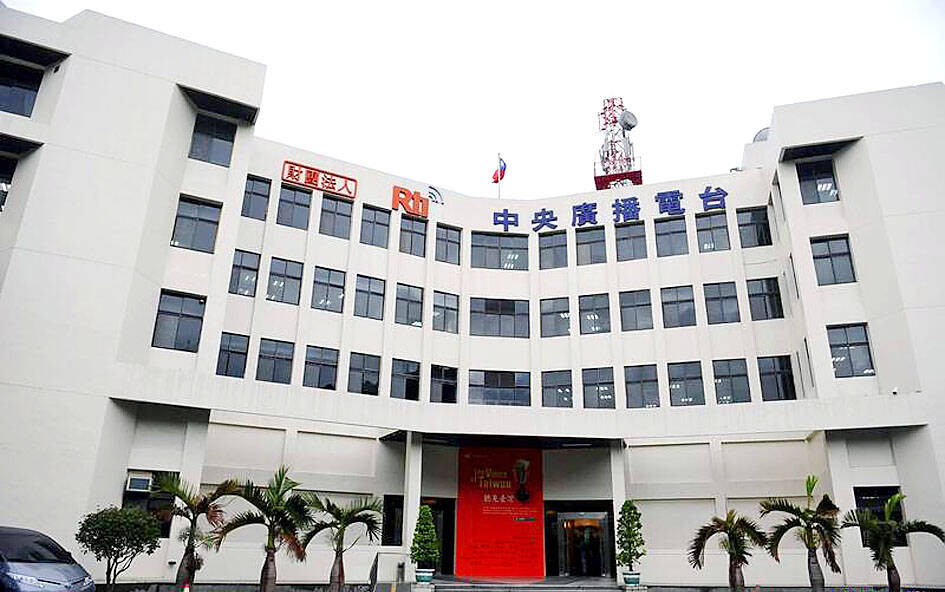
Photo: Taipei Times
The government lists RTI among the nation’s “critical infrastructure” in terms of national security.
The Taipei District Prosecutors’ Office said in a statement that it worked with Taipei police on Sept. 26 to search the residence and office of two RTI employees — a Web administrator surnamed Wu (吳) and section supervisor surnamed Yue (岳) — and question them.
Prosecutors said they also questioned an RTI contractor surnamed Huang (黃).
On Friday, they requested the court to detain Wu and Huang, who face pending charges of breach of trust and other offenses.
“There is evidence that Wu and Huang repeatedly hacked the RTI Web site. An investigation also found that the trio planned another hack on Double Ten National Day,” prosecutors said, adding that the hackers undermined national security, and they could collude and tamper with evidence.
The Taipei District Court on Friday granted bail of NT$100,000 to Yue, prohibiting him from leaving the country and ordering him to wear an electronic monitoring device. It also granted bail of NT$270,000 and NT$150,000 to Wu and Huang respectively.
Taipei prosecutors appealed the decision.
RTI in a statement last night said it would fully cooperate with the authorities “to ensure the security of the nation’s critical infrastructure.”
It added that it would seek civil damages for harm to its reputation and property.

A magnitude 6.1 earthquake struck off the coast of Yilan County at 8:39pm tonight, the Central Weather Administration (CWA) said, with no immediate reports of damage or injuries. The epicenter was 38.7km east-northeast of Yilan County Hall at a focal depth of 98.3km, the CWA’s Seismological Center said. The quake’s maximum intensity, which gauges the actual physical effect of a seismic event, was a level 4 on Taiwan’s 7-tier intensity scale, the center said. That intensity level was recorded in Yilan County’s Nanao Township (南澳), Hsinchu County’s Guansi Township (關西), Nantou County’s Hehuanshan (合歡山) and Hualien County’s Yanliao (鹽寮). An intensity of 3 was
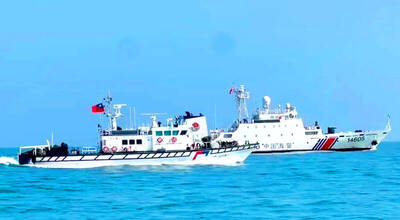
Instead of focusing solely on the threat of a full-scale military invasion, the US and its allies must prepare for a potential Chinese “quarantine” of Taiwan enforced through customs inspections, Stanford University Hoover fellow Eyck Freymann said in a Foreign Affairs article published on Wednesday. China could use various “gray zone” tactics in “reconfiguring the regional and ultimately the global economic order without a war,” said Freymann, who is also a nonresident research fellow at the US Naval War College. China might seize control of Taiwan’s links to the outside world by requiring all flights and ships entering or leaving Taiwan
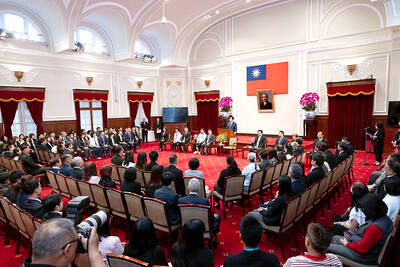
The next minimum wage hike is expected to exceed NT$30,000, President William Lai (賴清德) said yesterday during an award ceremony honoring “model workers,” including migrant workers, at the Presidential Office ahead of Workers’ Day today. Lai said he wished to thank the awardees on behalf of the nation and extend his most sincere respect for their hard work, on which Taiwan’s prosperity has been built. Lai specifically thanked 10 migrant workers selected for the award, saying that although they left their home countries to further their own goals, their efforts have benefited Taiwan as well. The nation’s industrial sector and small businesses lay
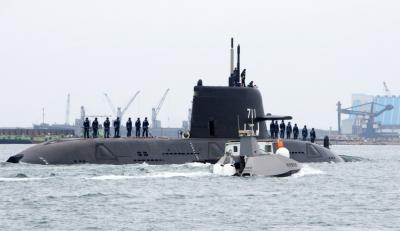
Taiwan's first indigenous defense submarine, the SS-711 Hai Kun (海鯤, or Narwhal), departed for its 13th sea trial at 7am today, marking its seventh submerged test, with delivery to the navy scheduled for July. The outing also marked its first sea deployment since President William Lai (賴清德) boarded the submarine for an inspection on March 19, drawing a crowd of military enthusiasts who gathered to show support. The submarine this morning departed port accompanied by CSBC Corp’s Endeavor Manta (奮進魔鬼魚號) uncrewed surface vessel and a navy M109 assault boat. Amid public interest in key milestones such as torpedo-launching operations and overnight submerged trials,


 RSS
RSS