


Police have urged people to check in on elderly family members to help prevent financial fraud, following a case in which a 63-year-old woman with dementia was swindled out of NT$160 million (US$5.26 million) over three years.
The Taipei City Police Department’s Criminal Investigation Division said that a criminal ring began targeting the victim — a Taipei resident surnamed Chang (張) — in 2022, convincing her to invest in sheng ji wei (生基位, or “living tombs”) based on Taoist and feng shui beliefs.
Police said the scammers promoted the investment as a way to “secure good fortune, wealth and longevity” by harnessing positive energy through the symbolic burial of personal items such as hair, nails, teeth, blood or clothing in a “living cemetery” — typically a mountain site with an open view.
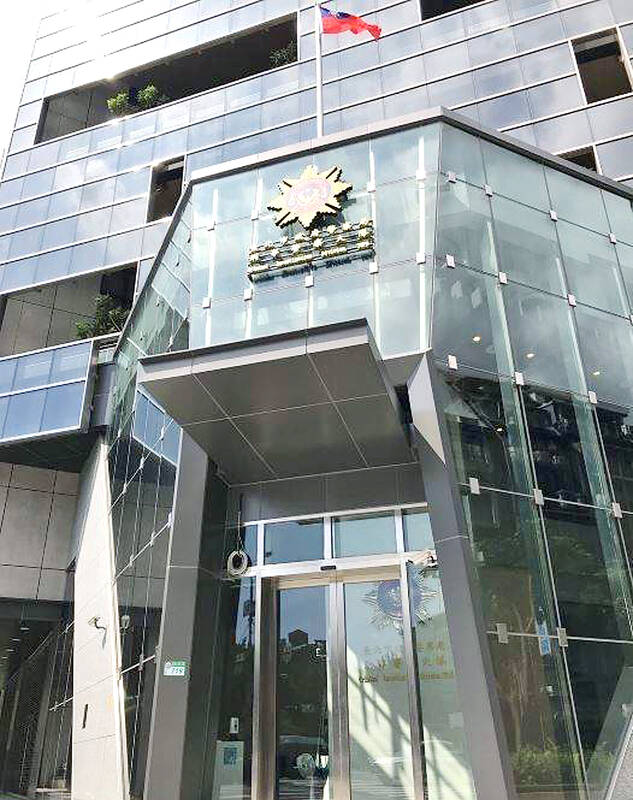
Photo: Liu Ching-ho, Taipei Times
They said the ritual had to be performed at an auspicious time to achieve maximum effect.
Chang, who has dementia, was persuaded to purchase a living tomb for herself and her family. She initially withdrew cash from her bank accounts to pay “initiation,” “processing” and “tax” fees to the fraudsters, police said.
Investigators said that the suspects later convinced her to take out high-interest loans, using her properties as collateral, to continue making payments.
Over three years, she reportedly made more than 300 transfers to the group and accumulated more than NT$80 million in loans on her assets.
Investigators estimated that the woman had paid more than NT$160 million to the criminal ring over three years.
Her family only discovered what had happened last month and reported the case to police for assistance, they said.
Taiwan Alzheimer’s Disease Association (TADA) secretary-general Chen Yun-ching (陳筠靜) said that people with dementia require greater support when making financial or other major life decisions.
“People with Alzheimer’s and their families must remain vigilant and increase their awareness of fraud prevention,” Chen said. “They should learn to recognize common scam tactics, develop habits of verifying information and ensure that people with dementia do not make major financial decisions alone. Families should communicate regularly, consult trusted relatives or friends, and form a support team to assist in decisionmaking.”
Families can adopt multilateral financial management methods to better organize and monitor assets, Chen said.
It is advisable to apply to the Joint Credit Information Center to receive credit reports, which can help prevent debts from getting too high, she said, adding that elderly people can appoint trusted relatives or professional trustees, including those offered by bank trust services, to help manage their assets, she said.
The Taipei City Police Department on Sunday said that officers dismantled 49 fraud rings in August, arresting 415 suspects and seizing NT$38.88 million in illegal gains.
Police also said they had prevented losses of about NT$240 million through early intervention.
Criminal Investigation Division captain Lu Chun-hung (盧俊宏) said the majority of cases involved online shopping and payment fraud, investment scams and romance scams linked to dating and matchmaking platforms.
People should be cautious of anyone promising high returns from investment groups or urging them to join joint investment ventures.
“If someone offers to send a person to meet you in person to collect investment funds, it is almost certainly a fraud operation run by a criminal group,” Lu said.
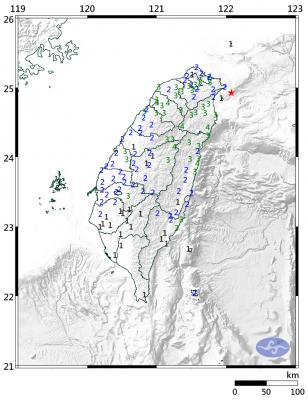
A magnitude 6.1 earthquake struck off the coast of Yilan County at 8:39pm tonight, the Central Weather Administration (CWA) said, with no immediate reports of damage or injuries. The epicenter was 38.7km east-northeast of Yilan County Hall at a focal depth of 98.3km, the CWA’s Seismological Center said. The quake’s maximum intensity, which gauges the actual physical effect of a seismic event, was a level 4 on Taiwan’s 7-tier intensity scale, the center said. That intensity level was recorded in Yilan County’s Nanao Township (南澳), Hsinchu County’s Guansi Township (關西), Nantou County’s Hehuanshan (合歡山) and Hualien County’s Yanliao (鹽寮). An intensity of 3 was

Instead of focusing solely on the threat of a full-scale military invasion, the US and its allies must prepare for a potential Chinese “quarantine” of Taiwan enforced through customs inspections, Stanford University Hoover fellow Eyck Freymann said in a Foreign Affairs article published on Wednesday. China could use various “gray zone” tactics in “reconfiguring the regional and ultimately the global economic order without a war,” said Freymann, who is also a nonresident research fellow at the US Naval War College. China might seize control of Taiwan’s links to the outside world by requiring all flights and ships entering or leaving Taiwan
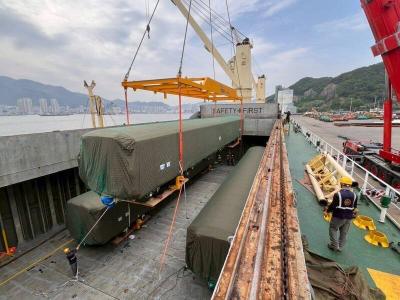
The first of 10 new high-capacity trains purchased from South Korea’s Hyundai Rotem arrived at the Port of Taipei yesterday to meet the demands of an expanding metro network, Taipei Rapid Transit Corp (TRTC) said yesterday. The train completed a three-day, 1,200km voyage from the Port of Masan in South Korea, the company said. Costing NT$590 million (US$18.79 million) each, the new six-carriage trains feature a redesigned interior based on "human-centric" transportation concepts, TRTC said. The design utilizes continuous longitudinal seating to widen the aisles and optimize passenger flow, while also upgrading passenger information displays and driving control systems for a more comfortable

Taiwan's first indigenous defense submarine, the SS-711 Hai Kun (海鯤, or Narwhal), departed for its 13th sea trial at 7am today, marking its seventh submerged test, with delivery to the navy scheduled for July. The outing also marked its first sea deployment since President William Lai (賴清德) boarded the submarine for an inspection on March 19, drawing a crowd of military enthusiasts who gathered to show support. The submarine this morning departed port accompanied by CSBC Corp’s Endeavor Manta (奮進魔鬼魚號) uncrewed surface vessel and a navy M109 assault boat. Amid public interest in key milestones such as torpedo-launching operations and overnight submerged trials,


 RSS
RSS