


The opposition Chinese Nationalist Party's (KMT) alliance with the smaller Taiwan People's Party (TPP) is to remain unchanged following former TPP chairman Ko Wen-je's (柯文哲) release from detention yesterday, several KMT lawmakers said.
The strategic partnership with the TPP is to continue with the goal of ousting the ruling Democratic Progressive Party (DPP) from power in 2028, KMT Legislator Wang Hung-wei (王鴻薇) said.
Ko was granted release by the Taipei District Court yesterday after posting bail of NT$70 million (US$2.29 million).
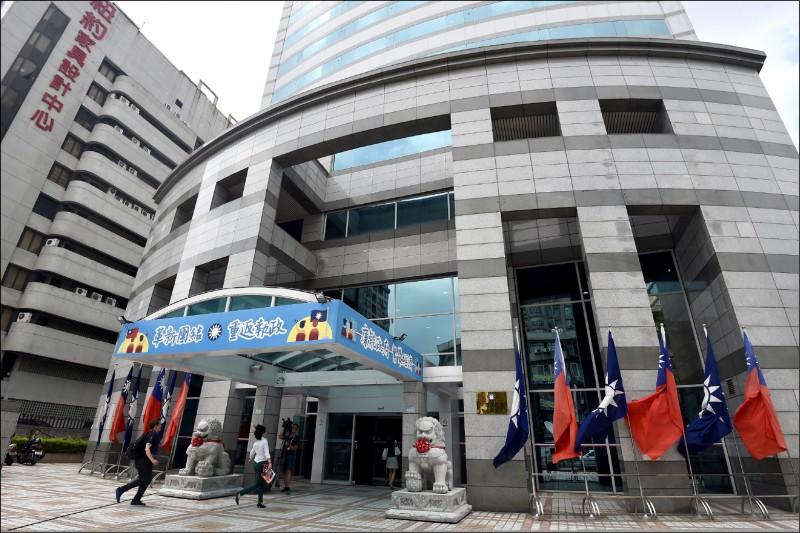
Photo: Taipei Times
He had been held in incommunicado detention for a year on corruption charges following his two terms as Taipei mayor from 2014 to 2022.
There is no reason why the two parties cannot continue to work together, especially as Ko has now seen the extent of the DPP's manipulation of the judiciary, Wang said.
KMT Legislator Chang Chia-chun (張嘉郡) said the KMT and TPP have worked well together in the legislature on various livelihood issues, and she is confident they would continue their cooperation to advance policies that benefit the public and support the disadvantaged.
KMT spokesperson Crystal Yang (楊智伃) and the party's caucus Deputy Secretary-General Lin Pei-hsiang (林沛祥) said the KMT and TPP remain committed to the oversight of the ruling party.
Earlier yesterday, Ko thanked his supporters for standing by him over the past year, during which he said Taipei prosecutors found "nothing" incriminating, despite comprehensive searches targeting him, his family, his assistants and his party.
Ko was detained on Sept. 5 last year and indicted in December on four charges, including accepting bribes for a property redevelopment case while serving as Taipei mayor, and embezzling political donations during his presidential campaign in last year’s election.
Prosecutors are seeking a total sentence of 28.5 years for Ko, who has maintained his innocence throughout the investigation and his ongoing trial.
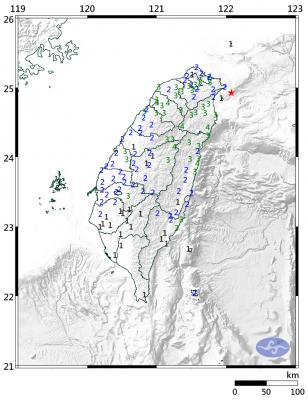
A magnitude 6.1 earthquake struck off the coast of Yilan County at 8:39pm tonight, the Central Weather Administration (CWA) said, with no immediate reports of damage or injuries. The epicenter was 38.7km east-northeast of Yilan County Hall at a focal depth of 98.3km, the CWA’s Seismological Center said. The quake’s maximum intensity, which gauges the actual physical effect of a seismic event, was a level 4 on Taiwan’s 7-tier intensity scale, the center said. That intensity level was recorded in Yilan County’s Nanao Township (南澳), Hsinchu County’s Guansi Township (關西), Nantou County’s Hehuanshan (合歡山) and Hualien County’s Yanliao (鹽寮). An intensity of 3 was
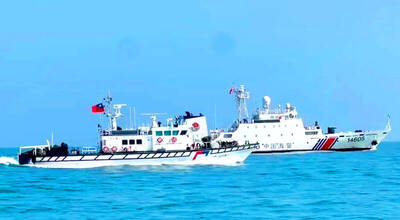
Instead of focusing solely on the threat of a full-scale military invasion, the US and its allies must prepare for a potential Chinese “quarantine” of Taiwan enforced through customs inspections, Stanford University Hoover fellow Eyck Freymann said in a Foreign Affairs article published on Wednesday. China could use various “gray zone” tactics in “reconfiguring the regional and ultimately the global economic order without a war,” said Freymann, who is also a nonresident research fellow at the US Naval War College. China might seize control of Taiwan’s links to the outside world by requiring all flights and ships entering or leaving Taiwan
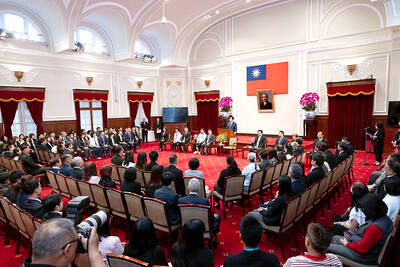
The next minimum wage hike is expected to exceed NT$30,000, President William Lai (賴清德) said yesterday during an award ceremony honoring “model workers,” including migrant workers, at the Presidential Office ahead of Workers’ Day today. Lai said he wished to thank the awardees on behalf of the nation and extend his most sincere respect for their hard work, on which Taiwan’s prosperity has been built. Lai specifically thanked 10 migrant workers selected for the award, saying that although they left their home countries to further their own goals, their efforts have benefited Taiwan as well. The nation’s industrial sector and small businesses lay
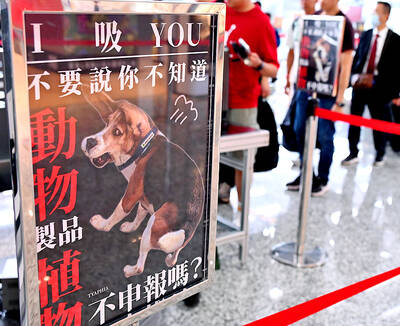
Quarantine awareness posters at Taiwan Taoyuan International Airport have gone viral for their use of wordplay. Issued by the airport branch of the Animal and Plant Health Inspection Agency, the posters feature sniffer dogs making a range of facial expressions, paired with advisory messages built around homophones. “We update the messages for holidays and campaign needs, periodically refreshing materials to attract people’s attention,” quarantine officials said. “The aim is to use the dogs’ appeal to draw focus to quarantine regulations.” A Japanese traveler visiting Taiwan has posted a photo on X of a poster showing a quarantine dog with a


 RSS
RSS