


University freshmen enrollment is expected to fall to 173,000 in 2028, down from 270,000 in 2015, and decline further to 146,000 by 2040, the Ministry of Education said in a reported released on Thursday.
A drop in births in 1998, due to a traditional belief that people born in the Year of the Tiger are associated with misfortune, led to a reduced number of university freshmen in 2017, at 241,000.
A slight recovery of 7,000 freshmen was recorded in 2018 due to an increase in births in 2000, related to the positive associations with the Year of the Dragon, but the trend soon resumed.
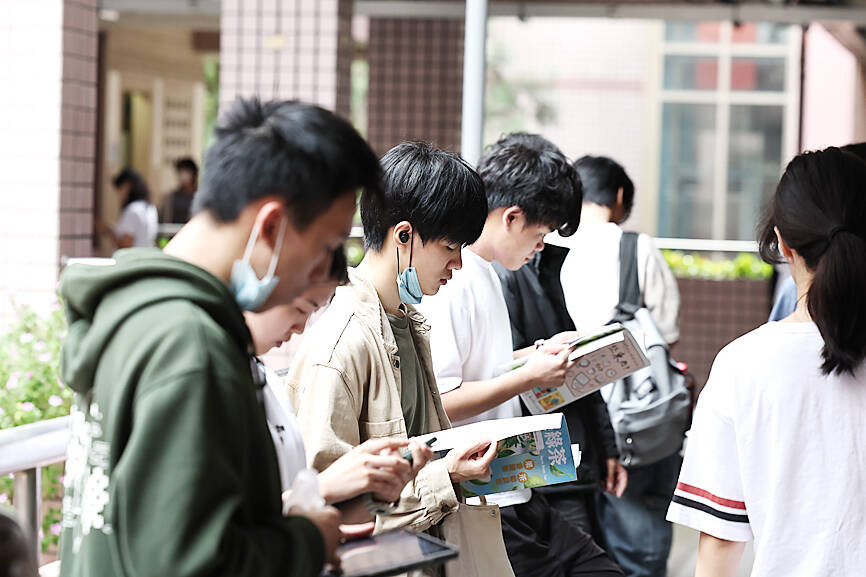
Photo: CNA
The ministry forecast that numbers would rebound in 2030 to 209,000, spurred again by a Year of the Dragon boom and a birth encouragement policy implemented in 2011.
However, by 2040, the number is expected to fall again to 146,000, 56,000 fewer than last year — a 27.8 percent decrease.
The Union of Private School Educators said that with only 173,000 new students in 2028, public universities would take about 120,000 of them, leaving private institutions competing to recruit the remaining 53,000.
That would sustain only 50 to 60 private universities and colleges, putting about 40 at risk of closure, the union said.
The ministry also reported that total university enrollment, which stood at about 1.1 million before 2016, dropped by 149,000 from 2019 to last year.
Total enrollment is expected to fall to fewer than 860,000 this year and reach a low of 838,000 in 2029 due to the Year of the Tiger effect, it said.
It would then likely rise to 911,000 in 2033 before dropping again to 725,000 by 2040, it added.
Meanwhile, enrollment at elementary schools would decline annually by about 32,000 students over the next 16 years, with the total number of students falling to fewer than 1 million by 2029 from about 1.2 million last year, and to fewer than 689,000 by 2040, the ministry said.
The spike in the number of elementary school students brought about by the 2012 Year of the Dragon and pronatalist measures has almost ended, it said.
While 569,000 students were enrolled in junior-high schools last year, the number is estimated to stay at about 600,000 to 620,000 over the next five years until 2029, the report said.
However, the number would begin to fall after 2029 and continue to decline to an estimated 377,000 students by 2040, it said.
High schools would not see the 2012 Year of the Dragon effect until 2027, when the student figure bounces back to about 600,000 to 630,000, from 591,000 last year, it said.
However, student enrollment would return to a downward trend after 2033 until reaching an estimated 404,000 by 2040, it said.
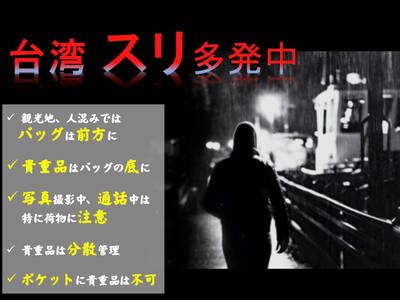
The Japan-Taiwan Exchange Association has cautioned Japanese travelers to be vigilant against pickpockets at several popular tourist spots in Taiwan, including Taipei’s night markets, the Yongkang Street area, Zhongshan MRT Station, and Jiufen (九份) in New Taipei City. The advisory, titled “Recent Development of Concerns,” was posted on the association’s Web site under its safety and emergency report section. It urges travelers to keep backpacks fully zipped and carried in front, with valuables placed at the bottom of the bag. Visitors are advised to be especially mindful of their belongings when taking photos or speaking on the phone, avoid storing wallets and
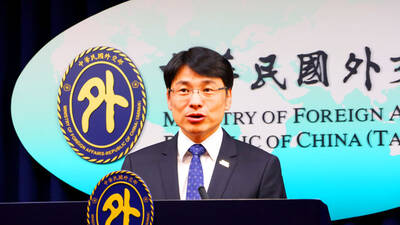
ENDORSING TAIWAN: Honduran presidential candidate Nasry Afura said that Honduras was ‘100 times better off’ when it was allied with Taipei The Ministry of Foreign Affairs yesterday said it would explore the possibility of restoring diplomatic relations with Honduras based on the principle of maintaining national interests and dignity. The ministry made the remarks in response to reporters’ questions regarding an article titled: “Will Taiwan Regain a Diplomatic Ally?” published in The Diplomat on Saturday. The article said Honduras’ presidential election in November could offer Taiwan the chance to regain an ally, as multiple candidates have promoted re-establishing diplomatic relations with Taiwan. Honduras severed diplomatic ties with Taiwan in March 2023 in favor of Beijing, but since switching its diplomatic recognition,
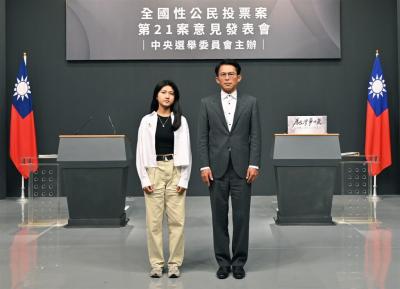
A fourth public debate was held today about restarting the recently decommissioned Ma-anshan Nuclear Power Plant, ahead of a referendum on the controversial issue to be held in less than two weeks. A referendum on Aug. 23 is to ask voters if they agree that “the Ma-anshan Nuclear Power Plant should continue operations upon approval by the competent authority and confirmation that there are no safety concerns.” Anyone over 18 years of age can vote in the referendum. The vote comes just three months after its final reactor shut down, officially making Taiwan nuclear-free. Taiwan People’s Party Chairman Huang Kuo-chang (黃國昌) represented

Scoot announced yesterday that starting in October, it would increase flights between Taipei and Japan’s Narita airport and Hokkaido, and between Singapore and Taipei. The low-cost airline, a subsidiary of Singapore Airlines, also said it would launch flights to Chiang Rai in Thailand, Okinawa and Tokyo’s Haneda airport between December and March next year. Flights between Singapore and Chiang Rai would begin on Jan. 1, with five flights per week operated by an Embraer E190-E2 aircraft, Scoot said. Flights between Singapore and Okinawa would begin on Dec. 15, with three flights per week operated by Airbus A320 aircraft, the airline said. Services between Singapore


 RSS
RSS