


The government is to launch a subsidy program on Sept. 1 for young people with breast or blood cancer to undergo fertility preservation treatments, the Health Promotion Administration (HPA) said yesterday.
Taiwanese diagnosed with stage 0 to 3 breast cancer or blood cancers such as leukemia, lymphoma or multiple myeloma, aged 18 to 40, and whose fertility is deemed to be impaired by cancer therapy, are eligible, the HPA said.
Female applicants could receive up to NT$70,000 for egg freezing, while males could receive up to NT$8,000 for sperm freezing.
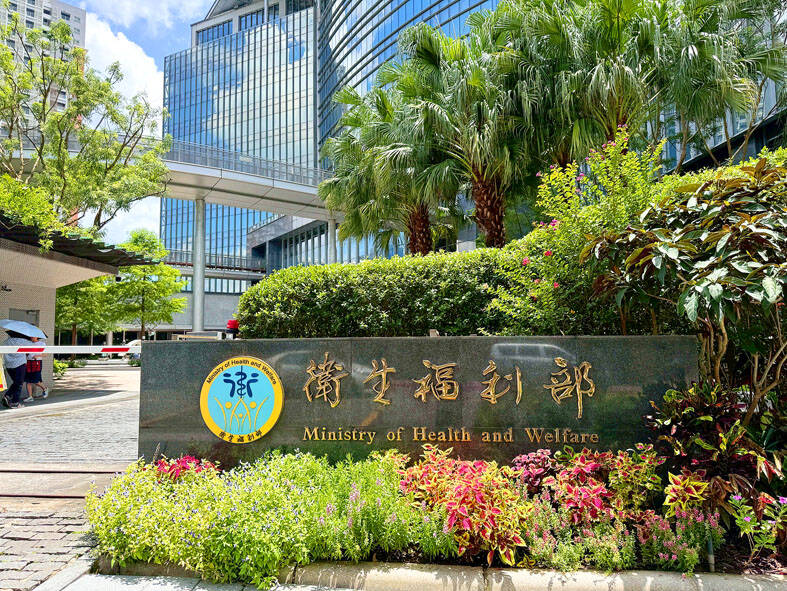
Photo: Chiu Chih-jou, Taipei Times
People can apply twice at most in their lifetime, it added.
The pilot program is expected to benefit 600 people in the first year, it said.
Thirty-five certified assisted reproduction centers nationwide are to take part in the program, HPA official Lin Yu-hsuan (林宇旋) said.
Applicants must be evaluated and get a referral from a hospital regarding a potential procedure for fertility preservation, Lin said.
They should consult a doctor about the potential effects and risks of the procedure, and if there is an urgent need for it before making a decision, she said.
They can apply for the subsidy after undergoing a fertility preservation procedure, she said.
Applicants should start the cancer treatment soon after undergoing the fertility preservation procedure, she said.
The new policy would alleviate the financial burden of people with cancer who face difficult choices regarding having children, Deputy Minister of Health and Welfare Lin Ching-yi (林靜儀) said, adding that there is a trend of cancer affecting people at younger ages.
The program would build a local model of fertility preservation, she said, adding that the government would consider expanding the coverage to other diseases depending on demand.
The government is to review the program in six months and consult experts to determine whether to broaden its scope, HPA Director-General Shen Ching-fen (沈靜芬) said.
The plan would help increase the chances for women who undergo treatment for breast cancer to have children, Taiwan Breast Cancer Society president Chen Fang-ming (陳芳銘) said.
Breast cancer is the most common cancer among women in Taiwan, with 2,000 of the 20,000 new cases each year occurring in women under 40, Chen said.
Only 10 percent of them can give birth after undergoing cancer treatment, he said.
Egg freezing is the most effective way to preserve fertility, he said, adding that it can increase the childbirth rate to 40 percent.
However, the cost makes many people hesitate, Chen said.
People often give up because of economic pressure or not knowing that egg retrieval can be completed in two weeks, Hematology Society of Taiwan secretary-general Huang Tai-chung (黃泰中) said.
The median age of people with lymphoma is just 30, Huang said.
Many people do not have children when they are diagnosed with cancer, as there is a trend of late marriage and lower ages of cancer diagnoses, Taiwanese Society for Reproductive Medicine secretary-general Huang Chu-jun (黃楚珺) said.
Tsao Chih-wei (曹智惟), deputy secretary-general of the Taiwan Urological Association, called for the subsidy program to cover people with testicular cancer.
They should have their sperm collected before starting cancer treatment, as they tend to have impaired reproductivity, despite the high success rate of treatment, Tsao said.

NATIONAL SECURITY: Authorities are working to confirm the identities of the military personnel involved and investigating possible illegal conduct and regulatory violations Authorities are probing possible national security implications after Kinmen police and immigration officers on Sunday found a Chinese woman allegedly posing as a tourist while engaging in prostitution involving more than 10 military personnel. The woman, surnamed Chen (陳), has since been deported, authorities said, adding that investigators are still working to confirm the identities of those implicated, as the records only listed code names and aliases. The case stemmed from a report received by the Kinmen District Prosecutors’ Office on Friday last week from the Jinhu Precinct of the Kinmen County Police Bureau. On Sunday, police, along with the National Immigration
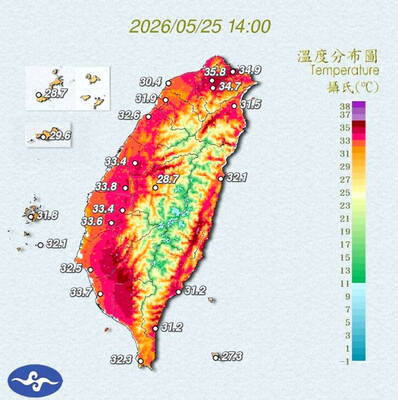
STAY COOL: The HPA recommended that people stay hydrated, use air-conditioning or fans while indoors, wear loose-fitting clothes and walk in the shade while outdoors Employers must implement measures such as installing cooling equipment, and providing drinking water and rest breaks for outdoor workers starting from Monday next week, the Taipei Department of Labor said on Sunday. Employers who fail to comply could face fines of NT$30,000 to NT$300,000 under the Occupational Safety and Health Act (職業安全衛生法), the department said. Businesses in Taipei employing fewer than 100 workers, as well as registered self-employed workers with labor insurance coverage, could receive on-site assessments and guidance from occupational safety consultants to help them apply for central government subsidies to implement or improve heat-protection measures, it said. Under the Ministry of

GLOBALGIVING: ‘ Caving to external pressure is not acceptable for an organization that has cultivated justice reform and human rights for 30 years,’ one NGO said A slew of non-government organizations (NGOs) have withdrawn from the GlobalGiving fundraising platform after it announced it would use “Chinese Taipei” instead of “Taiwan” from next month. The Taiwan Good Rice Association wrote on Facebook on Friday that it was informed on April 28 via a teleconference call of the change, which was made because the platform wanted to operate in China. Taiwan Good Rice is to terminate all cooperative relationships with GlobalGiving in response to the platform’s “unilateral and non-negotiable” decision to remove references to Taiwan, the NGO said. “Taiwan is in the official name of Taiwan Good Rice Association and the

Chinese Nationalist Party (KMT) Chairwoman Cheng Li-wun (鄭麗文) yesterday briefed her party’s Central Standing Committee regarding her scheduled visit to the US between Monday next week and June 16, saying that her purpose would be to persuade the US that the Republic of China (ROC) Constitution was a “one China” constitution that would foster stable and peaceful cross-strait relations. The ROC Constitution is the most important defense for all Taiwanese citizens, as it upholds our democracy and has contributed to our robust economy, which aligns with international and US interests, she said. “We would not be troublemakers and drag the US under,”


 RSS
RSS