


The Taiwan People’s Party (TPP) national congress yesterday made no changes to its requirements that legislators-at-large step down after two years, despite calls to abolish the policy.
TPP founder and former chairman Ko Wen-je (柯文哲) introduced the “two-year clause” ahead of last year’s elections, saying it would allow more people to represent the party and provide legislators experience when seeking other public offices.
However, after Ko was indicted on corruption charges in December last year and with a lack of experienced lawmakers, many TPP members have called for the clause to be abolished or suspended.

Photo: Tu Chien-jung, Taipei Times
Critics of the rule have said that requiring eight at-large lawmakers to resign in January next year could weaken the party ahead of local elections, especially amid the investigation into Ko.
During the national congress in Taoyuan, five motions were proposed regarding the clause, seeking to suspend it, abolish it or strictly enforce it. They were later merged into a single motion for discussion.
TPP Chairman Huang Kuo-chang (黃國昌) said the party followed the directive set by Ko and that any changes should be decided by the former chairman.
The congress then approved by acclamation a decision to keep the clause for the time being.
Huang said that under Ko’s leadership, the party, which marked its sixth anniversary yesterday, won 3.02 million party votes last year.
The party has grown significantly to 32,546 members, after starting with only 100 people five years ago, he said.
“The most important task is to continue growing and strengthening the party, bringing in more talent and sending them to serve voters in local communities,” he said.
Speaking to reporters after the congress, Huang said that “the TPP has faced attacks and some have tried to create divisions within the party, but such attempts have never succeeded because the TPP is a party with conviction, values, principles and a system.”
Over the past year and a half, the party has pushed forward bills in the legislature that the Democratic Progressive Party had promised, but failed to deliver, and in doing so the TPP fulfilled the public’s expectations, he said.
As the two-year clause remains in place, current TPP legislators-at-large would step down from the role on Jan. 31 next year, including Huang himself.
Among the replacement candidates for the TPP legislators-at-large are Institute for Information Industry Software Research Institute deputy director Hong Yu-hsiang (洪毓祥); Chinese Sunshine Promotion and Care Association chairwoman Tsai Chun-chou (蔡春綢); National Chung Cheng University College of Social Sciences dean Wang An-hsiang (王安祥); Taipei Nursing Health University General Education Center professor Chiu Hui-ju (邱慧洳); Taichung City Councilor Chen Ching-lung (陳清龍); and former legislator Hsu Chung-hsin (許忠信).
Additional reporting by CNA

The military has spotted two Chinese warships operating in waters near Penghu County in the Taiwan Strait and sent its own naval and air forces to monitor the vessels, the Ministry of National Defense (MND) said. Beijing sends warships and warplanes into the waters and skies around Taiwan on an almost daily basis, drawing condemnation from Taipei. While the ministry offers daily updates on the locations of Chinese military aircraft, it only rarely gives details of where Chinese warships are operating, generally only when it detects aircraft carriers, as happened last week. A Chinese destroyer and a frigate entered waters to the southwest
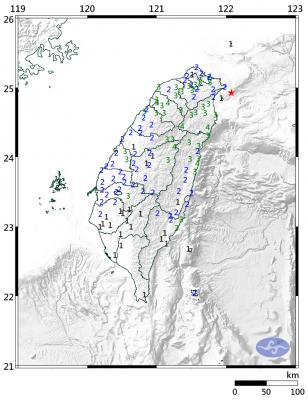
A magnitude 6.1 earthquake struck off the coast of Yilan County at 8:39pm tonight, the Central Weather Administration (CWA) said, with no immediate reports of damage or injuries. The epicenter was 38.7km east-northeast of Yilan County Hall at a focal depth of 98.3km, the CWA’s Seismological Center said. The quake’s maximum intensity, which gauges the actual physical effect of a seismic event, was a level 4 on Taiwan’s 7-tier intensity scale, the center said. That intensity level was recorded in Yilan County’s Nanao Township (南澳), Hsinchu County’s Guansi Township (關西), Nantou County’s Hehuanshan (合歡山) and Hualien County’s Yanliao (鹽寮). An intensity of 3 was

Japanese Prime Minister Sanae Takaichi’s comment last year on Tokyo’s potential reaction to a Taiwan-China conflict has forced Beijing to rewrite its invasion plans, a retired Japanese general said. Takaichi told the Diet on Nov. 7 last year that a Chinese naval blockade or military attack on Taiwan could constitute a “survival-threatening situation” for Japan, potentially allowing Tokyo to exercise its right to collective self-defense. Former Japan Ground Self-Defense Force general Kiyofumi Ogawa said in a recent speech that the remark has been interpreted as meaning Japan could intervene in the early stages of a Taiwan Strait conflict, undermining China’s previous assumptions
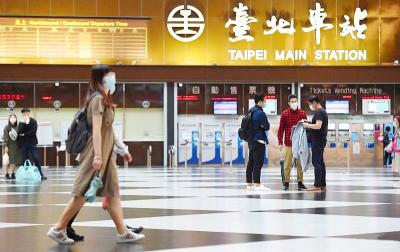
Taiwan Railways Corp (TRC) today announced that Shin Kong Mitsukoshi has been selected as the preferred bidder to operate the Taipei Railway Station shopping mall, replacing the current operator, Breeze Development Co Ltd. Among eight qualified firms that delivered presentations and were evaluated by a review committee, Shin Kong Mitsukoshi was ranked first, while Breeze was named the runner-up, the rail company said in a statement. Contract negotiations are to proceed in accordance with regulations, it said, adding that if negotiations with the top bidder fail, it could invite the second-ranked applicant to enter talks. Breeze in a statement today expressed doubts over


 RSS
RSS