


The number of cram schools in Taiwan this year reached a five-year high, despite admission quotas already outnumbering graduates from schools at lower levels in many districts due to the low birthrate, the latest data from the Ministry of Education showed.
As of June 26, Taiwan had 17,710 cram schools, up 328 from five years ago.
The number of test preparation cram schools rose by 402 to 15,599, or more than 88 percent, over the same period, while the number of enrichment classes fell by 74, the data showed.
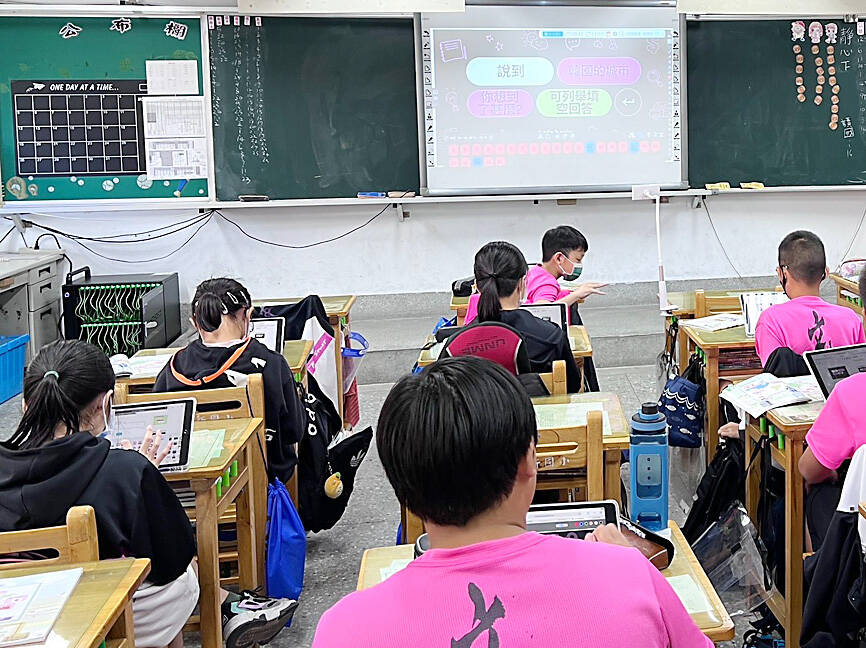
Photo: Lo Kuo-chia, Taipei Times
Although six test prep cram schools closed from 2019 to 2022 amid the COVID-19 pandemic, 209 opened from 2023 to this year, up by about 1 percent.
The estimated annual production value of all cram schools in Taiwan for primary and secondary education levels, including enrichment classes, is about NT$150 billion (US$5.2 billion), more than NT$100 billion of which comes from test prep cram schools.
Department of Lifelong Education official Wu Chia-fen (吳佳芬) on Saturday said that cram schools and after-school care centers cannot be established or operated without approval from local governments.
The cram school industry has rebounded after contracting during the pandemic, she said.
As many families are dual-income households with fewer children than previous generations, parents are more willing to invest in their child’s education, Wu said.
Another reason leading to the increase is that many cram schools offer small, personalized classes to align with parents’ needs, she added.
Elementary-school students have more leisure time than junior or senior-high school students, so they are enrolled in more enrichment classes, such as foreign language, music or painting programs, she said.
National Alliance of Parents Organization chairman Hsiao Tung-yuan (蕭東原) said the pressure to get kids into good schools is driving the increase in the number of cram schools.
The myth of competing for “top” schools persists even though examination systems have changed several times, he said.
For example, the system for high-school admissions has evolved from the joint entrance exam to the Basic Competency Test to the Comprehensive Assessment Program, but the pressure on students never changed, while the demand for tutoring increased, Hsiao said.
Enhancing children’s abilities to learn by themselves and apply digital learning resources would be a better choice than sending them to cram schools, he added.
National Parent Education Volunteer Association president Hsu Chu-lung (徐巨龍) said that dual-income families tend to send their children to cram schools, as they have to work and cannot pick up their kids directly after school or help them with homework.
The 410 Education Reform launched 31 years ago drove the proliferation of senior-high schools and universities, with the goal of promoting self-motivated learning, reducing the pressure of competing for scarce educational resources and achieving the goal of “higher education for all,” National Federation of Teachers’ Unions president Hou Chun-liang (侯俊良) said.
However, competitive pressure did not ease, despite sufficient admission opportunities due to sharply increased numbers of senior-high schools and universities, he said.


UPGRADE: The Kang Ding-class frigate is replacing its Chaparall missiles with Tien Chien II and Hua Yang VLS, which would provide it with long-range, 360° air defense Taiwan plans to produce 1,200 to 1,376 Hai Chien II missiles (海劍二, Sea Sword II) — also known as TC-2N — to serve as the standard air defense system of the navy’s surface combatant fleet, a source said yesterday. Last week, the Hai Chien II, the naval version of the Tien Kung II missile (天劍二, Sky Sword II), completed a live-fire test in waters off the National Chungshan Institute of Science and Technology’s Jiupeng facility (九鵬) in Pingtung County’s Manjhou Township (滿州). The MIM72 Chaparral and other dated air defense missiles that currently arm Taiwanese ships have inadequate range to combat Chinese

REASONS FOR TRAVEL: An assistant professor said that proposed amendments to penalize drivers if they used drugs overseas would not deter people from traveling People who operate a motor vehicle under the influence of marijuana would have their driver’s license revoked, even if they used the substance while overseas, the Ministry of Transportation and Communications said yesterday, citing proposed amendments to the Road Traffic Management and Penalty Act (道路交通管理處罰條例). The amendments would also authorize the government to revoke the licenses of people determined to have used Category 1 or Category 2 narcotics, even if they were not operating a vehicle while under the influence of drugs, as well as ban them from taking the license test for three years, the ministry said. People aged 18 or

Johanne Liou (劉喬安), a Taiwanese woman who shot to unwanted fame during the Sunflower movement protests in 2014, returned to Taiwan last night after being deported from the US. She is to stand trial in Taiwan for charges involving embezzlement, fraud and drug crimes. The Criminal Investigation Bureau (CIB) said it took her into custody at Taiwan Taoyuan International Airport and would first question her before transferring her to the New Taipei District Prosecutors’ Office. She was arrested upon disembarking a flight from San Francisco that landed shortly before 7pm. Liou absconded to the US in 2019 after jumping bail
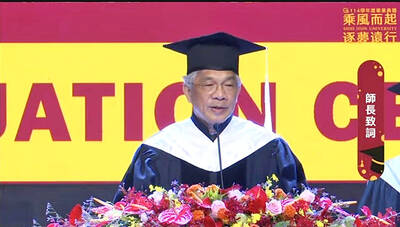
Shih Hsin University President Chen Ching-he (陳清河) yesterday issued a public apology for comments made in his commencement speech last week, stating that he has asked the school to suspend his duties and halt his wages for two months as a show of contrition. At the commencement ceremony on May 30, Chen said, “If you don’t manage your time well, or your own emotions, or your health, then I am telling every one of you — put a quick end to ‘you,’ because the world has no need for ‘you.’” The comments have sparked significant controversy online, and Chen through an open


 RSS
RSS