


The Ministry of Health and Welfare said it would meet with representatives of medical colleges to understand the cause of declining pass rates of the National Physician Licensing Exam, after it fell to a 19-year-low in January.
Medical students must pass two stages of national examinations before obtaining their physician license. The first stage exam, which focuses on basic medical science, is typically taken between their fourth and fifth years of medical school, while the second stage, which focuses on clinical medicine, is taken after graduating and completing their internships.
Ministry of Examination data from 2007 to this year showed that the pass rate of the first stage exam in January this year was 10.5 percent, below the previously lowest rate of 11.5 percent in 2016 and lower than the average of about 30 to 40 percent in most years.
Photo: Lin Hui-chin, Taipei Times
Ministry of Examination Deputy Minister Liu Yueh-lan (劉約蘭) said her ministry holds national exams for all types of healthcare professionals in June and July each year, and those who did not pass the exams can apply to take the national exams in January and February the following year.
However, as the eligibility requirements to take the first stage of the National Physician Licensing Exam were revised in June last year — requiring that the student first complete the second semester of the fourth year or that post-graduate students have completed the second semester of the second year — the pass rate cannot be compared with previous years, she said.
Department of Medical Affairs Director-General Liu Yueh-ping (劉越萍) said the backgrounds of the examinees in the January exam are relatively diverse, while the examinees of the July exam are mostly recent graduates.
Nevertheless, the pass rate has been declining in the past few years.
As it is difficult for the department to determine the reason for declining pass rates, it would invite representatives from medical colleges to discuss the issue, she said.
The pass rate of the first stage of the National Physician Licensing Exam held in July was 69.32 percent in 2007 and 68.27 percent in 2008, but has dropped to between 50 percent and a little more than 60 percent in the past few years.
Taiwan Association of Medical Education chairperson and National Taiwan University College of Medicine dean Ni Yen-hsuan (倪衍玄) said that more detailed data is needed to understand the declining pass rate in the January exam.
The examinees’ backgrounds are relatively diverse, including people who are taking the exam for a second or third time, or people who took alternative pathways in their medical studies, as well as people who suspended their studies or took a gap year, he said.
As the pass rates for the exam often fluctuate, it is inaccurate to project a trend from just one year, National Yang Ming Chiao Tung University College of Medicine dean Wang Shuu-jiun (王署君) said.
Pass rates from more years should be compared for the January exam, while the basis of comparison is more unified in the July exam, which better reflects students’ medical education and training, Wang said.
However, if the pass rates of the July exam have also significantly declined, then the exam questions might be too difficult or the examinees might not be prepared, he said.
The declining pass rate could be due to other reasons, such as fewer students pursuing a degree in medicine, which is reflected in the higher grade requirements for some university departments, some of which exceed those of medical colleges, National Cheng Kung University Hospital superintendent Shen Yen-sheng (沈延盛) said.
The number of students with relatively lower grades than those in previous years has also increased, inevitably affecting the pass rate of the national exams, he said.
Nevertheless, people do not have to worry, as medical students are still top performers with some of the highest grades nationwide, so as long as the clinical education and training remains strict, healthcare quality can be ensured, Shen said.
However, if medical students must retake the national exam a few times to pass, then the number of people entering postgraduate training in hospitals would decline each year, he added.
Ni said it is a good thing that the nation’s top talent pursues different careers, allowing society to progress, but as the healthcare sector is responsible for maintaining people’s health and saving lives, it is important for medical departments to attract outstanding students.
Additional reporting by Lin Hui-chin

A magnitude 6.1 earthquake struck off the coast of Yilan County at 8:39pm tonight, the Central Weather Administration (CWA) said, with no immediate reports of damage or injuries. The epicenter was 38.7km east-northeast of Yilan County Hall at a focal depth of 98.3km, the CWA’s Seismological Center said. The quake’s maximum intensity, which gauges the actual physical effect of a seismic event, was a level 4 on Taiwan’s 7-tier intensity scale, the center said. That intensity level was recorded in Yilan County’s Nanao Township (南澳), Hsinchu County’s Guansi Township (關西), Nantou County’s Hehuanshan (合歡山) and Hualien County’s Yanliao (鹽寮). An intensity of 3 was
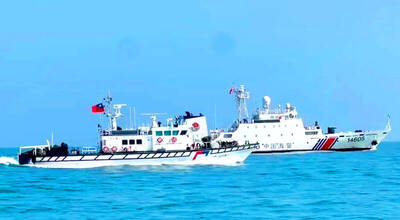
Instead of focusing solely on the threat of a full-scale military invasion, the US and its allies must prepare for a potential Chinese “quarantine” of Taiwan enforced through customs inspections, Stanford University Hoover fellow Eyck Freymann said in a Foreign Affairs article published on Wednesday. China could use various “gray zone” tactics in “reconfiguring the regional and ultimately the global economic order without a war,” said Freymann, who is also a nonresident research fellow at the US Naval War College. China might seize control of Taiwan’s links to the outside world by requiring all flights and ships entering or leaving Taiwan
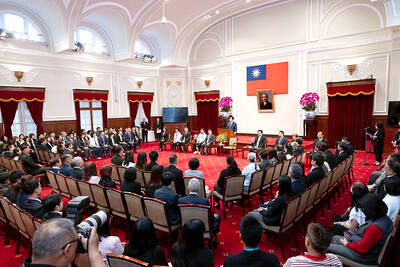
The next minimum wage hike is expected to exceed NT$30,000, President William Lai (賴清德) said yesterday during an award ceremony honoring “model workers,” including migrant workers, at the Presidential Office ahead of Workers’ Day today. Lai said he wished to thank the awardees on behalf of the nation and extend his most sincere respect for their hard work, on which Taiwan’s prosperity has been built. Lai specifically thanked 10 migrant workers selected for the award, saying that although they left their home countries to further their own goals, their efforts have benefited Taiwan as well. The nation’s industrial sector and small businesses lay
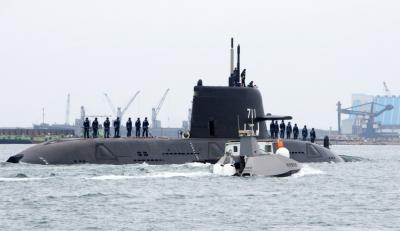
Taiwan's first indigenous defense submarine, the SS-711 Hai Kun (海鯤, or Narwhal), departed for its 13th sea trial at 7am today, marking its seventh submerged test, with delivery to the navy scheduled for July. The outing also marked its first sea deployment since President William Lai (賴清德) boarded the submarine for an inspection on March 19, drawing a crowd of military enthusiasts who gathered to show support. The submarine this morning departed port accompanied by CSBC Corp’s Endeavor Manta (奮進魔鬼魚號) uncrewed surface vessel and a navy M109 assault boat. Amid public interest in key milestones such as torpedo-launching operations and overnight submerged trials,


 RSS
RSS