

The wife of former Taipei Deputy Mayor Pong Cheng-sheng (彭振聲) died today in an apparent suicide prior to Pong's appearance in court today in connection with the Core Pacific corruption case.
The Taipei District Court today summoned Pong, former Taipei mayor Ko Wen-je (柯文哲) and Sheen Ching-jing (沈慶京), founder and chairman of the real-estate conglomerate Core Pacific Group, to listen to a recording of Pong’s interrogation.
While waiting in court for the hearing to begin, Pong received a call from his family that his wife had died after falling from a building in Kaohsiung, leading to him breaking down in tears.
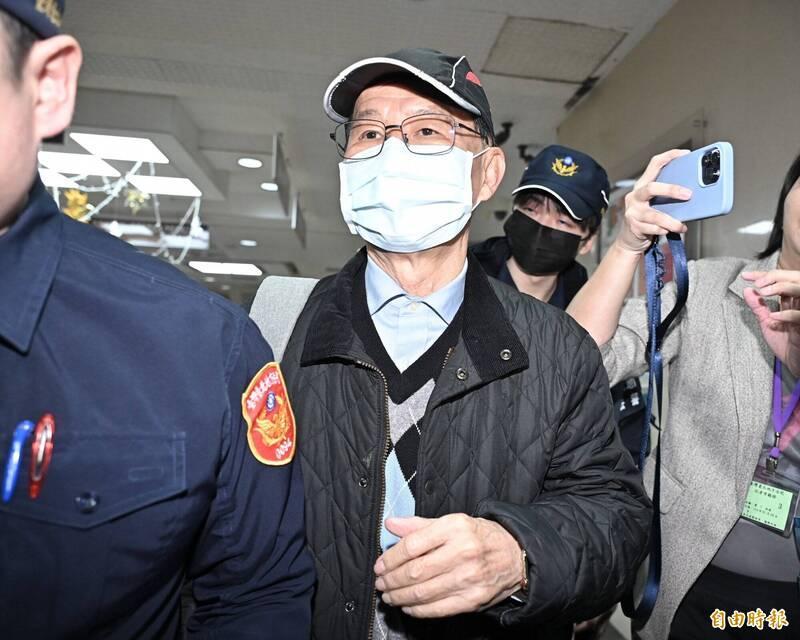
Photo: Tu Chien-jung, Taipei Times
Following the news, the court canceled the morning session and plans to listen to the recordings in the afternoon.
Pong told the prosecutors that he wanted to commit suicide to prove his innocence.
The court considered sending Pong to the hospital for treatment, but later allowed him to return home with his younger brother.
The Kaohsiung City Fire Department said today that it received a report at 9:01am of a woman who fell from a building in Sanming (三民) District.
Arriving on the scene, they found a 72-year-old woman surnamed Hsieh (謝), who was Pong's wife, on the ground. She was declared dead at the scene, they added.
The Taiwan People’s Party (TPP), which Pong is a member of, said that it is deeply shocked and sad, adding that its members who had been present at the court felt grief and anger as Pong expressed his sorrow.
It extended condolences to Pong and his family and called on society to show him care and understanding, it said.
The party would support Pong in handling subsequent matters and provide legal support, it said.
The Chinese Nationalist Party (KMT) said it empathized with Pong, and questioned whether the court is forcing defendants to confess, asking if this was the democratic system that President William Lai (賴清德) has highlighted.
Ruling Democratic Progressive Party (DPP) legislator Rosalia Wu (吳思瑤) said she has known Pong for years and that this is a tragic situation.
With regards to the investigation, Wu said that she hoped prosecutors and investigators would be fair.
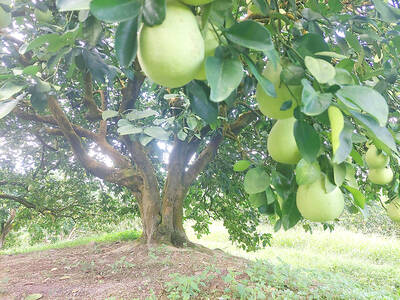
A Hualien pomelo farmer refused to sell to China after the country announced it would permit more Taiwanese pomelo imports, prompting widespread support from Taiwanese consumers, who rallied to buy his fruit. China’s Taiwan Affairs Office last month said that China’s General Administration of Customs registered an additional 79 Taiwanese pomelo orchards and packing facilities in Hualien County, allowing more Taiwanese producers to export pomelos to China. “I am a Hualien fruit farmer and I refuse to sell to China,” Liu Tzu-hao (劉子豪) from Ruisui Township (瑞穗) said in an online post. Liu is a well-known farmer in the community and has served
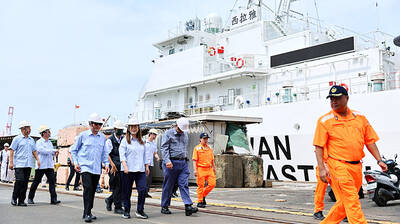
Ocean Affairs Council (OAC) Minister Kuan Bi-ling (管碧玲) on Wednesday said decommissioned coast guard vessels were given to the Philippines to enhance regional rescue capacity and would not affect Taiwanese fishers’ rights and benefits. Kuan made the remarks after confirmation on Tuesday that a 500-tonne Coast Guard Administration (CGA) patrol and rescue vessel would be given to the Philippine Coast Guard. The donation ceremony was reportedly done in Manila, but whether the vessel — previously numbered “CG123” and named Kinmen (金門) — has been handed over has yet to be confirmed. China’s Taiwan Affairs Office (TAO) on Wednesday criticized the donation for “taking
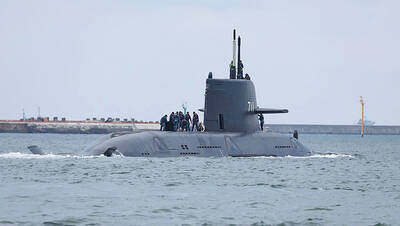
UPDATE: The submarine would need to undergo combined systems testing and crew training for navy personnel before it is ready for mission, an expert said Taiwan’s first domestically built submarine, the Hai Kun (Narwhal, 海鯤), could be delivered to the navy as early as next month, military expert and Taiwan Association for Security and Development chairman Chi Tung-yun (紀東昀) said yesterday. The submarine was yesterday morning observed departing for its 21st sea trial and its 15th submerged test. The vessel missed the initial delivery deadline of November last year due to “testing delays,” its primary contractor, shipbuilder CSBC Corp, Taiwan, said in June. The contractor also cited “political pressure from China” in procuring critical equipment. All testing operations are in the final stages, with the
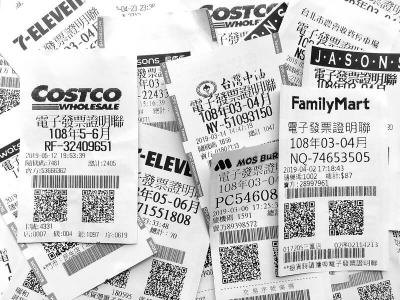
Six NT$10 million (US$315,527) special prizes and seven NT$2 million grand prizes in Taiwan's May-June uniform invoice lottery remained unclaimed as of today, including one NT$10 million winner who spent only NT$10 on an Uber Eats delivery order, the Ministry of Finance said. The ministry said the 13 winners need to claim their prizes by Nov. 5. The eight-digit serial number that won the NT$10 million special prize for May-June was 38548029, with 18 winning receipts in total. The NT$2 million grand prize number was 10138845, of which there were 22 winning receipts, the ministry said. In addition to the receipt issued for an


 RSS
RSS