


Activists of the Clean Air Alliance rallied outside the Legislative Yuan yesterday to protest the prohibition on heated tobacco products (HTPs) and delayed regulatory processes by Ministry of Health and Welfare (MOHW).
Clean Air Alliance head Peng Hua-gan (彭華幹) said that smokers have rights too, and demanded that the government not impose severe restrictions, but instead regulate HTPs, including e-cigarettes and vapes.
More than 100 people participated in the rally, holding signs, chanting slogans and performing a street theater.
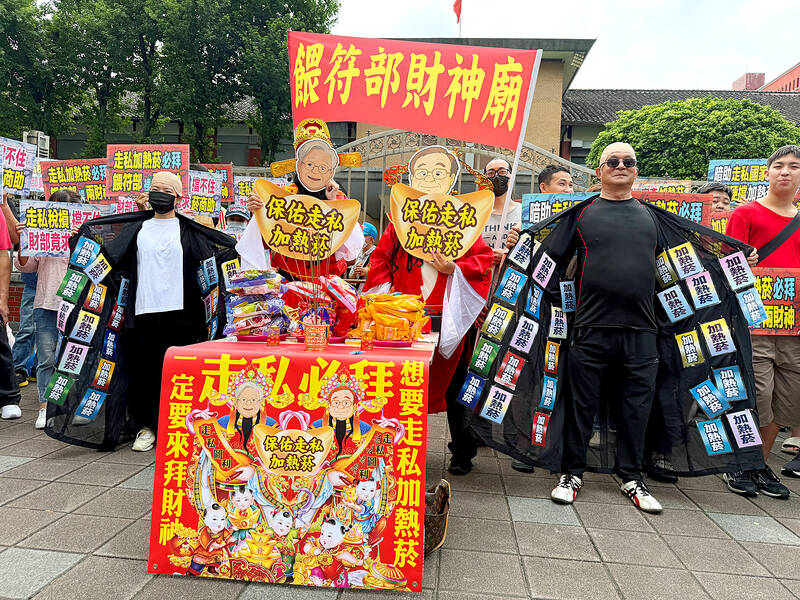
Photo: Wang Kuang-jen, Taipei Times
Lawmakers and the MOHW have deceived smokers, Peng said, as amendments to the Tobacco Hazards Prevention Act (菸害防制法) passed their third reading in March 2023, permitting the sale and purchase of HTPs.
“But to this day, we cannot buy any of these in Taiwan,” Peng added.
It is because lawmakers inserted an article requiring HTPs to first receive approval through a “health risk evaluation” process, Peng said.
“However, MOHW officials have dragged their feet and delayed it for more than two years, so people still cannot buy any legal HTPs or vapes in Taiwan,” he said.
“If the sale and purchase [of HPTs] were legal, the government could collect tax on it.” Peng said. “But now it is a three-way losing proposition — smokers’ right to choose has been violated, the government is losing out on the huge tax revenue and it has also led to increased smuggling.”
The name of the alliance refers to HTPs as cleaner alternatives to traditional tobacco products as they do not produce second-hand smoke, thereby reducing air pollution, he said.
Alliance members also put on a street theater performance, with two men dressed up as the “God of Wealth” (財神爺) — each wielding a large gold ingot to symbolize government officials colluding to benefit big businesses selling paper cigarettes — and two men representing smugglers, pretending to hide HTPs inside their jackets.
Lawmakers and the MOHW have driven up black market demand, Peng said, adding that customs have seen people dressed up as monks stuffing HTPs inside the robes, as well as other ways of smuggling.
“We are consumers, and we have the freedom to choose,” he said. “Vaping has no second-hand smoke, it is for cleaner air, and better for health.”
“Why ban it in Taiwan? People can buy paper cigarettes, and smoking is legal, as should be the case for e-cigarettes, but continued delays to the evaluation process mean they are effectively imposing a ban right now,” Peng said.

The military has spotted two Chinese warships operating in waters near Penghu County in the Taiwan Strait and sent its own naval and air forces to monitor the vessels, the Ministry of National Defense (MND) said. Beijing sends warships and warplanes into the waters and skies around Taiwan on an almost daily basis, drawing condemnation from Taipei. While the ministry offers daily updates on the locations of Chinese military aircraft, it only rarely gives details of where Chinese warships are operating, generally only when it detects aircraft carriers, as happened last week. A Chinese destroyer and a frigate entered waters to the southwest
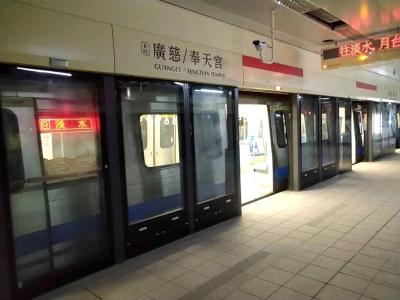
The eastern extension of the Taipei MRT Red Line could begin operations as early as late June, the Taipei Department of Rapid Transit Systems said yesterday. Taipei Rapid Transit Corp said it is considering offering one month of free rides on the new section to mark its opening. Construction progress on the 1.4km extension, which is to run from the current terminal Xiangshan Station to a new eastern terminal, Guangci/Fengtian Temple Station, was 90.6 percent complete by the end of last month, the department said in a report to the Taipei City Council's Transportation Committee. While construction began in October 2016 with an
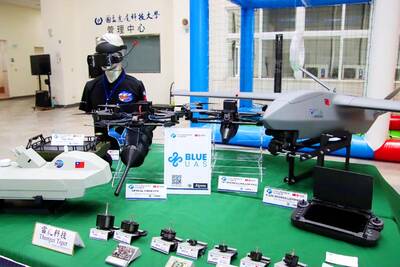
NON-RED SUPPLY: Boosting the nation’s drone industry is becoming increasingly urgent as China’s UAV dominance could become an issue in a crisis, an analyst said Taiwan’s drone exports to Europe grew 41.7-fold from 2024 to last year, with demand from Ukraine’s fight against Russian aggression the most likely driver of growth, a study showed. The Institute for Democracy, Society and Emerging Technology (DSET) in a statement on Wednesday said it found that many of Taiwan’s uncrewed aerial vehicle (UAV) sales were from Poland and the Czech Republic. These countries likely transferred the drones to Ukraine to aid it in its fight against the Russian invasion that started in 2022, it said. Despite the gains, Taiwan is not the dominant drone exporter to these markets, ranking second and fourth

Japanese Prime Minister Sanae Takaichi’s comment last year on Tokyo’s potential reaction to a Taiwan-China conflict has forced Beijing to rewrite its invasion plans, a retired Japanese general said. Takaichi told the Diet on Nov. 7 last year that a Chinese naval blockade or military attack on Taiwan could constitute a “survival-threatening situation” for Japan, potentially allowing Tokyo to exercise its right to collective self-defense. Former Japan Ground Self-Defense Force general Kiyofumi Ogawa said in a recent speech that the remark has been interpreted as meaning Japan could intervene in the early stages of a Taiwan Strait conflict, undermining China’s previous assumptions


 RSS
RSS