


New Taiwan High Speed Rail Corp (THSRC) chairman Shih Che (史哲) yesterday vowed to expedite the company’s digital transition ahead of the rail service’s 20-year anniversary in 2027.
Presenting the company’s “THSRC 2.0” plan at a meeting of the legislature’s Transportation Committee, Shih said the company would be introducing a new generation of trains, as well as installing platform screen doors, upgrading nursing rooms at high-speed rail stations and replacing aging elevators.
The high-speed rail system’s resilience would also be enhanced to better handle extreme weather events, he said.
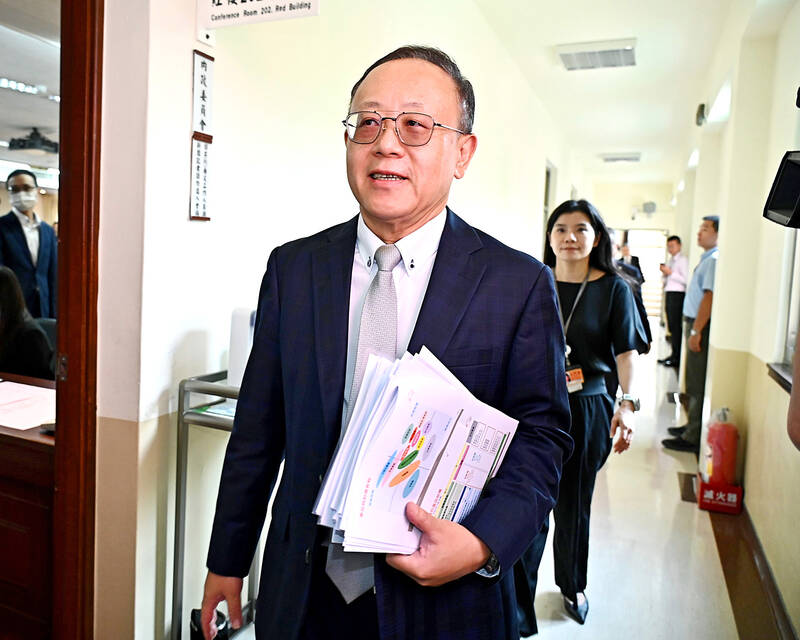
Photo: Tu Chien-jung, Taipei Times
The digital transformation would be accelerated to build a smart high-speed rail network, he said.
That includes launching a new ticketing system to improve operational efficiency, and shorten the time required for system updates and modifications, Shih said.
Other digital upgrades include cloud-based and paperless automatic ticketing systems, as well as the introduction of digital multi-ride passes, season tickets and e-coupon systems, he said.
New high-speed trains are scheduled to arrive in Taiwan in the fourth quarter of next year and are expected to be put into service in the third quarter of 2027, he said.
The company recorded an approximately 3.4 percent increase in passenger volume in the past five months, down from 6 to 7 percent after the COVID-19 restrictions were lifted, Shih said.
Nevertheless, high-speed rail tickets remain in high demand during peak hours, he said.
The company would have contingency plans in place to meet rising demand before the arrival of the new trains, he said.
Shih told lawmakers that the high-speed rail system’s passenger volume has grown to 220,000 per day, and that in response, 1,128 train services would be dispatched weekly starting from next month.
Implementing the “THSRC 2.0” plan by 2027 would be his first major test as chairman, he said.
Shih, a former culture minister, was appointed chairman earlier this month, a move that has faced scrutiny due to his lack of experience in the rail industry.
Some commentators criticized the appointment as a reward to loyalists of President William Lai (賴清德).
Chinese Nationalist Party (KMT) Legislator Lu Ming-che (魯明哲) said that Shih should consider forgoing his bonus during his first year as THSRC chairman and collect it after he raises passenger volume.
Shih said that his bonus depended on whether he meets key performance indicators set by the Ministry of Transportation and Communications.
Minister of Transportation and Communications Chen Shih-kai (陳世凱) yesterday defended Shih’s qualifications in an online radio show.
“His strong suit is listening and marketing... He was a government official for 25 years, having served as Kaohsiung deputy mayor, minister of culture and a minister without portfolio. His experience would make him a preferred candidate for management positions in the private sector. We should look at a person’s performance first before passing judgement,” Chen said.
Asked by reporters on the sidelines of the meeting about the company’s plans to raise ticket prices as Taiwan Railway Corp did, Shih said that ticket sales accounted for 95 percent of THSRC’s revenue, adding that the high-speed rail company’s board would regularly review its pricing schemes.

Actor Darren Wang (王大陸) was sentenced to six months in prison, commutable to a fine, by the New Taipei District Court today for contravening the Personal Data Protection Act (個人資料保護法) in a case linked to an alleged draft-dodging scheme. Wang allegedly paid NT$3.6 million (US$114,380) to an illegal group to help him evade mandatory military service through falsified medical documents, prosecutors said. He transferred the funds to Chen Chih-ming (陳志明), the alleged mastermind of a draft-evasion ring, although he lost contact with him as he was already in detention on fraud charges, they said. Chen is accused of helping a

SECURITY: Starlink owner Elon Musk has taken pro-Beijing positions, and allowing pro-China companies to control Taiwan’s critical infrastructure is risky, a legislator said Starlink was reluctant to offer services in Taiwan because of the nation’s extremely high penetration rates in 4G and 5G services, the Ministry of Digital Affairs said yesterday. The ministry made the comments at a meeting of the legislature’s Transportation Committee, which reviewed amendments to Article 36 of the Telecommunications Management Act (電信管理法). Article 36 bans foreigners from holding more than 49 percent of shares in public telecommunications networks, while shares foreigners directly and indirectly hold are also capped at 60 percent of the total, unless specified otherwise by law. The amendments, sponsored by Chinese Nationalist Party (KMT) Legislator Ko

The eastern extension of the Taipei MRT Red Line could begin operations as early as late June, the Taipei Department of Rapid Transit Systems said yesterday. Taipei Rapid Transit Corp said it is considering offering one month of free rides on the new section to mark its opening. Construction progress on the 1.4km extension, which is to run from the current terminal Xiangshan Station to a new eastern terminal, Guangci/Fengtian Temple Station, was 90.6 percent complete by the end of last month, the department said in a report to the Taipei City Council's Transportation Committee. While construction began in October 2016 with an
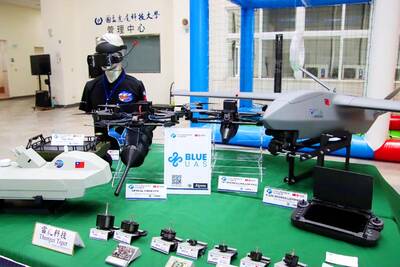
NON-RED SUPPLY: Boosting the nation’s drone industry is becoming increasingly urgent as China’s UAV dominance could become an issue in a crisis, an analyst said Taiwan’s drone exports to Europe grew 41.7-fold from 2024 to last year, with demand from Ukraine’s fight against Russian aggression the most likely driver of growth, a study showed. The Institute for Democracy, Society and Emerging Technology (DSET) in a statement on Wednesday said it found that many of Taiwan’s uncrewed aerial vehicle (UAV) sales were from Poland and the Czech Republic. These countries likely transferred the drones to Ukraine to aid it in its fight against the Russian invasion that started in 2022, it said. Despite the gains, Taiwan is not the dominant drone exporter to these markets, ranking second and fourth


 RSS
RSS