


The Ministry of Health and Welfare and the Ministry of the Interior (MOI) yesterday outlined public policies on cosmetics, insurance and government funeral services to be implemented from Tuesday next week.
The first of the health ministry’s three policies would require importers or manufacturers of cosmetics for infants, lips and eyes, and toothpastes and mouthwashes to register their Product Information File with the Food and Drug Administration.
After the file is registered, it would be reviewed to confirm the product’s safety, the ministry said.
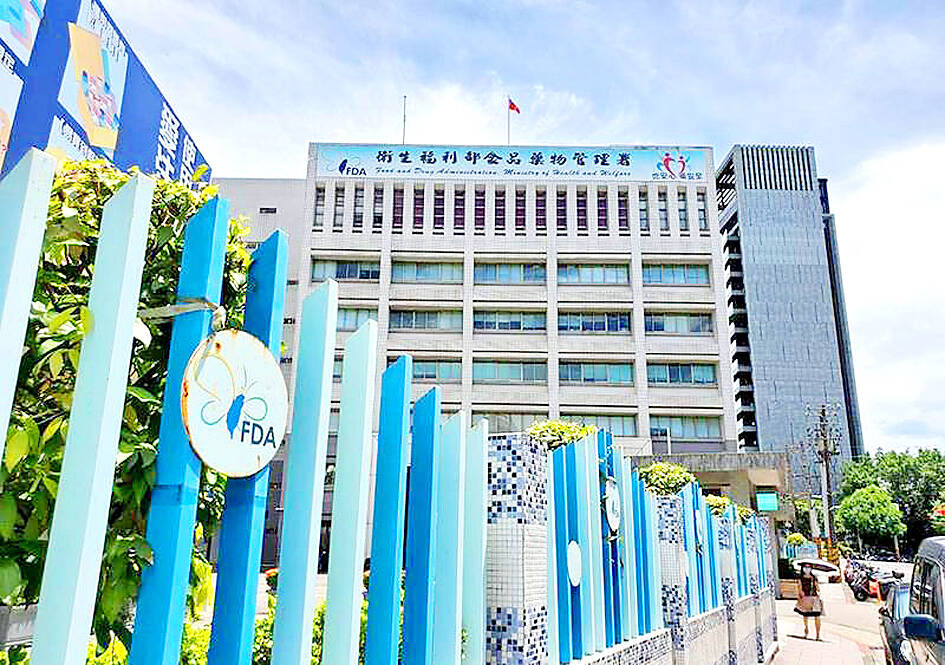
Photo: Chung Li-hua, Taipei Times
Under the second policy, National Health Insurance (NHI) payments for 1,068 diagnosis-related groups would be adjusted from next month to better match clinical practice engagements.
The change, made in response to adjustments to NHI payments of single-diagnosis and treatment services, was made through an amendment to the National Health Insurance Fee Schedule and Reference List for Medical Services (全民健康保險醫療服務給付項目及支付標準).
Third, the National Health Insurance Administration (NHIA) is to launch an enhanced recovery after surgery (ERAS) promotional program for NHI-covered surgeries.
ERAS is a multidisciplinary approach that uses a combination of patient-centered, evidence-based methods to improve patient care and recovery after surgeries.
ERAS medical teams might include healthcare professionals from anesthesiology, surgery, internal medicine, rehabilitation, nursing or nutrition departments. They would help patients through the preoperative, intraoperative and postoperative phases of surgery.
The promotional program would accelerate postoperative recovery and shorten hospital stays, the NHIA said, urging healthcare facilities to provide ERAS services to improve care and reduce healthcare costs.
NHIA Department of Medical Affairs Director Liu Lin-i (劉林義) said the program would first focus on knee or hip replacement surgeries for people aged 70 or older and those at high risk of complications from anesthesia.
A NT$60 million (US$2.02 million) budget would be allocated to the program, which is estimated to benefit about 2,600 people, he said, adding that eligibility for the program would gradually be expanded.
Meanwhile, the Ministry of the Interior is to allow the next of kin of police officers, volunteer police, civil defense personnel, firefighters, volunteer firefighters or other personnel engaged in official duties who have died in the line of duty to lay them to rest using public mortuary and burial facilities free of charge.
According to the policy, being implemented through amendments to the Mortuary Service Administration Act (殯葬管理條例), local governments would be supervised to amend their ordinances or handle relevant cases through special programs, the ministry said.
Additionally under the amendments, the management fees collected by operators of privately owned public cemeteries and remains storage facilities should be separated into “daily expenditures” and “emergency expenditures” held in earmarked accounts.
Three supplementary regulations, including the Mortuary Services Administration Act Enforcement Regulations (殯葬管理條例施行細則), are also to come into effect on Tuesday next week, the ministry said.
Meanwhile, in compliance with a National Security Council resolution, buildings with air raid shelters are to be included in the items for building public safety inspections and reporting, to ensure the air raid shelters are safe and that building residents cooperate with the police department’s evacuation drills, it said.

The Ministry of Finance this afternoon announced the winning numbers for the March-April uniform invoice lottery. The winning number for the NT$10 million (US$318,060) special prize is 19531471, and the winning number for the NT$2 million grand prize is 85941329. Three numbers were drawn for the NT$200,000 first prize: 07225810, 20231230 and 83518781. Those with receipts matching the last seven digits of any of the first-prize numbers will win the NT$40,000 second prize, while those matching the last six digits will win the NT$10,000 third prize. Those whose receipts match the last five digits of the first-prize numbers can claim the NT$4,000 fourth prize,

SIX SUBSIDIES: The monthly allowance for older farmers is to increase to NT$10,000, and NT$5,000 is to be given to homemakers under the national pension system, Lai said The government is to implement major welfare policies for disadvantaged groups, including raising the monthly allowance for older farmers to NT$10,000 and providing homemakers with NT$5,000 per month, President William Lai (賴清德) said yesterday. Lai made the remarks during a visit to Wangling Temple in Chiayi County, saying that the planned increases were being introduced amid economic growth and an increase in tax revenue. Touting a policy, in which the government plans to provide a monthly allowance of NT$5,000 for every child under the age of 18 in a bid to address Taiwan’s low birthrate, Lai said that if received for the
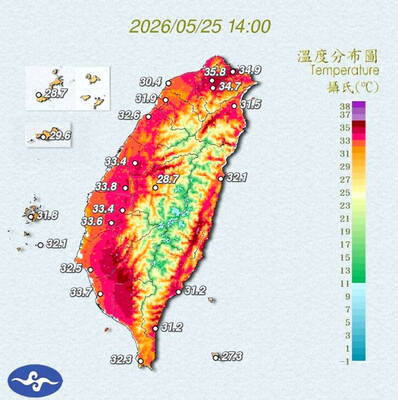
STAY COOL: The HPA recommended that people stay hydrated, use air-conditioning or fans while indoors, wear loose-fitting clothes and walk in the shade while outdoors Employers must implement measures such as installing cooling equipment, and providing drinking water and rest breaks for outdoor workers starting from Monday next week, the Taipei Department of Labor said on Sunday. Employers who fail to comply could face fines of NT$30,000 to NT$300,000 under the Occupational Safety and Health Act (職業安全衛生法), the department said. Businesses in Taipei employing fewer than 100 workers, as well as registered self-employed workers with labor insurance coverage, could receive on-site assessments and guidance from occupational safety consultants to help them apply for central government subsidies to implement or improve heat-protection measures, it said. Under the Ministry of

NATIONAL SECURITY: Authorities are working to confirm the identities of the military personnel involved and investigating possible illegal conduct and regulatory violations Authorities are probing possible national security implications after Kinmen police and immigration officers on Sunday found a Chinese woman allegedly posing as a tourist while engaging in prostitution involving more than 10 military personnel. The woman, surnamed Chen (陳), has since been deported, authorities said, adding that investigators are still working to confirm the identities of those implicated, as the records only listed code names and aliases. The case stemmed from a report received by the Kinmen District Prosecutors’ Office on Friday last week from the Jinhu Precinct of the Kinmen County Police Bureau. On Sunday, police, along with the National Immigration


 RSS
RSS