


The Taipei District Prosecutors' Office today indicted six people on suspicion of defrauding late Taiya Group chairman Shen Yu-hsiung (沈裕雄) of nearly NT$5 billion (US$169.38 million).
The suspected leader of the scheme was Lo Pei-wen (羅佩雯), who was charged with fraud and money laundering along with Cheng Chun-chun (鄭淳駿), Yang Kuo-lung (楊國隆), Hsieh Tsung-han (謝宗翰), Lo Wen-chieh (羅文傑) and Chan Yi-ling (詹依苓), prosecutors said.
Lo Pei-wen, Cheng and Hsieh have been detained and held incommunicado during the investigation, and their cases are to be transferred to the Taipei District Court, which would decide whether to extend their detention, prosecutors said.

Photo: CNA
Lo Pei-wen served time for fraud involving false claims of profits from plane ticket arbitrage between 2008 and 2011, they said.
She obtained parole in June 2014, but was facing financial problems in 2015 and convinced 10 people to invest more than NT$525 million with her, repaying early investors with high interest using funds received from later investors, prosecutors said.
Lo Pei-wen is suspected of defrauding Shen of more than NT$4.88 billion after meeting the clothing company chairman through Cheng, prosecutors said, adding that Cheng allegedly helped Lo Pei-wen receive money from Shen using his personal bank accounts
In a separate scheme, Lo Pei-wen allegedly defrauded Shen of an additional NT$54.5 million and US$7.14 million between July 2022 and February 2023 by falsely claiming she could assist with immigration investments in countries such as Australia, Mexico and the UK, prosecutors said.
Shen died in October 2023, and his family filed a complaint after repeatedly having trouble reconciling his accounts.
Prosecutors said that Lo Pei-wen transferred her criminal proceeds to her ex-husband Hsieh, who used the funds to open a restaurant and buy property in Australia.
She also sent money to her brother Lo Wen-chieh and sister-in-law Chan under false loan agreements to fund restaurants and property purchases, prosecutors said.
To get some of the funds back, the Shilin Branch of the Administrative Enforcement Agency auctioned 130 luxury items seized from Lo Pei-wen, raising NT$21.41 million in two sales held in May and June, prosecutors added.
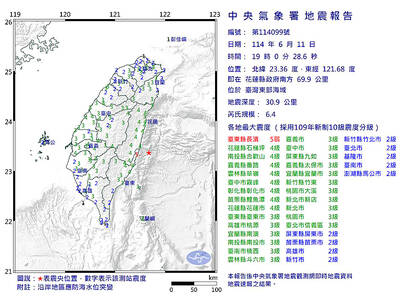
A magnitude 6.4 earthquake struck off the coast of Hualien County in eastern Taiwan at 7pm yesterday, the Central Weather Administration (CWA) said. The epicenter of the temblor was at sea, about 69.9km south of Hualien County Hall, at a depth of 30.9km, it said. There were no immediate reports of damage resulting from the quake. The earthquake’s intensity, which gauges the actual effect of a temblor, was highest in Taitung County’s Changbin Township (長濱), where it measured 5 on Taiwan’s seven-tier intensity scale. The quake also measured an intensity of 4 in Hualien, Nantou, Chiayi, Yunlin, Changhua and Miaoli counties, as well as
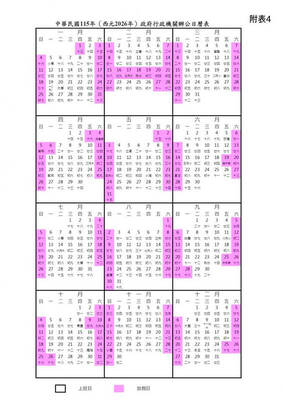
Taiwan is to have nine extended holidays next year, led by a nine-day Lunar New Year break, the Cabinet announced yesterday. The nine-day Lunar New Year holiday next year matches the length of this year’s holiday, which featured six extended holidays. The increase in extended holidays is due to the Act on the Implementation of Commemorative and Festival Holidays (紀念日及節日實施條例), which was passed early last month with support from the opposition Chinese Nationalist Party (KMT) and Taiwan People’s Party. Under the new act, the day before Lunar New Year’s Eve is also a national holiday, and Labor Day would no longer be limited

COMMITMENTS: The company had a relatively low renewable ratio at 56 percent and did not have any goal to achieve 100 percent renewable energy, the report said Pegatron Corp ranked the lowest among five major final assembly suppliers in progressing toward Apple Inc’s commitment to be 100 percent carbon neutral by 2030, a Greenpeace East Asia report said yesterday. While Apple has set the goal of using 100 percent renewable energy across its entire business, supply chain and product lifecycle by 2030, carbon emissions from electronics manufacturing are rising globally due to increased energy consumption, it said. Given that carbon emissions from its supply chain accounted for more than half of its total emissions last year, Greenpeace East Asia evaluated the green transition performance of Apple’s five largest final
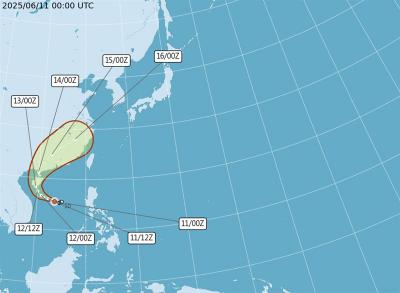
The first tropical storm of the year in the western North Pacific, Wutip (蝴蝶), has formed over the South China Sea and is expected to move toward Hainan Island off southern China, the Central Weather Administration (CWA) said today. The agency said a tropical depression over waters near the Paracel and Zhongsha islands strengthened into a tropical storm this morning. The storm had maximum sustained winds near its center of 64.8kph, with peak gusts reaching 90kph, it said. Winds at Beaufort scale level 7 — ranging from 50kph to 61.5kph — extended up to 80km from the center, it added. Forecaster Kuan Hsin-ping


 RSS
RSS