


National Taiwan University Hospital (NTUH) at a news conference on Friday lauded the 10-year survival rate of 75 percent for people who had pediatric liver transplants there over the past 30 years and highlighted two successful procedures involving Indonesian children.
“All the anatomical structures [in children’s livers] are very small,” making pediatric liver transplants more challenging than adult ones, said Hu Rey-heng (胡瑞恒), an attending physician in NTUH’s Department of Surgery.
Other factors such as limited abdominal space, a shortage of suitable donors and the need for precise dosing — as children have lower tolerance for excess medication — also pose significant challenges to the success of pediatric liver transplants, Hu said.

Photo: CNA
Despite the complexities, the hospital has been performing pediatric liver transplants — defined as transplants received by people under the age of 18 — since 1992, with about 200 procedures to date, he said.
Of the 174 procedures performed between January 1992 and December 2021, the five-year survival rate was 85 percent and the 10-year survival rate was 75 percent, with 83 percent of the patients requiring the surgery due to cholestatic diseases, he said.
Cholestatic diseases are conditions in which the flow of bile from the liver is reduced or blocked, with examples including biliary atresia, a blockage in the ducts that can lead to liver damage or death if left untreated.
Among those who have undergone a transplant at NTUH are 11-year-old Sherlyn Aurelia and 10-year-old David Kenrich Huang, both Indonesians born with biliary atresia.
“Sherlyn’s condition was more critical when she first arrived, so she spent some time in the intensive care unit before the transplant,” Hu said.
The girl had undergone an unsuccessful Kasai operation — aimed at re-establishing bile flow from the liver into the intestine — in Malaysia to treat biliary atresia before being referred to NTUH in August 2014, he said.
After a 10-hour surgery at NTUH in September 2014, Sherlyn, who was one at the time, received part of a liver from her mother.
Checkups at NTUH every six months have shown that she has recovered well, the hospital said.
After learning about Sherlyn’s case, Huang’s father contacted NTUH seeking treatment for his son, who also had biliary atresia.
The hospital agreed and gave the son part of his father’s liver in a living-donor transplant at the hospital in 2016, when he was just one year old, the hospital said.
Now both in good health, the two children and their families at the news conference expressed gratitude to the NTUH medical team for their years of care.
Lee Yi-hsuan (李怡萱), deputy executive officer of NTUH’s International Medical Service Center, said that the hospital has treated more than 2,000 international patients requiring hospitalization through referrals from overseas medical institutions.
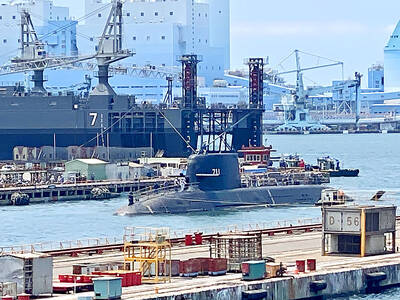
AGING: While Japan has 22 submarines, Taiwan only operates four, two of which were commissioned by the US in 1945 and 1946, and transferred to Taiwan in 1973 Taiwan would need at least 12 submarines to reach modern fleet capabilities, CSBC Corp, Taiwan chairman Chen Cheng-hung (陳政宏) said in an interview broadcast on Friday, citing a US assessment. CSBC is testing the nation’s first indigenous defense submarine, the Hai Kun (海鯤, Narwhal), which is scheduled to be delivered to the navy next month or in July. The Hai Kun has completed torpedo-firing tests and is scheduled to undergo overnight sea trials, Chen said on an SET TV military affairs program. Taiwan would require at least 12 submarines to establish a modern submarine force after assessing the nation’s operational environment and defense

A white king snake that frightened passengers and caused a stir on a Taipei MRT train on Friday evening has been claimed by its owner, who would be fined, Taipei Rapid Transit Corp (TRTC) said yesterday. A person on Threads posted that he thought he was lucky to find an empty row of seats on Friday after boarding a train on the Bannan (Blue) Line, only to spot a white snake with black stripes after sitting down. Startled, he jumped up, he wrote, describing the encounter as “terrifying.” “Taipei’s rat control plan: Release snakes on the metro,” one person wrote in reply, referring
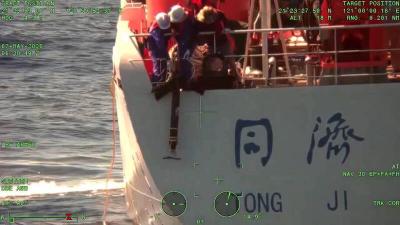
The coast guard today said that it had disrupted "illegal" operations by a Chinese research ship in waters close to the nation and driven it away, part of what Taipei sees a provocative pattern of China's stepped up maritime activities. The coast guard said that it on Thursday last week detected the Chinese ship Tongji (同濟號), which was commissioned only last year, 29 nautical miles (54km) southeast of the southern tip of Taiwan, although just outside restricted waters. The ship was observed lowering ropes into the water, suspected to be the deployment of scientific instruments for "illegal" survey operations, and the coast
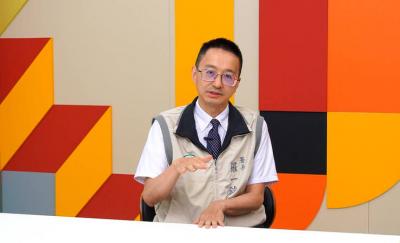
Taiwan’s two cases of hantavirus so far this year are on par with previous years’ case numbers, and the government is coordinating rat extermination work, so there should not be any outbreaks, Centers for Disease Control (CDC) Director-General Philip Lo (羅一鈞) said today in an interview with the Liberty Times (the Taipei Times’ sister newspaper). An increase in rat sightings in Taipei and New Taipei City has raised concerns about the spread of hantavirus, as rats can carry the disease. In January, a man in his 70s who lived in Taipei’s Daan District (大安) tested positive posthumously for hantavirus, Taiwan’s


 RSS
RSS