


The Ministry of Foreign Affairs has raised its travel advisories for Israel and Iran amid rapidly escalating tensions in the Middle East and urged Taiwanese in Iran to leave immediately for their safety.
The travel advisory for Israel was raised to Level 3 (orange), which means Taiwanese are advised to avoid traveling there unless absolutely necessary, it said on Friday.
The ministry last year raised the alert for the Israel-Lebanon border region to Level 4 (red), the highest in its four-tier system, due to frequent cross-border hostilities following rocket exchanges and Israeli airstrikes targeting Hezbollah positions in southern Lebanon.
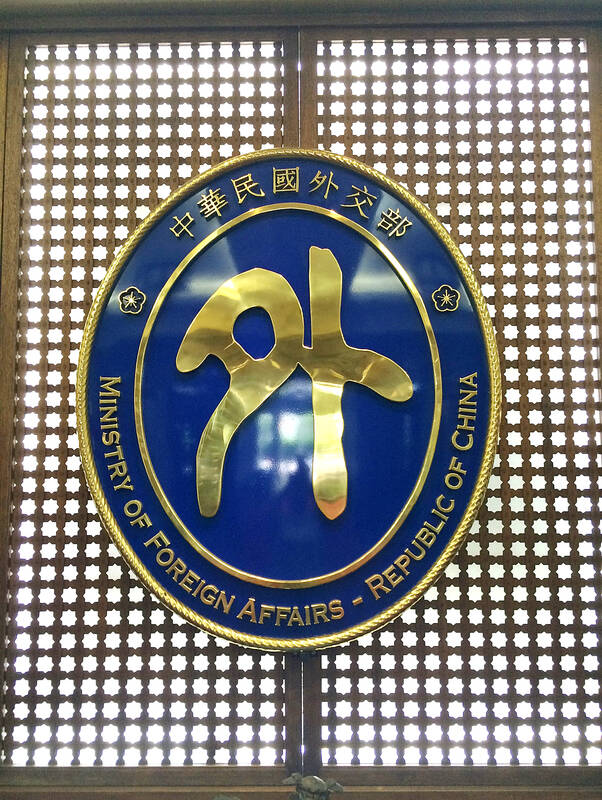
Photo: Lu Yi-hsuan, Taipei Times
The ministry also raised the alert for Iran to Level 4 on Friday, urging Taiwanese there to leave as soon as possible.
The announcement came hours after Israel launched an airstrike against Iran, targeting the Iranian nuclear program, and key government figures and nuclear scientists.
Israeli Prime Minister Benjamin Netanyahu has justified the attacks, saying that it was about Israel’s “survival” and accusing Iran of accelerating its nuclear program in recent months.
The tit-for-tat attacks between Israel and Iran have effectively plunged the ongoing negotiations between the US and Iran for a possible nuclear peace deal into uncertainty.
Ministry data showed that there are about 283 Taiwanese in Israel, including its overseas personnel and their families, residents and travelers, while there are seven Taiwanese in Iran.
All of them are safe, the ministry said, adding that its overseas missions in Israel and Dubai, the latter of which also manages affairs in Iran, remain in close contact with Taiwanese there and are ready to provide assistance if needed.
The ministry on Friday also said that its working holiday scheme for Israel, which had started accepting applications for the first time on June 1, has been suspended until further notice.
Taiwan and Israel signed a working holiday agreement in 2023, allowing up to 200 nationals aged 18 to 30 to work in the other country for up to one year.
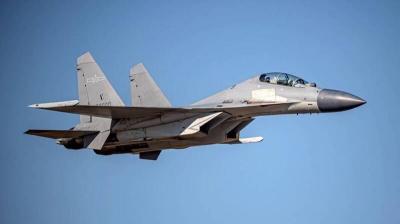
Eight Chinese naval vessels and 24 military aircraft were detected crossing the median line of the Taiwan Strait between 6am yesterday and 6am today, the Ministry of National Defense said this morning. The aircraft entered Taiwan’s northern, central, southwestern and eastern air defense identification zones, the ministry said. The armed forces responded with mission aircraft, naval vessels and shore-based missile systems to closely monitor the situation, it added. Eight naval vessels, one official ship and 36 aircraft sorties were spotted in total, the ministry said.
The Ministry of Foreign Affairs (MOFA) today said that if South Korea does not reply appropriately to its request to correct Taiwan’s name on its e-Arrival card system before March 31, it would take corresponding measures to alter how South Korea is labeled on the online Taiwan Arrival Card system. South Korea’s e-Arrival card system lists Taiwan as “China (Taiwan)” in the “point of departure” and “next destination” fields. The ministry said that it changed the nationality for South Koreans on Taiwan’s Alien Resident Certificates from “Korea” to “South Korea” on March 1, in a gesture of goodwill and based on the
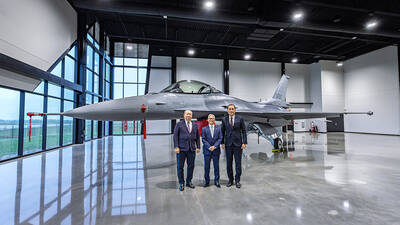
Taiwanese officials were shown the first of 66 F-16V fighter jets purchased by Taiwan from the United States, the Ministry of National Defense said yesterday, adding the aircraft has completed an initial flight test and is expected to be delivered later this year. A delegation led by Deputy Minister of National Defense Hsu Szu-chien (徐斯儉) visited Lockheed Martin’s F-16 C/D Block 70 (also known as F-16V) assembly line in South Carolina on March 16 to view the aircraft. The jet will undergo a final acceptance flight in the US before being delivered to Taiwan, the
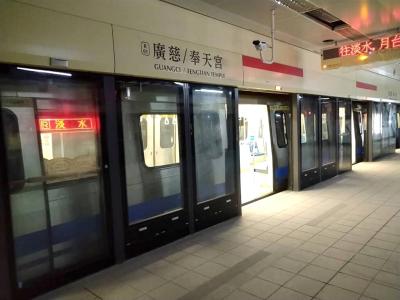
The New Taipei Metro's Sanyin Line and the eastern extension of the Taipei Metro's Tamsui-Xinyi Line (Red Line) are scheduled to begin operations in June, the National Development Council said today. The Red Line, which terminates at Xiangshan Station, would be connected by the 1.4km extension to a new eastern terminal, Guangci/Fengtian Temple Station, while the Sanyin Line would link New Taipei City's Tucheng and Yingge stations via Sanxia District (三峽). The council gave the updates at a council meeting reviewing progress on public construction projects for this year. Taiwan's annual public infrastructure budget would remain at NT$800 billion (US$25.08 billion), with NT$97.3


 RSS
RSS