

Aerial photographs of Hualien Air Base that appeared in a video posted on Chinese social media were digitally composed images and not taken by a drone that flew over the base, Minister of Defense Minister Wellington Koo (顧立雄) said yesterday.
The images appeared on Xiaohongshu (小紅書, known as RedNote in English) on Wednesday last week, a day after President William Lai’s (賴清德) first anniversary in office. The photographs appeared to be aerial shots taken by a drone, raising concerns of an undetected intrusion into Taiwan’s air space.
A video posted with the images used graphics to identify structures on the air base, such as barracks and hangars, and also showed general distances and other features.
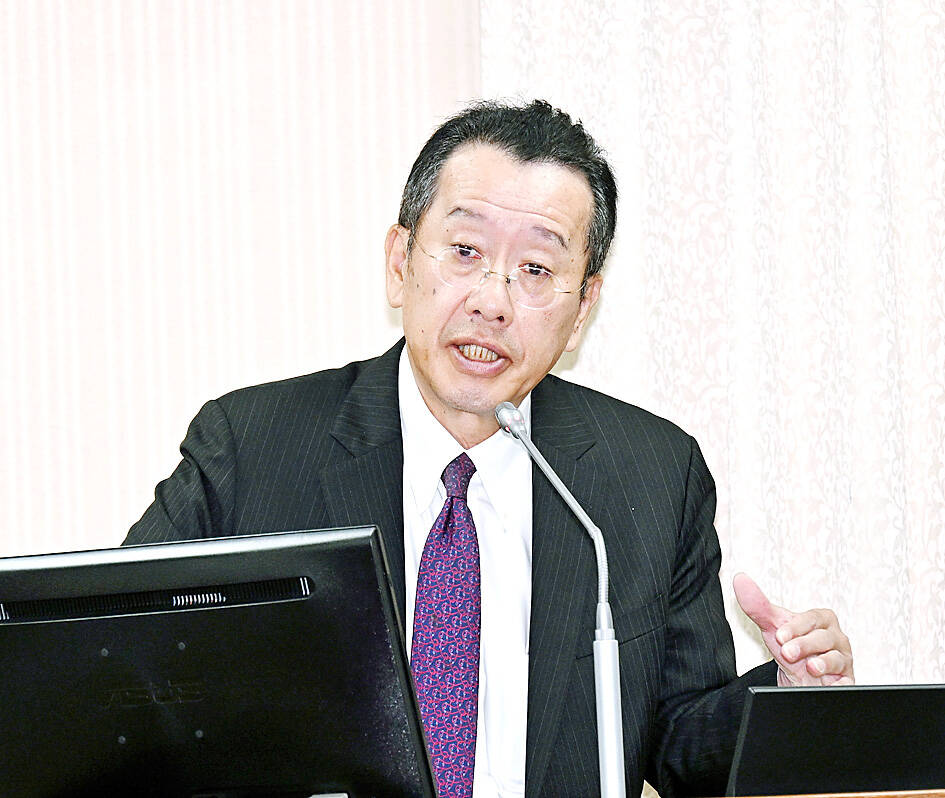
Photo: Fang Pin-chao, Taipei Times
Speaking to the media before attending a legislative committee meeting, Koo downplayed the images, saying that an internal analysis found they were created using 3D compositing techniques and were not captured by a drone filming the military base.
During the legislative session, lawmakers asked Koo if the video was part of a Chinese Communist Party cognitive warfare campaign. He said it did contain certain elements to suggest it was.
The military’s political warfare and public communications units need to respond swiftly and assertively to counter such actions, he said.
Although the air force said there was no drone intrusion into the airspace around Hualien Air Base, Air Force Chief of Staff Lee Ching-jan (李慶然) said that they could be difficult to detect, especially given that Taiwan had not yet completed the installation of anti-drone systems.
Asked by legislators if the military is capable of visually detecting drones, Lee said that visual detection was extremely difficult at higher altitudes and against complex backgrounds, and made even more difficult given that most drones are relatively small.
The construction of active and passive defense systems began in 2022, and parts of the bases where the systems would be located have been established, he said.
Once all facilities are fully equipped, “any drone intrusions will definitely be detected,” he said, without specifying when the anti-drone systems would be completed and fully activated.
Regarding the progress of the army’s procurement of 26 sets of anti-drone systems, Army Chief of Staff Lieutenant General Chen Chien-yi (陳建義) said the systems were primarily for Taiwan’s outlying islands.
The procurement and production agreement was approved early last month, with the first batch of 13 systems scheduled for delivery in early October, while the second batch is set for delivery next year, he said.

A total of 400 foreign “high- level” professionals have been naturalized as Republic of China (Taiwan) citizens over the past decade as the government has eased nationality rules to attract talent from a wider range of fields, the Ministry of the Interior said yesterday. The 400th high-level professional, who works in the electronics industry, was approved for ROC citizenship on Aug. 26, the MOI said. The MOI quoted the newly naturalized citizen as saying that Taiwan is a leader in fields such as semiconductors, electronics manufacturing, artificial intelligence development and energy technology. He also said
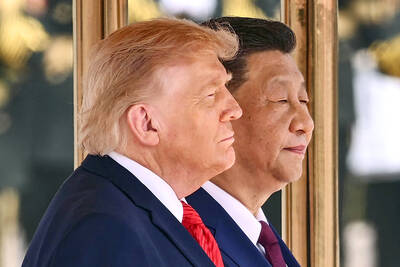
China has warned that it could cancel a planned US-China leaders’ summit if Washington approves new arms sales to Taiwan, a Japanese media outlet quoted sources as saying yesterday. US President Donald Trump, “apparently eager to showcase some diplomatic achievements ahead of November’s midterm congressional elections, places great importance on holding the summit with Chinese President Xi Jinping (習近平),” Japan’s Kyodo News reported. “While preparing for Xi’s upcoming trip, China has restated its position that the Taiwan issue is a ‘red line’ in bilateral relations,” the report said. The report said that when Xi met with Trump in Beijing in May, Xi said
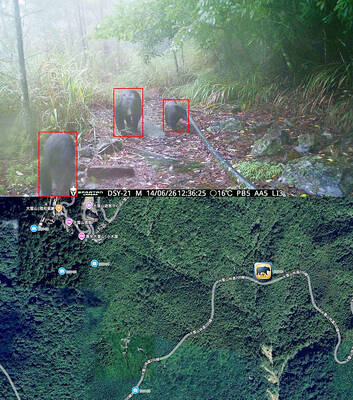
RARE PEEK: The footage released showed one of the bears staying in a cave for as long as 70 days, providing the first record of Formosan black bear’s overwintering The Forestry and Nature Conservation Agency yesterday released tracking records of released Formosan black bears for the first time, showing that they get much closer to human settlements than previously thought. The agency said it had captured two bears, Da Qu-ali (達古阿里) and Aziman (阿里曼), in indigenous villages in Hualien County and began to track them with a camera-mounted satellite collar after releasing them back into the wild. The results confirmed that the bears have moved from deep mountain areas into lowland hills closer to human communities, leading to an increase in human-bear conflicts, it said. The agency has introduced artificial intelligence-assisted early

DIPLOMATIC TOUR: Chinese President Xi Jinping began a series of overseas visits last month to Kyrgyzstan, Egypt and India, aimed at securing leverage, an official said Recent Chinese diplomatic and military moves are aimed at creating pressure ahead of a planned meeting between Chinese President Xi Jinping (習近平) and US President Donald Trump, National Security Council adviser Huang Chung-yen (黃重諺) said. Trump when visiting China in May extended an invitation to Xi to visit Washington on Sept. 24. China is yet to officially announce plans for Xi’s visit to the US. In an interview with the Liberty Times (sister paper of the Taipei Times) on Thursday, Huang said Xi’s overseas visits, China’s “gray zone” activities along the First Island Chain and efforts to expand its trade surplus with the


 RSS
RSS