


An exhibition that traces the roots of Taiwan’s pop music opened in Taipei yesterday, featuring three never-released Taiwanese music gems from the 1930s, when Taiwan was still under Japanese colonial rule.
“Modern Era: The Dawn of Pop Music,” a Chinese-English show hosted by the Taipei Music Center, is to run until Aug. 10 on the second floor of the center’s Cultural Cube.
Wang Ying-fen (王櫻芬), the exhibition’s chief consultant, said the show represents the best of private collections of its curators, who generously loaned their precious collectibles to make the show a truly unique experience that people are unlikely to find elsewhere.
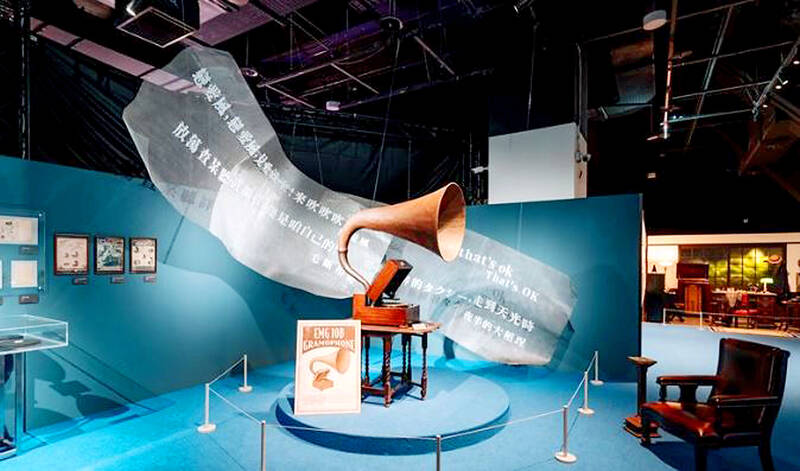
Photo courtesy of the Taipei Music Center
Among the exhibits are vintage gramophones and phonographs, as well as colorful metal boxes used to store styli for playing 78rpm shellac records.
Wang, a distinguished professor at National Taiwan University’s Graduate Institute of Musicology, said visitors can listen to three previously unreleased songs.
One is a rare recording by the late Teng Yu-hsien (鄧雨賢), often hailed as “the father of Taiwanese popular songs,” singing his original composition Song By The Sea (臨海曲).
The other two are A Maiden’s Lament (閨女嘆) by Lin Shih-hao (林氏好), known as “Taiwan’s first soprano,” and Wife of a Military Laborer (軍夫之妻) by Chun-chun (純純), a popular female singer in the 1930s.
Visitors can also listen toBrazil Tea Shop (巴西喫茶店), the lyrics of which were written by Chen Jyun-yu (陳君玉) 90 years ago, but had never been set to music until now.
Taipei Music Center chairwoman Kay Huang (黃韻玲) brings the song fully up to date with a stirring melody and a Latin American beat, providing a backdrop on which Golden Melody Award best male Taiwanese singer Henry Hsu (許富凱) laid his vocals.
The show also features renderings of tabloids from the 1930s, printed in Chinese and English, that have love stories behind the hit songs and profiles of some of the top female singers at the time, offering insights into the songs and the entertainment industry in pre-World War II Taiwan.
A long projection screen shows people dressed in kimonos performing dance moves popular at the time.
Back then, each song was choreographed, and records came with “dance scores” that instructed people on how to dance to the music, Wang said.
“[But] I think that we should not just focus on the rhythms, the harmonies and the melodies of the music,” she said. “The bottom line is: We should know our roots, and I hope that this exhibition will remind us all of our roots, no matter how much trends and creations have evolved.”
Tickets are NT$200, NT$150 for students and residents of Neihu (內湖) and Nangang (南港) districts, NT$100 for people aged 65 or older, and free for people with a disability certificate.
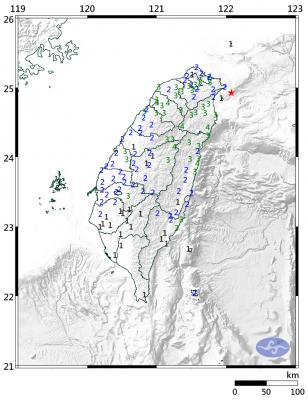
A magnitude 6.1 earthquake struck off the coast of Yilan County at 8:39pm tonight, the Central Weather Administration (CWA) said, with no immediate reports of damage or injuries. The epicenter was 38.7km east-northeast of Yilan County Hall at a focal depth of 98.3km, the CWA’s Seismological Center said. The quake’s maximum intensity, which gauges the actual physical effect of a seismic event, was a level 4 on Taiwan’s 7-tier intensity scale, the center said. That intensity level was recorded in Yilan County’s Nanao Township (南澳), Hsinchu County’s Guansi Township (關西), Nantou County’s Hehuanshan (合歡山) and Hualien County’s Yanliao (鹽寮). An intensity of 3 was
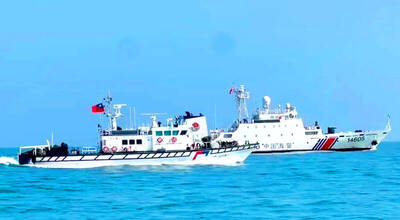
Instead of focusing solely on the threat of a full-scale military invasion, the US and its allies must prepare for a potential Chinese “quarantine” of Taiwan enforced through customs inspections, Stanford University Hoover fellow Eyck Freymann said in a Foreign Affairs article published on Wednesday. China could use various “gray zone” tactics in “reconfiguring the regional and ultimately the global economic order without a war,” said Freymann, who is also a nonresident research fellow at the US Naval War College. China might seize control of Taiwan’s links to the outside world by requiring all flights and ships entering or leaving Taiwan
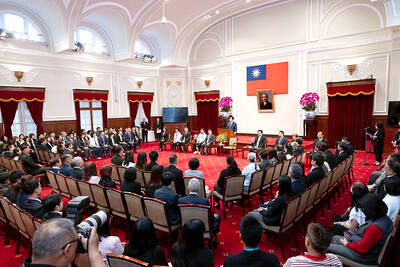
The next minimum wage hike is expected to exceed NT$30,000, President William Lai (賴清德) said yesterday during an award ceremony honoring “model workers,” including migrant workers, at the Presidential Office ahead of Workers’ Day today. Lai said he wished to thank the awardees on behalf of the nation and extend his most sincere respect for their hard work, on which Taiwan’s prosperity has been built. Lai specifically thanked 10 migrant workers selected for the award, saying that although they left their home countries to further their own goals, their efforts have benefited Taiwan as well. The nation’s industrial sector and small businesses lay
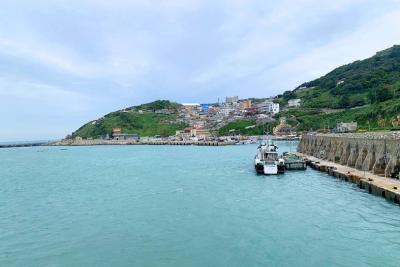
Taiwan has activated backup communications for its northernmost territory, the remote and strategically located island of Dongyin (東引), after poor weather conditions apparently shifted the wreckage of a ship onto an undersea cable causing it to break. The vulnerability of undersea communication cables linking Taiwan with its outlying islands has been a persistent cause of concern for Taipei, whose government has on several occasions blamed Chinese ships for intentionally causing damage. Dongyin, home to about 1,500 people, sits in a strategic position at the top of the Taiwan Strait and the island has a heavy military presence. It does not have an


 RSS
RSS