


Coral surrounding the Pratas Islands (Dongsha Islands, 東沙群島) could become extinct in two years, conservationists warned on Thursday, after a study showed that starfish have devoured 19 percent of the population.
Chinese fishers’ overharvesting of Triton’s trumpet sea snails in the seas near the islands has sparked runaway growth in the crown-of-thorns starfish population, Academia Sinica Biodiversity Research Center researcher Jeng Ming-shiou (鄭明修) told a news conference.
The reef-eating starfish’s unchecked population growth has had a devastating effect on the corals on the atoll’s periphery, he said.
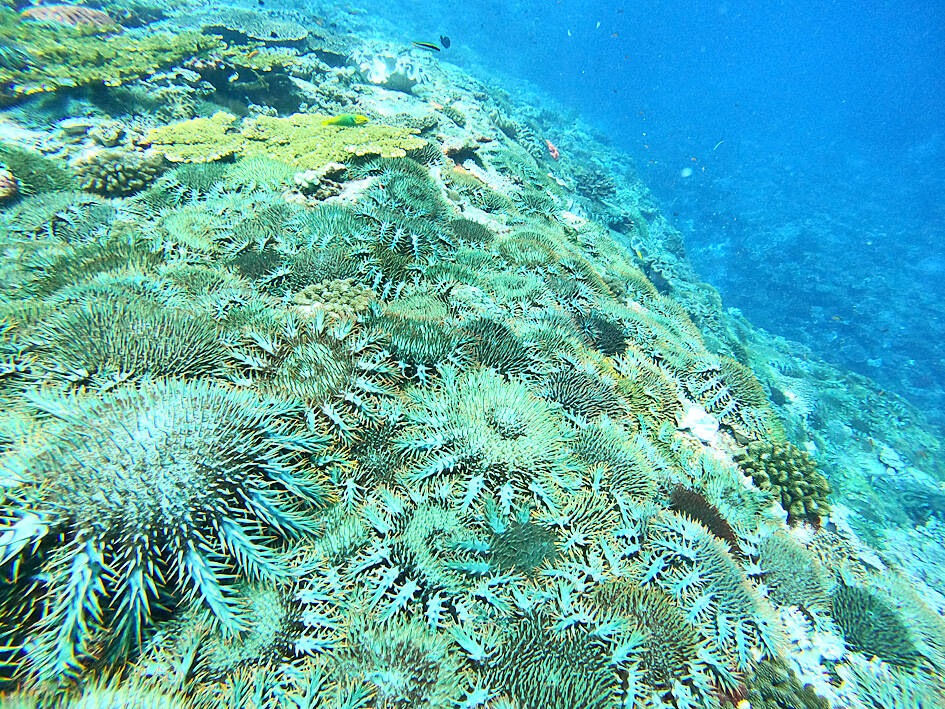
Photo courtesy of the Taiwanese Coral Reef Society
Last year, Jeng, who is honorary chairman of the Taiwanese Coral Reef Society, said he organized a volunteer group named the Dongsha Commandos who culled 13,976 starfish by using non-polluting acetic acid.
The volunteers in March and last month eliminated another 33,748 starfish around the islands, an alarming number, as only 29,000 starfish were previously believed to inhabit the area.
Furthermore, the starfish seem to be migrating to the east at a speed of 250m a week, putting the coral in the Pratas Islands’ inner lagoon under threat, he said.
Volunteers also reported spotting starfish off Keelung, Green Island (綠島) and Kenting, he said.
Studies on the reefs off Guam suggest that the corals near the Pratas Islands would be depleted in two years, to be followed by the reefs in the atoll’s lagoon, Jeng said.
The government must launch a robust, multi-agency response and allow volunteers to play a larger role in conservation efforts if it wishes to prevent an environmental disaster, he said.
A factor hindering the work of volunteers is the military, which has restricted access to the waters around the atoll, he said.
The cost of inaction would be high, as the islands’ reefs could potentially generate profits estimated at NT$33.5 billion (US$1.1 billion) in fishing and tourism, Jeng said.
Officials should target the starfish during their spawning season this month and next, when culling would be most effective, he added.
The National Park Service said it had allocated NT$20 million to handle the starfish crisis over the past two years.
The service is leading a growing number of volunteer teams and ships to study and control the starfish population with the assistance of Academia Sinica, the Coast Guard Administration and private-sector partners, it said.
Research programs are being conducted toward establishing mechanisms to predict starfish population booms, as recent scientific literature suggests some kind of cyclical pattern is in play, it said.
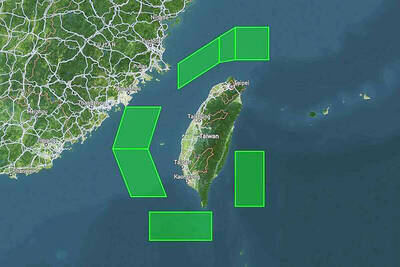
The disruption of 941 flights in and out of Taiwan due to China’s large-scale military exercises was no accident, but rather the result of a “quasi-blockade” used to simulate creating the air and sea routes needed for an amphibious landing, a military expert said. The disruptions occurred on Tuesday and lasted about 10 hours as China conducted live-fire drills in the Taiwan Strait. The Civil Aviation Administration (CAA) said the exercises affected 857 international flights and 84 domestic flights, affecting more than 100,000 travelers. Su Tzu-yun (蘇紫雲), a research fellow at the government-sponsored Institute for National Defense and Security Research, said the air
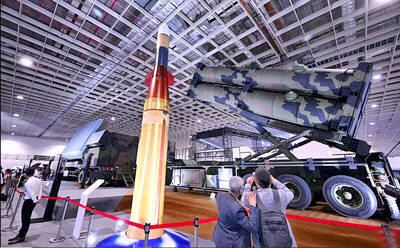
Taiwan is to commence mass production of the Tien Kung (天弓, “Sky Bow”) III, IV and V missiles by the second quarter of this year if the legislature approves the government’s NT$1.25 trillion (US$39.78 billion) special defense budget, an official said yesterday. Commenting on condition of anonymity, a defense official with knowledge of the matter said that the advanced systems are expected to provide crucial capabilities against ballistic and cruise missiles for the proposed “T-Dome,” an advanced, multi-layered air defense network. The Tien Kung III is an air defense missile with a maximum interception altitude of 35km. The Tien Kung IV and V

Trips for more than 100,000 international and domestic air travelers could be disrupted as China launches a military exercise around Taiwan today, Taiwan’s Civil Aviation Administration (CAA) said yesterday. The exercise could affect nearly 900 flights scheduled to enter the Taipei Flight Information Region (FIR) during the exercise window, it added. A notice issued by the Chinese Civil Aviation Administration showed there would be seven temporary zones around the Taiwan Strait which would be used for live-fire exercises, lasting from 8am to 6pm today. All aircraft are prohibited from entering during exercise, it says. Taipei FIR has 14 international air routes and
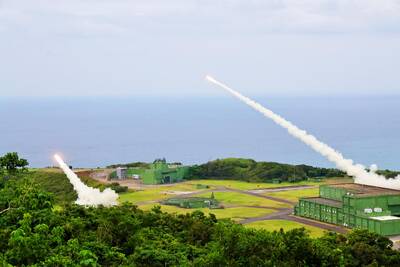
Taiwan lacks effective and cost-efficient armaments to intercept rockets, making the planned “T-Dome” interception system necessary, two experts said on Tuesday. The concerns were raised after China’s military fired two waves of rockets during live-fire drills around Taiwan on Tuesday, part of two-day exercises code-named “Justice Mission 2025.” The first wave involved 17 rockets launched at 9am from Pingtan in China’s Fujian Province, according to Lieutenant General Hsieh Jih-sheng (謝日升) of the Office of the Deputy Chief of the General Staff for Intelligence at the Ministry of National Defense. Those rockets landed 70 nautical miles (129.6km) northeast of Keelung without flying over Taiwan,


 RSS
RSS