


The addition of two new categories eligible for National Health Insurance (NHI) payouts under Advance Care Planning (ACP), starting today, is expected to benefit 1.8 million people nationwide, the National Health Insurance Administration (NHIA) said yesterday.
Elderly people with severe injuries or illnesses, and elderly people with multiple chronic diseases who are eligible for the NHIA Integrated Family Doctor Care Program, or the NHIA Hospital Care Program, would be eligible for ACP payouts, NHIA Medical Affairs Division Director Chen Yi-chieh (陳依婕) said.
The requirement for people to sign advance decision forms to undergo ACP consultation, which costs NT$2,000 to NT$3,500, has been the main obstacle, resulting in only 103,000 people having signed them, representing less than 1 percent of all adults in Taiwan, the NHIA said.

Photo: Taipei Times
There were originally two methods of NHI payouts for ACP sessions: one was a one-time payout of 3,000 points, and the other was paying 1,500 points to those who had already undergone a palliative medicine family consultation, Chen said.
The payout method would change to one-time payouts of 3,000 points for all eligible people, Chen said.
Each NHI point is equivalent to NT$0.9.
Since the promulgation of the Patients’ Right to Autonomy Act (病人自主權利法) in 2019, Taiwanese can sign an advance decision form to accept or refuse life-sustaining treatment, thereby opting for a dignified end of life.
Starting in July last year, the NHIA included ACP fees under a once per lifetime NHI payout for four categories of people, including people who fit the criteria as laid out under the Hospice Palliative Care Act (安寧緩和醫療條例), people with mild dementia, but can still function autonomously, people who fit the requirements of conditions that the Ministry of Health and Welfare deem “unbearable and incurable,” and those who are the target of the ministry’s Integrated Home Care Program.
However, the NHIA has the precondition that people sign the document while hospitalized.
As of the end of March, only 155 people across 51 hospitals have applied for the NHIA payout for ACP fees, NHIA statistics showed.

“China is preparing to invade Taiwan,” Deputy Minister of Foreign Affairs Francois Wu (吳志中) said in an exclusive interview with British media channel Sky News for a special report titled, “Is Taiwan ready for a Chinese invasion?” the Ministry of Foreign Affairs said today in a statement. The 25-minute-long special report by Helen Ann-Smith released yesterday saw Sky News travel to Penghu, Taoyuan and Taipei to discuss the possibility of a Chinese invasion and how Taiwan is preparing for an attack. The film observed emergency response drills, interviewed baseball fans at the Taipei Dome on their views of US President
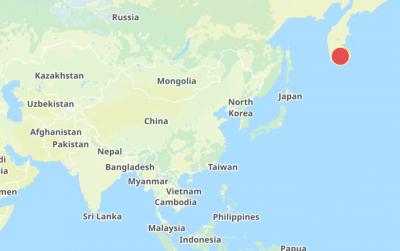
The Central Weather Administration (CWA) today issued a "tsunami watch" alert after a magnitude 8.7 earthquake struck off the Kamchatka Peninsula in northeastern Russia earlier in the morning. The quake struck off the east coast of the Kamchatka Peninsula at 7:25am (Taiwan time) at a depth of about 19km, the CWA said, citing figures from the Pacific Tsunami Warning Center. The CWA's Seismological Center said preliminary assessments indicate that a tsunami could reach Taiwan's coastal areas by 1:18pm today. The CWA urged residents along the coast to stay alert and take necessary precautions as waves as high as 1m could hit the southeastern

ECONOMIC BENEFITS: The imports from Belize would replace those from Honduras, whose shrimp exports have dropped 67 percent since cutting ties in 2023 Maintaining ties with Taiwan has economic benefits, Ministry of Foreign Affairs officials said yesterday, citing the approval of frozen whiteleg shrimp imports from Belize by the Food and Drug Administration (FDA) as an example. The FDA on Wednesday approved the tariff-free imports from Belize after the whiteleg shrimp passed the Systematic Inspection of Imported Food, which would continue to boost mutual trade, the ministry said. Taiwan’s annual consumption of whiteleg shrimps stands at 30,000 tonnes, far exceeding domestic production, the ministry said. Taiwan used to fill the gap by importing shrimps from Honduras, but purchases slumped after Tegucigalpa severed diplomatic ties with Taiwan

The Executive Yuan yesterday approved a southwestern extension of the Sanying MRT Line from New Taipei to Bade District (八德) in Taoyuan, with a goal of starting construction by late 2026. The 4.03-kilometer extension, featuring three new stations, will run from the current terminus at Yingtao Fude Station (LB12) in New Taipei City to Dannan Station (LB14), where it will connect with Taoyuan’s Green Line, New Taipei City Metro Corp said in a statement. This extension will follow the completion of core Sanying Line, a 14.29-kilometer medium-capacity system linking Tucheng (土城), Sansia (三峽)


 RSS
RSS