

Taiwan's National Development Council (NDC) has previewed proposals to allow high-earning foreign professionals to apply for permanent residence after only one year, while also extending the duration of its new digital nomad visa to a maximum of two years.
The draft changes, consisting of amendments to the Act for the Recruitment and Employment of Foreign Professionals, were put up for public review last week, and are expected to be sent to the Cabinet at the end of the 30-day commenting period in early May.
The changes would create a "global elite" category for foreign professionals earning more than NT$6 million (US$182,674) annually, which would allow those eligible to apply for permanent residence after only one year in Taiwan.
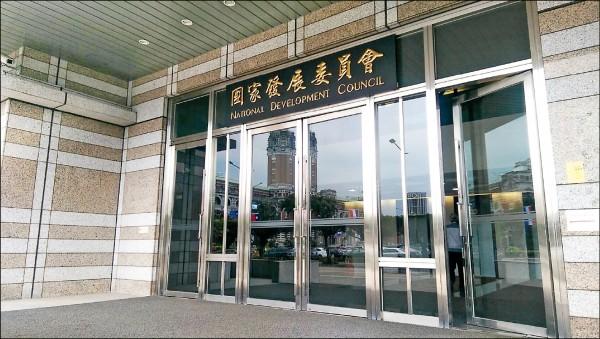
Photo: Taipei Times file photo
In contrast, holders of the current employment gold card must wait three years to apply for permanent residence.
Meanwhile, the proposal would extend the duration of the "digital nomad visitor visa" that Taiwan's government launched this year, from the current maximum of six months to up to two years.
The draft amendments would also add a new visa category to attract graduates of the world's top 200 ranked universities, in a program based on the United Kingdom's High Potential Individual (HPI) visa.
The NDC explained that while Taiwan currently offers a visitor visa for employment-seeking purposes, that option lacks incentives.
The proposed visa category for graduates of top universities would allow them to stay without finding a fixed employer, thus giving them the flexibility to take on individual contracts or engage in freelance work, the NDC said.
Following the public comment period, the draft proposal is to be sent to the Executive Yuan for approval, and must then be passed by the Legislature in order to become law.
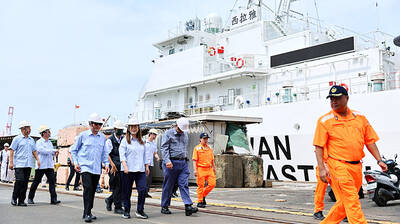
Ocean Affairs Council (OAC) Minister Kuan Bi-ling (管碧玲) on Wednesday said decommissioned coast guard vessels were given to the Philippines to enhance regional rescue capacity and would not affect Taiwanese fishers’ rights and benefits. Kuan made the remarks after confirmation on Tuesday that a 500-tonne Coast Guard Administration (CGA) patrol and rescue vessel would be given to the Philippine Coast Guard. The donation ceremony was reportedly done in Manila, but whether the vessel — previously numbered “CG123” and named Kinmen (金門) — has been handed over has yet to be confirmed. China’s Taiwan Affairs Office (TAO) on Wednesday criticized the donation for “taking
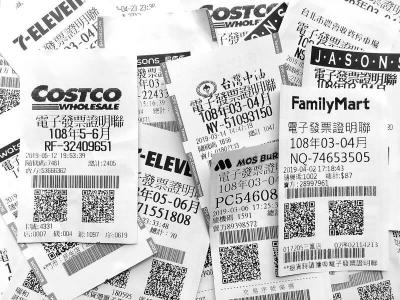
The Ministry of Finance today announced the winning numbers for the July-August uniform invoice lottery. The winning number for the NT$10 million (US$314,663) special prize is 89996565, while the winning number for the NT$2 million grand prize is 91098182. Three numbers were drawn for the NT$200,000 first prize: 54348835, 44991397 and 06595111. Those with receipts matching the last seven digits of any of the first-prize numbers can claim the NT$40,000 second prize, while those matching the last six digits qualify for the NT$10,000 third prize. Those whose receipts match the last five digits of the first-prize numbers are eligible for the NT$4,000 fourth prize,

The National Police Agency’s Third Special Police Corps yesterday said that from May to July, it intercepted five smuggling operations from China, seizing more than 70,000 counterfeit Beyblades with an estimated infringement value of NT$34.45 million (US$1.08 million). It added that any bootleg unit that reached the local market could present hidden health hazards to players. Beyblades, a line of spinning toy tops used in competitive gaming and developed in Japan by toy company Takara Tomy, have become popular in Taiwan, making them a target for fraudsters. The Third Special Police Corps, dedicated to safeguarding maritime borders and trade lines,
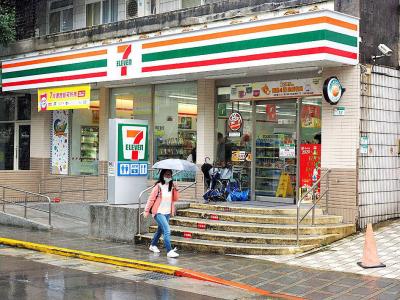
Five customers who made purchases at 7-Eleven stores across Taiwan won the top NT$10 million (US$313,716) special prize in the July-August uniform invoice lottery, including one who spent just NT$27 on photocopying, the convenience store chain said today. The five special prize winners made their purchases at stores in Taoyuan, Taipei, Taichung and Kaohsiung, 7-Eleven operator President Chain Store Corp said. The five winning purchases included NT$29 spent on snacks at a store in Taoyuan's Zhongli District (中壢), NT$27 on photocopying at a store in Taipei's Zhongzheng District (中正), NT$139 on City Cafe coffee and daily necessities at a store in Taipei's


 RSS
RSS