


A majority of the public is dissatisfied with the government’s measures to make housing affordable and to handle cases of school bullying, according to a survey by the National Human Rights Commission (NHRC).
The survey results, released with an accompanying report at a news conference yesterday, found that nearly 60 percent of 3,264 respondents were not satisfied with the government’s efforts in ensuring housing rights, particularly in housing affordability.
Such sentiment is more pronounced among people aged 40 to 49 than any other age group, with nearly 70 percent expressing dissatisfaction with the government’s housing policy.

Photo: George Tsorng, Taipei Times
The report, based on a survey commissioned by the NHRC conducted between Sept. 20 and Oct. 15 last year, identified rising housing prices, an unstable rental market and a shortage of affordable housing as the main reasons for public dissatisfaction.
In addition, approximately 62 percent of those polled considered the government’s measures to tackle school bullying unsatisfactory, including reporting mechanisms, responses and support systems in the aftermath.
The NHRC indicated in the report that the dissatisfaction might be related to a lack of transparency in the reporting mechanism, delayed responses and inadequate support resources.
According to the NHRC, the survey aimed to assess public awareness of human rights conditions in Taiwan and identify the human rights issues that are most important to the public.
The survey findings showed that the most pressing human rights issues for the public were those concerning labor rights, followed by the right to housing and education.
NHRC Vice Chairwoman Wang Yu-ling (王幼玲) called on the government to pour in more resources to improve working conditions and protections for workers.
The government should also double down on its efforts to increase affordable housing and reduce the disparity in education resources, the report said.
Michael Hsiao (蕭新煌), an NHRC adviser, said the survey showed Taiwan is a country that places great importance on human rights, with 88.4 percent of respondents agreeing human rights issues should be emphasized in society.
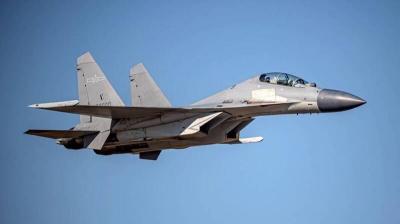
Eight Chinese naval vessels and 24 military aircraft were detected crossing the median line of the Taiwan Strait between 6am yesterday and 6am today, the Ministry of National Defense said this morning. The aircraft entered Taiwan’s northern, central, southwestern and eastern air defense identification zones, the ministry said. The armed forces responded with mission aircraft, naval vessels and shore-based missile systems to closely monitor the situation, it added. Eight naval vessels, one official ship and 36 aircraft sorties were spotted in total, the ministry said.
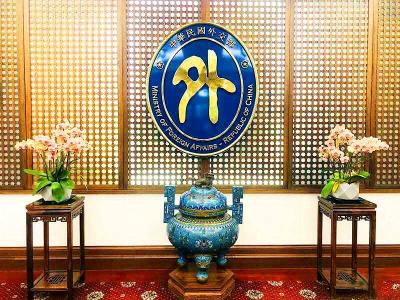
The Ministry of Foreign Affairs (MOFA) today said that if South Korea does not reply appropriately to its request to correct Taiwan’s name on its e-Arrival card system before March 31, it would take corresponding measures to alter how South Korea is labeled on the online Taiwan Arrival Card system. South Korea’s e-Arrival card system lists Taiwan as “China (Taiwan)” in the “point of departure” and “next destination” fields. The ministry said that it changed the nationality for South Koreans on Taiwan’s Alien Resident Certificates from “Korea” to “South Korea” on March 1, in a gesture of goodwill and based on the

Taiwanese officials were shown the first of 66 F-16V fighter jets purchased by Taiwan from the United States, the Ministry of National Defense said yesterday, adding the aircraft has completed an initial flight test and is expected to be delivered later this year. A delegation led by Deputy Minister of National Defense Hsu Szu-chien (徐斯儉) visited Lockheed Martin’s F-16 C/D Block 70 (also known as F-16V) assembly line in South Carolina on March 16 to view the aircraft. The jet will undergo a final acceptance flight in the US before being delivered to Taiwan, the
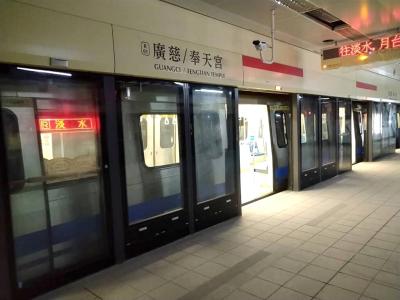
The New Taipei Metro's Sanyin Line and the eastern extension of the Taipei Metro's Tamsui-Xinyi Line (Red Line) are scheduled to begin operations in June, the National Development Council said today. The Red Line, which terminates at Xiangshan Station, would be connected by the 1.4km extension to a new eastern terminal, Guangci/Fengtian Temple Station, while the Sanyin Line would link New Taipei City's Tucheng and Yingge stations via Sanxia District (三峽). The council gave the updates at a council meeting reviewing progress on public construction projects for this year. Taiwan's annual public infrastructure budget would remain at NT$800 billion (US$25.08 billion), with NT$97.3


 RSS
RSS