


Men were more likely to be diagnosed with sexually transmitted infections (STIs) last year, mainly due to unsafe sexual practices, the Centers for Disease Control (CDC) said yesterday.
Last year saw 9,738 confirmed cases of syphilis and 7,605 cases of gonorrhea, with unprotected sex the main cause, the CDC said in a statement.
STIs primarily affect sexually active men younger than 50, it said.
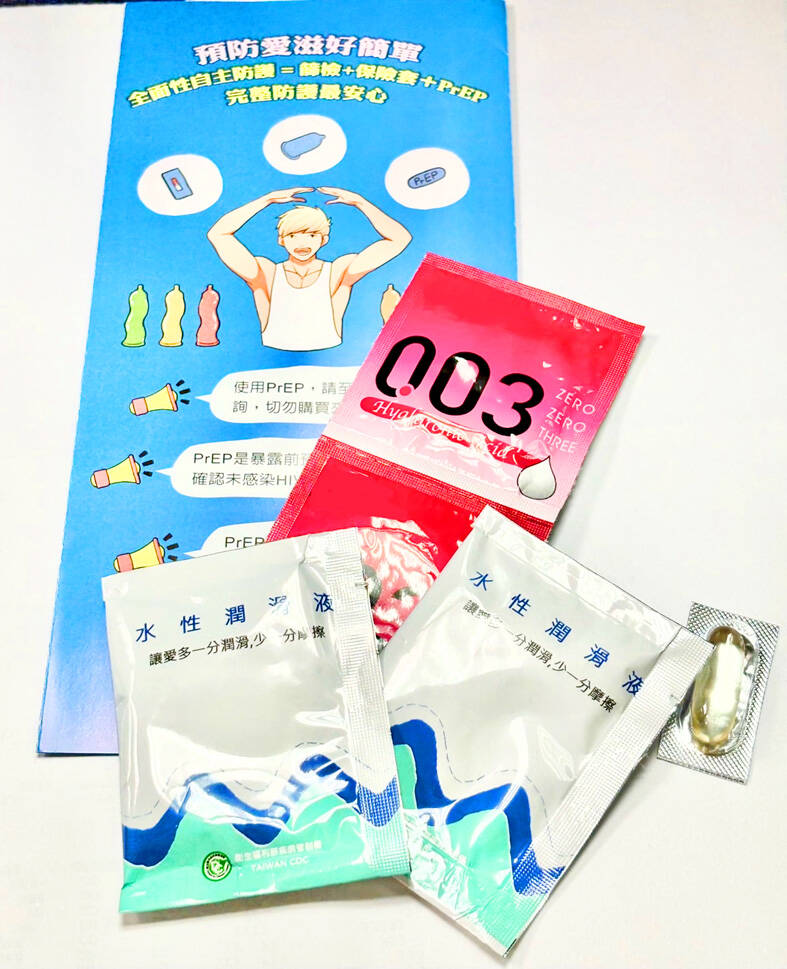
Photo courtesy of Taipei Veterans General Hospital via CNA
However, syphilis cases have decreased by 2 percent and gonorrhea cases by 8 percent from 2023, it added.
Although the number of cases is going down, syphilis cases in 2023 were the second-highest in five years, while gonorrhea remains among the top three most reported STIs, CDC spokeswoman Tseng Shu-hui (曾淑慧) told reporters.
Syphilis has a male-to-female reported case ratio of 5:1, while as many as 90 percent of gonorrhea cases were men, she said.
Syphilis is caused by the bacterium Treponema pallidum and spreads through direct contact with an infectious sore via skin-to-skin contact, mucous membranes and blood, with an incubation period of 10 to 90 days, she said.
The initial symptoms of syphilis are painless ulcers on the genitals, which can then develop into a rash, headache, fatigue and fever, she added.
If untreated, syphilis can cause tumors and life-threatening neurological and cardiovascular complications, Tseng said.
Gonorrhea is caused by the bacterium Neisseria gonorrhoeae, with symptoms presenting in men as pus-like discharge and painful urination from two to seven days after infection, while women are often asymptomatic, she said.
If left untreated, gonorrhea can lead to infertility in women, or spread to the rectum, throat or eyes, where it can cause gonococcal conjunctivitis, she added.
Both diseases are curable, although reinfection can occur, Tseng said.
The CDC recommends safe sex practices such as wearing a condom, using water-based lubricants and regular STI testing for those with active sex lives.
It also recommends that sexual partners encourage each other to get tested and treated if necessary to avoid “ping pong” style reinfections.

NATIONAL SECURITY: Authorities are working to confirm the identities of the military personnel involved and investigating possible illegal conduct and regulatory violations Authorities are probing possible national security implications after Kinmen police and immigration officers on Sunday found a Chinese woman allegedly posing as a tourist while engaging in prostitution involving more than 10 military personnel. The woman, surnamed Chen (陳), has since been deported, authorities said, adding that investigators are still working to confirm the identities of those implicated, as the records only listed code names and aliases. The case stemmed from a report received by the Kinmen District Prosecutors’ Office on Friday last week from the Jinhu Precinct of the Kinmen County Police Bureau. On Sunday, police, along with the National Immigration

GLOBALGIVING: ‘ Caving to external pressure is not acceptable for an organization that has cultivated justice reform and human rights for 30 years,’ one NGO said A slew of non-government organizations (NGOs) have withdrawn from the GlobalGiving fundraising platform after it announced it would use “Chinese Taipei” instead of “Taiwan” from next month. The Taiwan Good Rice Association wrote on Facebook on Friday that it was informed on April 28 via a teleconference call of the change, which was made because the platform wanted to operate in China. Taiwan Good Rice is to terminate all cooperative relationships with GlobalGiving in response to the platform’s “unilateral and non-negotiable” decision to remove references to Taiwan, the NGO said. “Taiwan is in the official name of Taiwan Good Rice Association and the

HEAVY WEATHER: Typhoon Jangmi is due to crash straight into the Ryukyus as airlines look to shift flights to larger aircraft or cancel flights to Okinawa entirely Taiwan’s international air carriers announced flight adjustments over the weekend as Typhoon Jangmi is forecast to hit the Ryukyu Islands today and tomorrow. The Central Weather Administration (CWA) upgraded Jangmi from a tropical storm to a typhoon at 8am yesterday, with the eye located 580km south of Naha city. It was moving north at 19kph. Today, China Airlines’ CI-120, CI-121, CI-122 and CI-123 flights between Taoyuan and Naha, Okinawa, have been canceled as well as CI-132 and CI-133 between Kaohsiung and Naha. EVA Air’s BR-112, BR-113, BR-186 and BR-185 flights between Taoyuan and Naha are also canceled. Low-cost carrier Tigerair Taiwan canceled IT-230,

Chinese Nationalist Party (KMT) Chairwoman Cheng Li-wun (鄭麗文) yesterday briefed her party’s Central Standing Committee regarding her scheduled visit to the US between Monday next week and June 16, saying that her purpose would be to persuade the US that the Republic of China (ROC) Constitution was a “one China” constitution that would foster stable and peaceful cross-strait relations. The ROC Constitution is the most important defense for all Taiwanese citizens, as it upholds our democracy and has contributed to our robust economy, which aligns with international and US interests, she said. “We would not be troublemakers and drag the US under,”


 RSS
RSS