


The government is considering imposing a fine on Taiwanese who have Chinese residence permits, as part of efforts to deter Chinese cognitive warfare, a national security official said yesterday.
President William Lai (賴清德) at a news conference on Friday, after his first high-level national security meeting of the year, said that the government has summed up an overall strategy for the next stage of advancing national security and development.
“To counter the threats to our national security from China’s ‘united front’ tactics, attempts at infiltration and cognitive warfare, we will continue with the reform of our legal framework for national security and expand the national security framework to boost societal resilience and foster unity within,” he said.
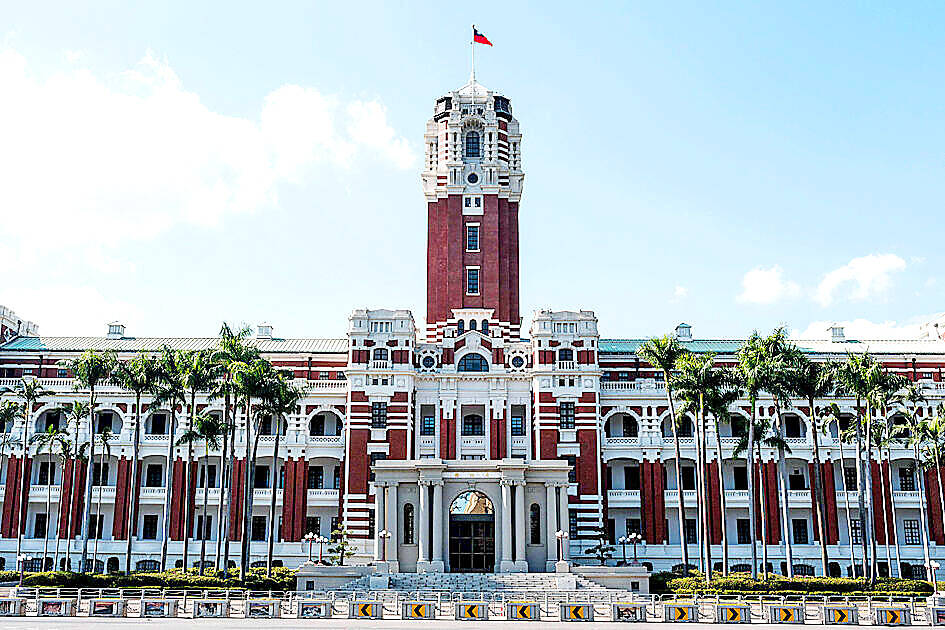
Photo: Yasuyoshi Chiba, AFP
A security official familiar with cross-strait issues on condition of anonymity yesterday said that the Act Governing Relations Between the People of the Taiwan Area and the Mainland Area (兩岸人民關係條例) stipulates that the government can cancel ID cards and household registrations of those who have Chinese ID cards or Chinese passports, but the act has yet to regulate those holding Chinese residence permits.
An amendment to the act was proposed in 2018, which would require those holding Chinese residence permits to inform the government after receiving the documents, and those who fail to do so would be punished in accordance with the law. Those who work in agencies that handle national security affairs were banned from holding Chinese residence permits. However, the amendment was not approved by the Cabinet due to the elections and other factors.
The official yesterday said that Lai has instructed security officials to build a comprehensive national security network to counter China’s intensifying “united front” work and infiltration campaign by reviewing regulations, infrastructure and other aspects.
To bolster national security laws, the government is considering proposing an amendment to punish those who apply for Chinese residence permits or ID cards, the official said, adding that it is also considering amending the administrative order to better manage the travel of those working or living in China.
Residents of Hong Kong and Macau who apply to migrate to or reside in Taiwan would also be under even closer scrutiny, as the two regions are increasingly integrated into China, the official said yesterday, adding that migrants from those areas could become channels to infiltrate Taiwan and become national security loopholes.

The military has spotted two Chinese warships operating in waters near Penghu County in the Taiwan Strait and sent its own naval and air forces to monitor the vessels, the Ministry of National Defense (MND) said. Beijing sends warships and warplanes into the waters and skies around Taiwan on an almost daily basis, drawing condemnation from Taipei. While the ministry offers daily updates on the locations of Chinese military aircraft, it only rarely gives details of where Chinese warships are operating, generally only when it detects aircraft carriers, as happened last week. A Chinese destroyer and a frigate entered waters to the southwest

The eastern extension of the Taipei MRT Red Line could begin operations as early as late June, the Taipei Department of Rapid Transit Systems said yesterday. Taipei Rapid Transit Corp said it is considering offering one month of free rides on the new section to mark its opening. Construction progress on the 1.4km extension, which is to run from the current terminal Xiangshan Station to a new eastern terminal, Guangci/Fengtian Temple Station, was 90.6 percent complete by the end of last month, the department said in a report to the Taipei City Council's Transportation Committee. While construction began in October 2016 with an
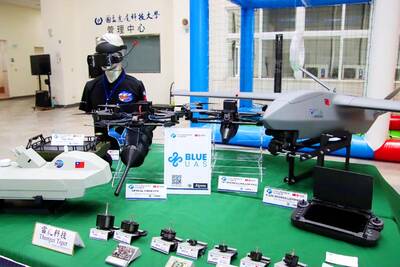
NON-RED SUPPLY: Boosting the nation’s drone industry is becoming increasingly urgent as China’s UAV dominance could become an issue in a crisis, an analyst said Taiwan’s drone exports to Europe grew 41.7-fold from 2024 to last year, with demand from Ukraine’s fight against Russian aggression the most likely driver of growth, a study showed. The Institute for Democracy, Society and Emerging Technology (DSET) in a statement on Wednesday said it found that many of Taiwan’s uncrewed aerial vehicle (UAV) sales were from Poland and the Czech Republic. These countries likely transferred the drones to Ukraine to aid it in its fight against the Russian invasion that started in 2022, it said. Despite the gains, Taiwan is not the dominant drone exporter to these markets, ranking second and fourth

Japanese Prime Minister Sanae Takaichi’s comment last year on Tokyo’s potential reaction to a Taiwan-China conflict has forced Beijing to rewrite its invasion plans, a retired Japanese general said. Takaichi told the Diet on Nov. 7 last year that a Chinese naval blockade or military attack on Taiwan could constitute a “survival-threatening situation” for Japan, potentially allowing Tokyo to exercise its right to collective self-defense. Former Japan Ground Self-Defense Force general Kiyofumi Ogawa said in a recent speech that the remark has been interpreted as meaning Japan could intervene in the early stages of a Taiwan Strait conflict, undermining China’s previous assumptions


 RSS
RSS