


Twenty-four Republican members of the US House of Representatives yesterday introduced a concurrent resolution calling on the US government to abolish the “one China” policy and restore formal diplomatic relations with Taiwan.
Led by US representatives Tom Tiffany and Scott Perry, the resolution calls for not only re-establishing formal relations, but also urges the US Trade Representative to negotiate a free-trade agreement (FTA) with Taiwan and for US officials to advocate for Taiwan’s full membership in the UN and other international organizations.
In a news release announcing the resolution, Tiffany, who represents a Wisconsin district, called the “one China” policy “outdated, counterproductive and dishonest.”
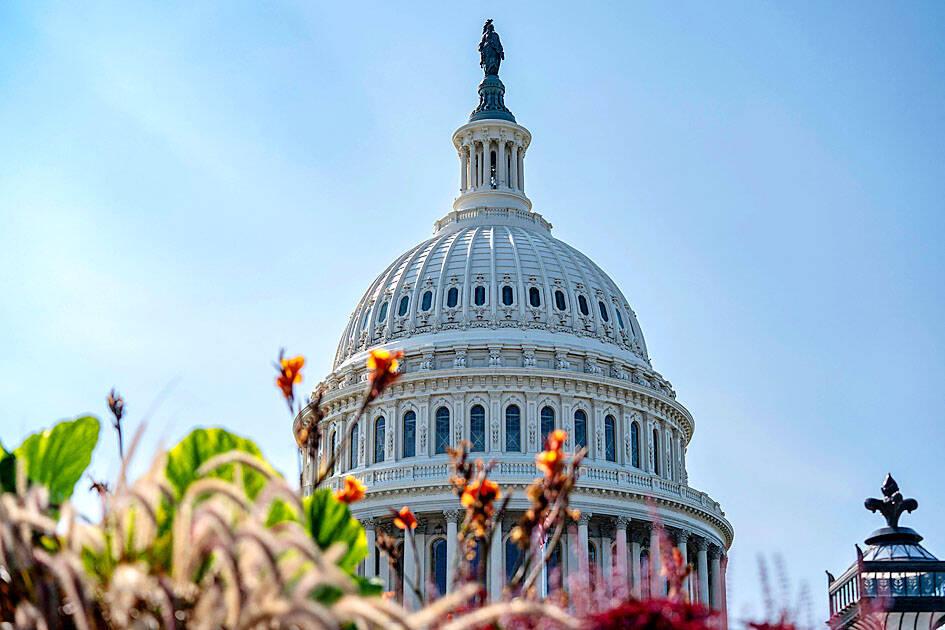
Photo: AFP
The US “inexplicably” treats Taiwan’s democratically elected government “the same way it treats brutal regimes in North Korea and Iran,” the news release said.
Taiwan’s diplomatic, cultural and economic links around the world demonstrate its “clear and indisputable independence from the People’s Republic of China,” the resolution says.
The “so-called ‘one China policy’ is obsolete, does not serve the people of Taiwan or the US, and fails to reflect the obvious reality” of Taiwan’s independence, the resolution adds.
The resolution cites previous statements and legislation, such as the Taiwan Relations Act of 1979 and then-US president Ronald Reagan’s “six assurances” as well as arms sales and the Taiwan Travel Act to demonstrate that Taiwan is a “steadfast” ally of the US.
In addition to calling for an FTA and Taiwan’s inclusion in international organizations, the resolution also suggests sending a US ambassador to Taiwan and receiving a Taiwanese ambassador to the US, and rescinding guidelines on interactions between officials in both countries.
A resolution, unlike a bill, is not presented to the president for action and is not a law, but serves to express the US Congress’ position on an issue.
A concurrent resolution requires approval from both the US House of Representatives and the Senate.
It comes just two days after a bill, led by US representatives Young Kim and Al Green, was introduced to the House of Representatives calling for Taiwan’s inclusion in the IMF.

Taipei and Kaohsiung have extended an open invitation to Japanese pop star Ayumi Hamasaki after Chinese authorities abruptly canceled her scheduled concert in Shanghai. Hamasaki, 47, had been slated to perform on Saturday before organizers pulled the show at the last minute, citing “force majeure,” a move widely viewed as retaliation for Japanese Prime Minister Sanae Takaichi’s recent remark that a Chinese attack on Taiwan could draw a military response from Tokyo. Taipei Mayor Chiang Wan-an (蔣萬安) yesterday said the city “very much welcomes” Hamasaki’s return and would continue to “surprise” her. Hamasaki, who has a large global fan base, including
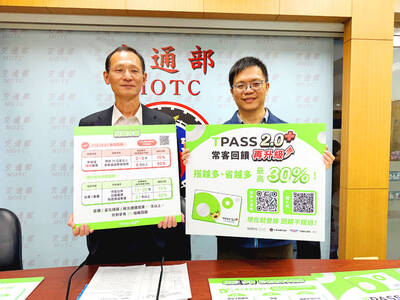
Starting next month, people who signed up for the TPass 2.0 program can receive a 15 percent rebate for trips on mid to long-distance freeway buses or on buses headed to the east coast twice every month, the Highway Bureau said. Bureau Director-General Lin Fu-shan (林福山) said the government started TPass 2.0 to offer rebates to frequent riders of public transportation, or people who use city buses, highway buses, trains or MRTs at least 11 times per month. As of Nov. 12, 265,000 people have registered for TPass 2.0, and about 16.56 million trips between February and September qualified for
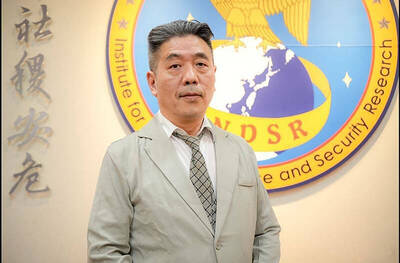
The year 2027 is regarded as the year China would likely gain the capability to invade Taiwan, not the year it would launch an invasion, Taiwanese defense experts said yesterday. The experts made the remarks after President William Lai (賴清德) told a news conference on Wednesday that his administration would introduce a NT$1.25 trillion (US$39.8 billion) special defense budget bill to boost Taiwan’s overall defense posture over the next eight years. Lai said that Beijing aims for military unification of Taiwan by 2027. The Presidential Office later clarified that what Lai meant was that China’s goal is to “prepare for military unification
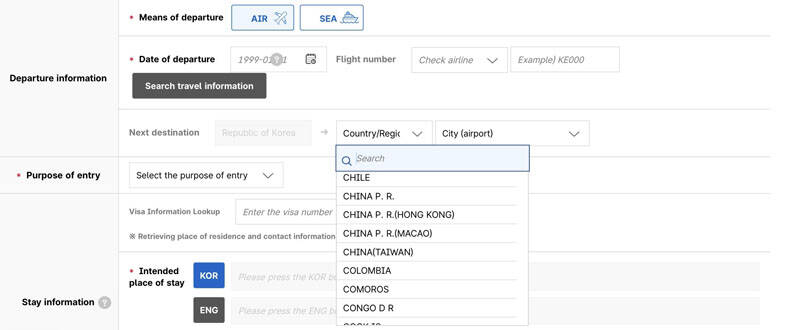
‘REGRETTABLE’: Travelers reported that Seoul’s online arrival card system lists Taiwan as ‘China (Taiwan),’ the Ministry of Foreign Affairs said The Ministry of Foreign Affairs yesterday urged South Korea to correct the way Taiwan is listed in its newly launched e-Arrival card system, saying the current designation downgrades the nation’s status. South Korea rolled out the online system on Feb. 24 to gradually replace paper arrival cards, which it plans to phase out by next year. Travelers must complete the electronic form up to 72 hours before entering the country. The ministry said it has received multiple complaints from Taiwanese travelers saying that the system lists Taiwan as “China (Taiwan)” in dropdown menus for both “place of departure” and “next


 RSS
RSS