


Citizens aged 30 and over are to be eligible for free health checkups every five years starting this year, the Health Promotion Administration (HPA) announced today.
The latest adjustments to adult preventative healthcare services are to lower the minimum age for free health checkups from 40 to 30, which would benefit an estimated 3.2 million people between 30 and 40.

Photo: Chiu Chih-jou, Taipei Times
Those aged 40 to 65 are to continue to be eligible for one free health checkup every three years, while those over 65 are already eligible for yearly checkups, also offered to indigenous people over 55 and polio patients aged 35 and over, HPA Director-General Wu Chao-chun (吳昭軍) said.
The payment for each checkup has also been increased from NT$520 to NT$880 to enable healthcare providers to expand services, he said.
The latest Nutrition and Health Survey in Taiwan, conducted from 2019 to 2023, showed that 9.7 percent of 30–39-year-olds suffer from high blood pressure, 2.5 percent from high blood sugar and 18.7 percent from high blood cholesterol, the chief physician of the HPA’s Aging and Chronic Disease Control Division Hu I-chun (胡怡君).
Treatment of conditions related to the “three highs” — high blood pressure, blood sugar and blood cholesterol levels — currently cost NT$167.6 billion (US$5 billion) per year, she added.
The checkups would help patients who appear healthy to spot abnormalities early and begin preventative treatment before the onset of chronic disease, as well as enable young people to get a better understanding of their health and get into the habit of regular checkups, she said.
Currently, adult preventative health services include health behavior surveys, physical exams, blood tests, urine tests and health education consultations to address common health problems such as the “three highs,” kidney function, liver function and body mass index (BMI), the HPA said.
From this year, services are to be upgraded to offer uric acid tests, chronic disease risk assessments, kidney disease testing and educational information related to a balanced diet and getting 150 minutes of exercise per week, it said.
High uric acid is closely related to diabetes, high blood pressure and kidney disease, and affects 21.9 percent of men and 9.8 percent of women aged over 19 in Taiwan, Hu said.
Identifying high uric acid in health checkups would allow patients to identify the risks early and implement dietary adjustments, regular exercise routines and weight management to prevent the onset of chronic disease, he added.
The decision to offer free health checkups to patients as young as 30 is a huge breakthrough which would not help young people take their health more seriously and also establish a baseline for health data tracking and allow patients to live longer and happier lives, said Huang Chi-chia (黃啟嘉), a managing director of the Taiwan Medical Association.

Actor Darren Wang (王大陸) was sentenced to six months in prison, commutable to a fine, by the New Taipei District Court today for contravening the Personal Data Protection Act (個人資料保護法) in a case linked to an alleged draft-dodging scheme. Wang allegedly paid NT$3.6 million (US$114,380) to an illegal group to help him evade mandatory military service through falsified medical documents, prosecutors said. He transferred the funds to Chen Chih-ming (陳志明), the alleged mastermind of a draft-evasion ring, although he lost contact with him as he was already in detention on fraud charges, they said. Chen is accused of helping a

SECURITY: Starlink owner Elon Musk has taken pro-Beijing positions, and allowing pro-China companies to control Taiwan’s critical infrastructure is risky, a legislator said Starlink was reluctant to offer services in Taiwan because of the nation’s extremely high penetration rates in 4G and 5G services, the Ministry of Digital Affairs said yesterday. The ministry made the comments at a meeting of the legislature’s Transportation Committee, which reviewed amendments to Article 36 of the Telecommunications Management Act (電信管理法). Article 36 bans foreigners from holding more than 49 percent of shares in public telecommunications networks, while shares foreigners directly and indirectly hold are also capped at 60 percent of the total, unless specified otherwise by law. The amendments, sponsored by Chinese Nationalist Party (KMT) Legislator Ko

The eastern extension of the Taipei MRT Red Line could begin operations as early as late June, the Taipei Department of Rapid Transit Systems said yesterday. Taipei Rapid Transit Corp said it is considering offering one month of free rides on the new section to mark its opening. Construction progress on the 1.4km extension, which is to run from the current terminal Xiangshan Station to a new eastern terminal, Guangci/Fengtian Temple Station, was 90.6 percent complete by the end of last month, the department said in a report to the Taipei City Council's Transportation Committee. While construction began in October 2016 with an
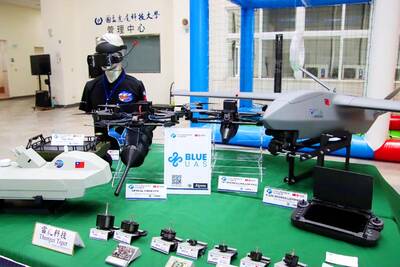
NON-RED SUPPLY: Boosting the nation’s drone industry is becoming increasingly urgent as China’s UAV dominance could become an issue in a crisis, an analyst said Taiwan’s drone exports to Europe grew 41.7-fold from 2024 to last year, with demand from Ukraine’s fight against Russian aggression the most likely driver of growth, a study showed. The Institute for Democracy, Society and Emerging Technology (DSET) in a statement on Wednesday said it found that many of Taiwan’s uncrewed aerial vehicle (UAV) sales were from Poland and the Czech Republic. These countries likely transferred the drones to Ukraine to aid it in its fight against the Russian invasion that started in 2022, it said. Despite the gains, Taiwan is not the dominant drone exporter to these markets, ranking second and fourth


 RSS
RSS