


Guidelines released by the Ministry of Labor to better inform female migrant workers who are pregnant or have young children about their rights in Taiwan have drawn mixed responses from civic groups.
The guidelines, released on Tuesday, bring together information scattered across the jurisdictions of several government agencies that female migrant workers can refer to when they become pregnant.
For example, one regulation states that they can reach a mutual agreement to dissolve their contract with their employer after they become pregnant and they are entitled to a 60-day leeway period to rest after childbirth before they have to start looking for a new employer.
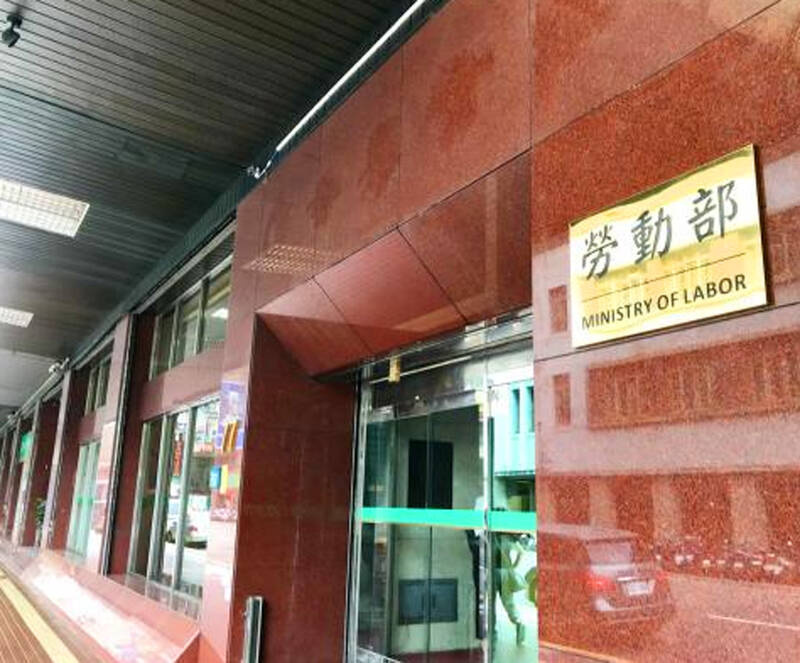
Photo: Li Ya-wen, Taipei Times
The document is available in Chinese, English, Indonesian, Vietnamese and Thai.
The guidelines drew criticism from the International Association of Family and Employers with Disabilities, which described them as “intentionally playing up the importance of migrant workers’ families” and “neglecting the mission of their jobs.”
The primary goal for migrant workers who have come to Taiwan should be to work, not to have children, the association said in a statement on Wednesday.
The ministry should immediately rescind the guidelines, which put the rights of women and children before the needs of families that recruit live-in caregivers, infringing upon their welfare, it said.
In response, the ministry said that migrant workers have the same rights as Taiwanese workers to decide whether to have children and, like their Taiwanese counterparts, are protected by the Gender Equality in Employment Act (性別平等工作法), which governs maternity leave and other applicable laws.
Crucially, the guidelines also point employers of migrant live-in caregivers to short-term and respite care services, which they can use if their caregiver becomes pregnant, the ministry said.
The guidelines do not undermine the rights of people who hire migrant workers, it said, adding that it would discuss with the Ministry of Health and Welfare how to improve existing supplementary care services to better address the needs of people should their caregiver become pregnant.
Serikat Buruh Industri Perawatan Taiwan, a union made up of Indonesian caregivers working for Taiwanese families and in nursing homes, said it respected the association’s opinion and acknowledged that pregnant caregivers could put care recipients and themselves in danger if they continue to work.
However, the Gender Equality in Employment Act and international anti-discrimination conventions have been enshrined into local law to prohibit the dismissal of pregnant workers, the union said on Thursday.
Despite those efforts, sexual discrimination still exists, the union said.
If certain groups disregard the rights of migrant workers to become pregnant and flout international conventions, their suitability to hire such workers should be questioned, and they risk tarnishing the image of their nation, it said.
Lee Kai-li (李凱莉), a director in charge of migrant affairs at the Garden of Hope Foundation, commended the labor ministry for publishing the guidelines, which she said conveniently bring together the majority of regulations regarding migrant workers.
However, she said there is a major omission — the document neglects to mention the legal liability of employers should they break the regulations.
Noting that many employers who illegally fire pregnant migrant workers have gone unpunished after paying severance, Lee said she hoped that the guidelines would serve as a reminder to the authorities that the law must be enforced.

Yangmingshan National Park authorities yesterday urged visitors to respect public spaces and obey the law after a couple was caught on a camera livestream having sex at the park’s Qingtiangang (擎天崗) earlier in the day. The Shilin Police Precinct in Taipei said it has identified a suspect and his vehicle registration number, and would summon him for questioning. The case would be handled in accordance with public indecency charges, it added. The couple entered the park at about 11pm on Thursday and began fooling around by 1am yesterday, the police said, adding that the two were unaware of the park’s all-day live

Fast food chain McDonald's is to raise prices by up to NT$5 on some products at its restaurants across Taiwan, starting on Wednesday next week, the company announced today. The prices of all extra value meals and sharing boxes are to increase by NT$5, while breakfast combos and creamy corn soup would go up by NT$3, the company said in a statement. The price of the main items of those meals, if ordered individually, would remain the same. Meanwhile, the price of a medium-sized lemon iced tea and hot cappuccino would rise by NT$3, extra dipping sauces for chicken nuggets would go up

Yangmingshan National Park’s Qingtiangang (擎天崗) nature area has gone viral after a park livestream camera observed a couple in the throes of intimate congress, which was broadcast live on YouTube, drawing large late-night crowds and sparking a backlash over noise, bright lights and disruption to wildlife habitat. The area’s livestream footage appeared to show a couple engaging in sexual activity on a picnic table in the park on Friday last week, with the uncensored footage streamed publicly online. The footage quickly spread across social media, prompting a tide of visitors to travel to the site to “check in” and recreate the

Minister of Digital Affairs Lin Yi-ching (林宜敬) yesterday cited regulatory issues and national security concerns as an expert said that Taiwan is among the few Asian regions without Starlink. Lin made the remarks on Facebook after funP Innovation Group chief executive officer Nathan Chiu (邱繼弘) on Friday said Taiwan and four other countries in Asia — China, North Korea, Afghanistan and Syria — have no access to Starlink. Starlink has become available in 166 countries worldwide, including Ukraine, Malaysia, the Philippines and Vietnam, in the six years since it became commercial, he said. While China and North Korea block Starlink, Syria is not


 RSS
RSS