


The Cabinet yesterday approved draft amendments to the Electricity Act (電業法) to boost green power trading by regulating on-grid energy storage and demand response services.
Deputy Minister of Economic Affairs Ho Chin-tsang (何晉滄) told a post-Cabinet meeting news conference that 38 of the more than 80 domestic renewable energy vendors have already begun to sell their products.
Once the bill is passed by the legislature, it would facilitate the sale of residual electricity, with prices decided by the market, he said.
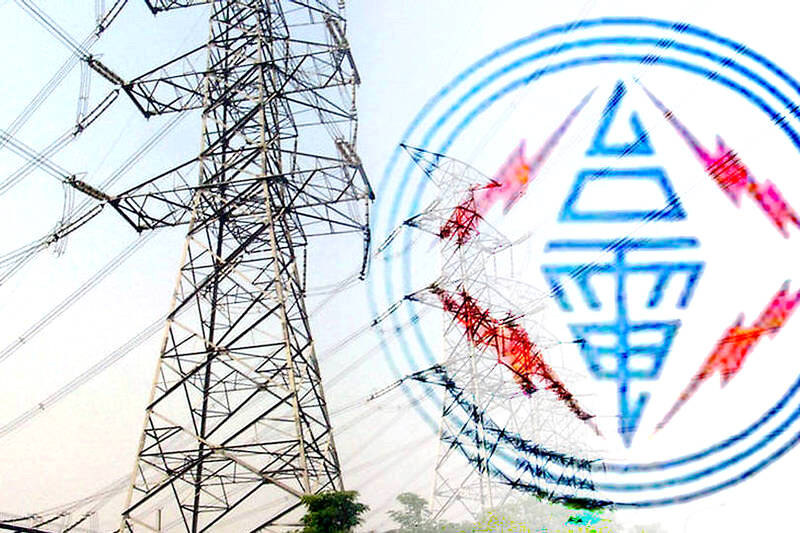
Photo: Taipei Times
The Ministry of Economic Affairs said in a statement that substantial funding is required to construct power and grid infrastructure, as the power dispatching system is facing challenges from renewable energy and extreme weather, while the government is striving to stabilize power supply and achieve its goal of net zero transition.
Under such circumstances, state-run Taiwan Power Co (Taipower) is expected to be maintained as a vertically integrated electric utility that combines resources related to power generation, dispatch, distribution and sales, it said.
The current act enables renewable energy vendors to sell electricity only to users, while emerging power resources such as energy storage and demand response measures are not explicitly legalized, the ministry said.
Given that renewable energy products and new power resources continue to enter the market, the domestic power trading platform must be reviewed and improved, it said.
Therefore, the act would be amended in line with the practical developments of the electricity market to introduce necessary regulations and address the aforementioned problems, the ministry said, adding that the amendments aim to boost green power trading on the premise of stable power supply.
To deal with transitions in the electric power structure and the market, as well as enable efficient management and open competition, the amendments would go in four directions, it said.
First, Taipower would keep the current operating model without divestiture to synergize resources via its power grid, increasing investment efficiency and maintaining stable power supply.
Second, renewable energy vendors would be allowed to sell energy to each other to increase their operational flexibility.
Third, on-grid energy storage and demand response services would be stipulated to reduce the compliance risk for vendors and include more potential power resources.
Last, the regulatory mechanism for the power trading platform would be strengthened to ensure its impartiality, and the market’s openness and transparency, the ministry said, adding that the platform might develop into an independent trading entity depending on market developments.
The revision of the act would help to build a friendly environment for domestic green power development, as well as enhance the power sector’s operational efficiency, the power grid’s resilience, and users’ rights and benefits, it said.

Taiwan has received more than US$70 million in royalties as of the end of last year from developing the F-16V jet as countries worldwide purchase or upgrade to this popular model, government and military officials said on Saturday. Taiwan funded the development of the F-16V jet and ended up the sole investor as other countries withdrew from the program. Now the F-16V is increasingly popular and countries must pay Taiwan a percentage in royalties when they purchase new F-16V aircraft or upgrade older F-16 models. The next five years are expected to be the peak for these royalties, with Taiwan potentially earning
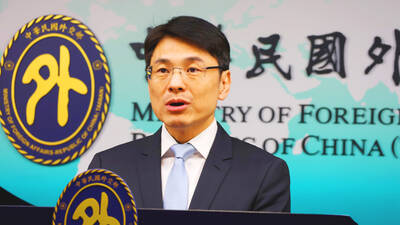
STAY IN YOUR LANE: As the US and Israel attack Iran, the ministry has warned China not to overstep by including Taiwanese citizens in its evacuation orders The Ministry of Foreign Affairs (MOFA) yesterday rebuked a statement by China’s embassy in Israel that it would evacuate Taiwanese holders of Chinese travel documents from Israel amid the latter’s escalating conflict with Iran. Tensions have risen across the Middle East in the wake of US and Israeli airstrikes on Iran beginning Saturday. China subsequently issued an evacuation notice for its citizens. In a news release, the Chinese embassy in Israel said holders of “Taiwan compatriot permits (台胞證)” issued to Taiwanese nationals by Chinese authorities for travel to China — could register for evacuation to Egypt. In Taipei, the ministry yesterday said Taiwan
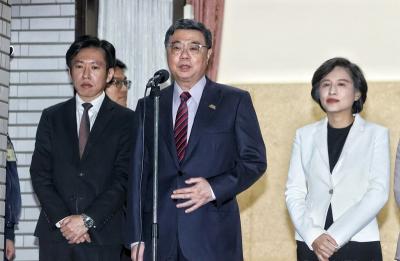
Taiwan is awaiting official notification from the US regarding the status of the Agreement on Reciprocal Trade (ART) after the US Supreme Court ruled US President Donald Trump's global tariffs unconstitutional. Speaking to reporters before a legislative hearing today, Premier Cho Jung-tai (卓榮泰) said that Taiwan's negotiation team remains focused on ensuring that the bilateral trade deal remains intact despite the legal challenge to Trump's tariff policy. "The US has pledged to notify its trade partners once the subsequent administrative and legal processes are finalized, and that certainly includes Taiwan," Cho said when asked about opposition parties’ doubts that the ART was
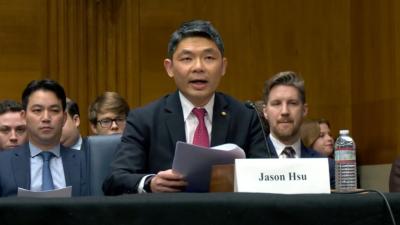
If China chose to invade Taiwan tomorrow, it would only have to sever three undersea fiber-optic cable clusters to cause a data blackout, Jason Hsu (許毓仁), a senior fellow at the Hudson Institute and former Chinese Nationalist Party (KMT) legislator, told a US security panel yesterday. In a Taiwan contingency, cable disruption would be one of the earliest preinvasion actions and the signal that escalation had begun, he said, adding that Taiwan’s current cable repair capabilities are insufficient. The US-China Economic and Security Review Commission (USCC) yesterday held a hearing on US-China Competition Under the Sea, with Hsu speaking on


 RSS
RSS