


The number of Chinese lobbying groups visiting the US has increased unusually ahead of US president-elect Donald Trump’s inauguration on Jan. 20, a source said yesterday.
Intelligence showed that the number of Chinese academics and governmental officials visiting the US has surged abnormally, apparently to gain information on the incoming Trump administration’s policies and to circulate rumors that “Taiwan is the troublemaker hampering cross-strait exchanges,” said a security official familiar with cross-strait issues, who asked to remain anonymous.
Beijing is spreading such messages in the US via lobbyists to shape Taipei or the Mainland Affairs Council’s image as uncooperative and disruptive, they said.
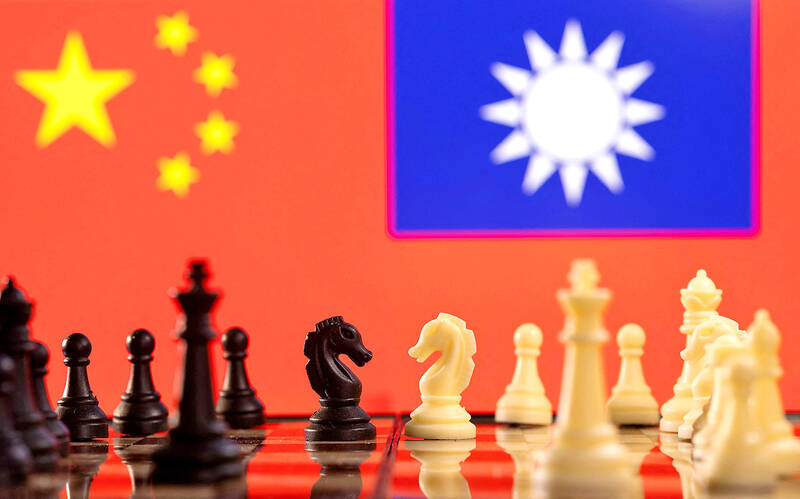
Photo: Reuters
“However, numbers speak volumes,” they added.
Although the government conditionally allows Taiwanese group tours to China, it does not impose any restrictions on self-guided tours, they said.
From January to October last year, Taiwanese visiting China surpassed 2.3 million, while Chinese travelers to Taiwan were only 300,000, who were either visitors for professional exchanges or permanent residents of “a third place” such as Macau, Hong Kong or a foreign country, the official said.
Beijing has permitted self-guided tours from its Fujian Province to Kinmen County or from Fujian to Lienchiang County (Matsu), but Taiwan proper is still banned from China’s list of tourist destinations, they said.
President William Lai (賴清德) in his inauguration speech last year said that the number of Chinese students pursuing a degree in Taiwan could return to as many as before the COVID-19 pandemic, the official said.
However, no Chinese students enrolled in Taiwanese high schools or universities last year, as Beijing continued its barring policy, they said, adding that one could tell who is hampering cross-strait exchanges simply from these figures.
Regarding the Taipei-Shanghai Twin-City Forum, the official said that the government banned certain delegates from visiting Taiwan to counter the guidelines China’s Taiwan Affairs Office (TAO) announced to penalize “diehard Taiwanese independence separatists.”
Given the TAO was hostile to Taiwan, its officials who were at the level of directors or higher were in return not allowed to visit Taiwan, they said, adding that those who were disapproved were not indispensable participants in the forum and made up only 10 percent, while more than 90 percent of the proposed delegates were approved.
On the other hand, the Chinese People’s Liberation Army as of Dec. 30 last year sent a total of 5,089 warplanes and 2,490 warships around Taiwan as coercion, and 3,100 vessels and aircraft crossed the median line of the Taiwan Strait, the official said.
Beijing asked for courtesy clearance at the airport for all delegates who were attending the forum in Taipei while dispatching warplanes and warships to coerce Taiwanese, they said.
“How does make sense?” the official asked.
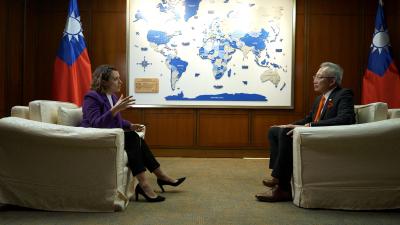
“China is preparing to invade Taiwan,” Deputy Minister of Foreign Affairs Francois Wu (吳志中) said in an exclusive interview with British media channel Sky News for a special report titled, “Is Taiwan ready for a Chinese invasion?” the Ministry of Foreign Affairs said today in a statement. The 25-minute-long special report by Helen Ann-Smith released yesterday saw Sky News travel to Penghu, Taoyuan and Taipei to discuss the possibility of a Chinese invasion and how Taiwan is preparing for an attack. The film observed emergency response drills, interviewed baseball fans at the Taipei Dome on their views of US President
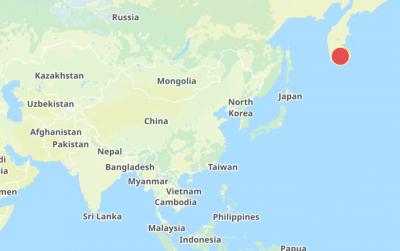
The Central Weather Administration (CWA) today issued a "tsunami watch" alert after a magnitude 8.7 earthquake struck off the Kamchatka Peninsula in northeastern Russia earlier in the morning. The quake struck off the east coast of the Kamchatka Peninsula at 7:25am (Taiwan time) at a depth of about 19km, the CWA said, citing figures from the Pacific Tsunami Warning Center. The CWA's Seismological Center said preliminary assessments indicate that a tsunami could reach Taiwan's coastal areas by 1:18pm today. The CWA urged residents along the coast to stay alert and take necessary precautions as waves as high as 1m could hit the southeastern

ECONOMIC BENEFITS: The imports from Belize would replace those from Honduras, whose shrimp exports have dropped 67 percent since cutting ties in 2023 Maintaining ties with Taiwan has economic benefits, Ministry of Foreign Affairs officials said yesterday, citing the approval of frozen whiteleg shrimp imports from Belize by the Food and Drug Administration (FDA) as an example. The FDA on Wednesday approved the tariff-free imports from Belize after the whiteleg shrimp passed the Systematic Inspection of Imported Food, which would continue to boost mutual trade, the ministry said. Taiwan’s annual consumption of whiteleg shrimps stands at 30,000 tonnes, far exceeding domestic production, the ministry said. Taiwan used to fill the gap by importing shrimps from Honduras, but purchases slumped after Tegucigalpa severed diplomatic ties with Taiwan
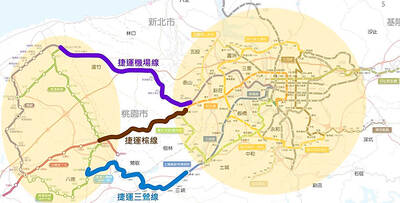
The Executive Yuan yesterday approved a southwestern extension of the Sanying MRT Line from New Taipei to Bade District (八德) in Taoyuan, with a goal of starting construction by late 2026. The 4.03-kilometer extension, featuring three new stations, will run from the current terminus at Yingtao Fude Station (LB12) in New Taipei City to Dannan Station (LB14), where it will connect with Taoyuan’s Green Line, New Taipei City Metro Corp said in a statement. This extension will follow the completion of core Sanying Line, a 14.29-kilometer medium-capacity system linking Tucheng (土城), Sansia (三峽)


 RSS
RSS