


Taiwan should seek opportunities to cooperate with the US on drone production, a Taiwanese researcher said yesterday, after the US Department of Commerce on Thursday announced a potential ban on drones with Chinese components.
The department said it was seeking to safeguard the supply chain for drones, as Russia and China could potentially access drones remotely and manipulate them to gain sensitive data, Reuters reported.
US Secretary of Commerce Gina Raimondo in September last year announced a similar ban on Chinese vehicles, it added.
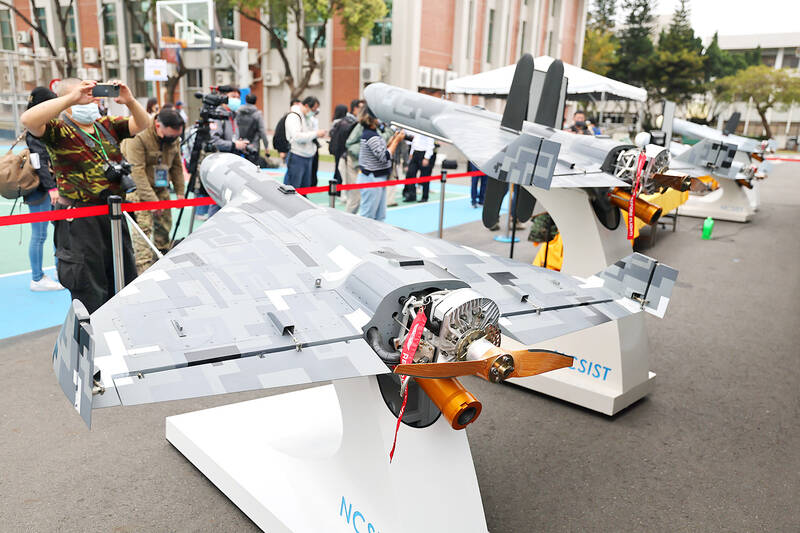
Photo: CNA
“Taiwan should take this opportunity to clearly define the ‘non-red’ supply chain, and to become a trusted partner of the US in drone production,” Kuma Academy chief executive officer Ho Cheng-hui (何澄輝) said yesterday.
China and Russia have shown their intention to use cyberespionage to endanger US infrastructure and security, so Washington is likely to amend legislation to require private companies to cooperate on protecting national security, he said.
The geospatial information captured or collected by drones is highly sensitive and could have implications for national security. To address the issue, the US could take a phased approach, he said.
“To start with, it could clarify security concerns and require drone manufacturers to use databases and servers located in the US,” he said, adding that it could be strictly prohibited for drones to send any data back to China or be remotely accessible.
“Taiwan should also follow the US approach and implement inspection and control measures in stages,” Ho said.
Taiwan’s government already enforces measures for regulating drones in three stages starting from last year and would require registration measures for all drones on the market by the end of this year, he said.
“In the future, drones weighing more than 500g must undergo different tests related to information security, and manufacturers would be required to obtain registration certificates,” he said.
The Chungshan Institute of Science and Technology has also bolstered drone production in Taiwan through the establishment of an aerospace industrial park in Chiayi, which uses wind tunnels and artificial intelligence to aid development, he said.
“The park also facilitates customized site design, and there are facilities for hydrogen production and energy storage,” he said.
“The hope is to attract private enterprises to open in the park, with the aim of establishing a drone industry ecosystem,” he added.
While a full ban on Chinese drones for the commercial sector would be challenging, Taiwan must take steps to protect its domestic market and build a trustworthy supply chain to facilitate cooperation with the US and other partners, he said.
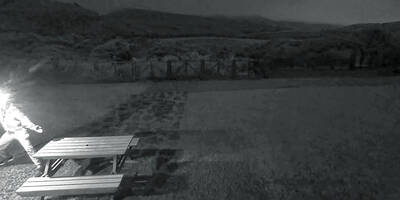
Yangmingshan National Park authorities yesterday urged visitors to respect public spaces and obey the law after a couple was caught on a camera livestream having sex at the park’s Qingtiangang (擎天崗) earlier in the day. The Shilin Police Precinct in Taipei said it has identified a suspect and his vehicle registration number, and would summon him for questioning. The case would be handled in accordance with public indecency charges, it added. The couple entered the park at about 11pm on Thursday and began fooling around by 1am yesterday, the police said, adding that the two were unaware of the park’s all-day live

Fast food chain McDonald's is to raise prices by up to NT$5 on some products at its restaurants across Taiwan, starting on Wednesday next week, the company announced today. The prices of all extra value meals and sharing boxes are to increase by NT$5, while breakfast combos and creamy corn soup would go up by NT$3, the company said in a statement. The price of the main items of those meals, if ordered individually, would remain the same. Meanwhile, the price of a medium-sized lemon iced tea and hot cappuccino would rise by NT$3, extra dipping sauces for chicken nuggets would go up
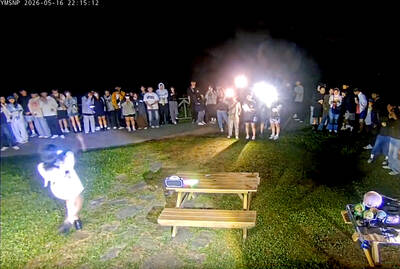
Yangmingshan National Park’s Qingtiangang (擎天崗) nature area has gone viral after a park livestream camera observed a couple in the throes of intimate congress, which was broadcast live on YouTube, drawing large late-night crowds and sparking a backlash over noise, bright lights and disruption to wildlife habitat. The area’s livestream footage appeared to show a couple engaging in sexual activity on a picnic table in the park on Friday last week, with the uncensored footage streamed publicly online. The footage quickly spread across social media, prompting a tide of visitors to travel to the site to “check in” and recreate the

Minister of Digital Affairs Lin Yi-ching (林宜敬) yesterday cited regulatory issues and national security concerns as an expert said that Taiwan is among the few Asian regions without Starlink. Lin made the remarks on Facebook after funP Innovation Group chief executive officer Nathan Chiu (邱繼弘) on Friday said Taiwan and four other countries in Asia — China, North Korea, Afghanistan and Syria — have no access to Starlink. Starlink has become available in 166 countries worldwide, including Ukraine, Malaysia, the Philippines and Vietnam, in the six years since it became commercial, he said. While China and North Korea block Starlink, Syria is not


 RSS
RSS