


The Taiwan Environmental Protection Union (TEPU) yesterday released its annual sustainability report, while criticizing Taipei, New Taipei City and seven other regions for refusing to provide data.
According to the report, Tainan, Kaohsiung and Pingtung County were rated excellent this year.
Taipei, New Taipei City, Taoyuan, Taichung, Keelung and Chiayi City, as well as the counties of Hsinchu, Yilan and Taitung, did not provide the union with data related to their sustainability policies and received the worst rating of “inferior.”
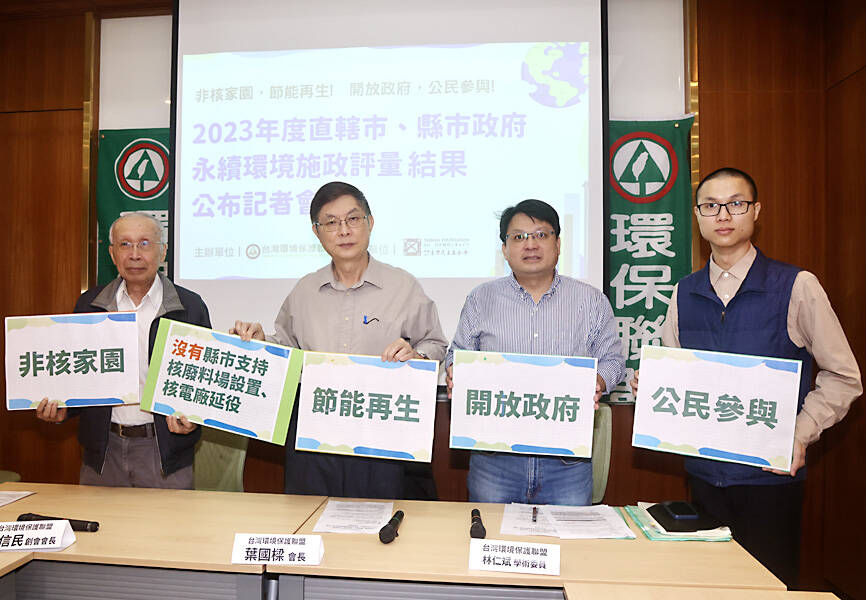
Photo: CNA
The public has long expected transparency of government information and allowing the public to participate in governance, and the local governments refusing to share data demonstrates the arrogance of those in power and a regression of citizen involvement, TEPU president Yeh Kuo-liang (葉國樑) said.
Chiayi County had the best energy conservation and carbon reduction performance last year, with total power usage dropping by 7.9 percent compared with 2022, TEPU founder Shih Hsin-min (施信民) said.
Kinmen and Changhua counties saw significant growth in renewable energy facilities and a substantial increase in renewable energy generation, Shih said.
The report also showed that regions did not support establishing new nuclear power plants or nuclear waste storage sites, nor did they support extending the service of current nuclear power plants, the report said.
No region opposed the shutdown of the Fourth Nuclear Power Plant, also known as the Longmen Nuclear Power Plant, in New Taipei City’s Gongliao District (貢寮).
The power plant was first proposed in 1980 and was nearing completion in 2011 when the Fukushima Dai-ichi incident revived concerns about nuclear power safety.
This ultimately led to the freezing of the facility in 2014, with the last of the fuel rods delivered to the US on March 28, 2021.
Only a few regions released data on greenhouse gas emissions, Shih said, adding that Changhua only periodically recorded such emissions, while Miaoli, Nantou and Penghu counties had no information available.
This demonstrates the low priority of such issues for these local governments.
TEPU academic committee member Lin Jen-pin (林仁斌) urged Hsinchu and Hualien counties to promote water conservation policies, as the report showed that the average daily water consumption of those counties’ residents, at 318 and 295 liters respectively, were higher than other regions.
Lin also urged regions to work on wastewater pipe networks, saying that less than 30 percent of most counties and cities were connected to water purification plants.
The group urged the Hualien County Government to investigate what caused the county’s forest coverage to drop from 80 percent last year to 38 percent this year, whether natural disaster or human caused.
Pingtung County had the best performance in removing invasive species, clearing 3,600 hectares of 34,000 foreign animals, the report showed.
Tainan removed 8,014 invasive green iguanas last year, it said.
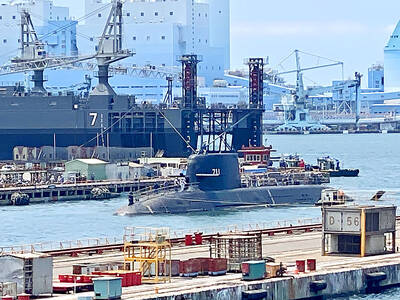
AGING: While Japan has 22 submarines, Taiwan only operates four, two of which were commissioned by the US in 1945 and 1946, and transferred to Taiwan in 1973 Taiwan would need at least 12 submarines to reach modern fleet capabilities, CSBC Corp, Taiwan chairman Chen Cheng-hung (陳政宏) said in an interview broadcast on Friday, citing a US assessment. CSBC is testing the nation’s first indigenous defense submarine, the Hai Kun (海鯤, Narwhal), which is scheduled to be delivered to the navy next month or in July. The Hai Kun has completed torpedo-firing tests and is scheduled to undergo overnight sea trials, Chen said on an SET TV military affairs program. Taiwan would require at least 12 submarines to establish a modern submarine force after assessing the nation’s operational environment and defense

A white king snake that frightened passengers and caused a stir on a Taipei MRT train on Friday evening has been claimed by its owner, who would be fined, Taipei Rapid Transit Corp (TRTC) said yesterday. A person on Threads posted that he thought he was lucky to find an empty row of seats on Friday after boarding a train on the Bannan (Blue) Line, only to spot a white snake with black stripes after sitting down. Startled, he jumped up, he wrote, describing the encounter as “terrifying.” “Taipei’s rat control plan: Release snakes on the metro,” one person wrote in reply, referring
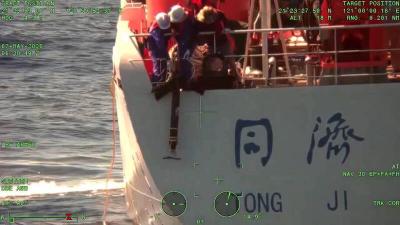
The coast guard today said that it had disrupted "illegal" operations by a Chinese research ship in waters close to the nation and driven it away, part of what Taipei sees a provocative pattern of China's stepped up maritime activities. The coast guard said that it on Thursday last week detected the Chinese ship Tongji (同濟號), which was commissioned only last year, 29 nautical miles (54km) southeast of the southern tip of Taiwan, although just outside restricted waters. The ship was observed lowering ropes into the water, suspected to be the deployment of scientific instruments for "illegal" survey operations, and the coast
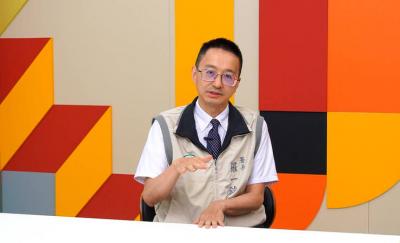
Taiwan’s two cases of hantavirus so far this year are on par with previous years’ case numbers, and the government is coordinating rat extermination work, so there should not be any outbreaks, Centers for Disease Control (CDC) Director-General Philip Lo (羅一鈞) said today in an interview with the Liberty Times (the Taipei Times’ sister newspaper). An increase in rat sightings in Taipei and New Taipei City has raised concerns about the spread of hantavirus, as rats can carry the disease. In January, a man in his 70s who lived in Taipei’s Daan District (大安) tested positive posthumously for hantavirus, Taiwan’s


 RSS
RSS