


Taipei police yesterday said they are investigating a couple over allegations of scalping pop star Jay Chou’s (周杰倫) concert tickets, as part of what they claim to be the nation’s largest scalping group.
Tickets to the pop star’s concerts in December sold out within five minutes on Wednesday for all four shows.
An investigation team was formed under the instruction of Taipei Mayor Chiang Wan-an (蔣萬安) and Taipei Police Department Commissioner Li Hsi-ho (李西河) after receiving reports about scalpers selling tickets to the concerts, the department’s Criminal Investigation Division said in a news release.
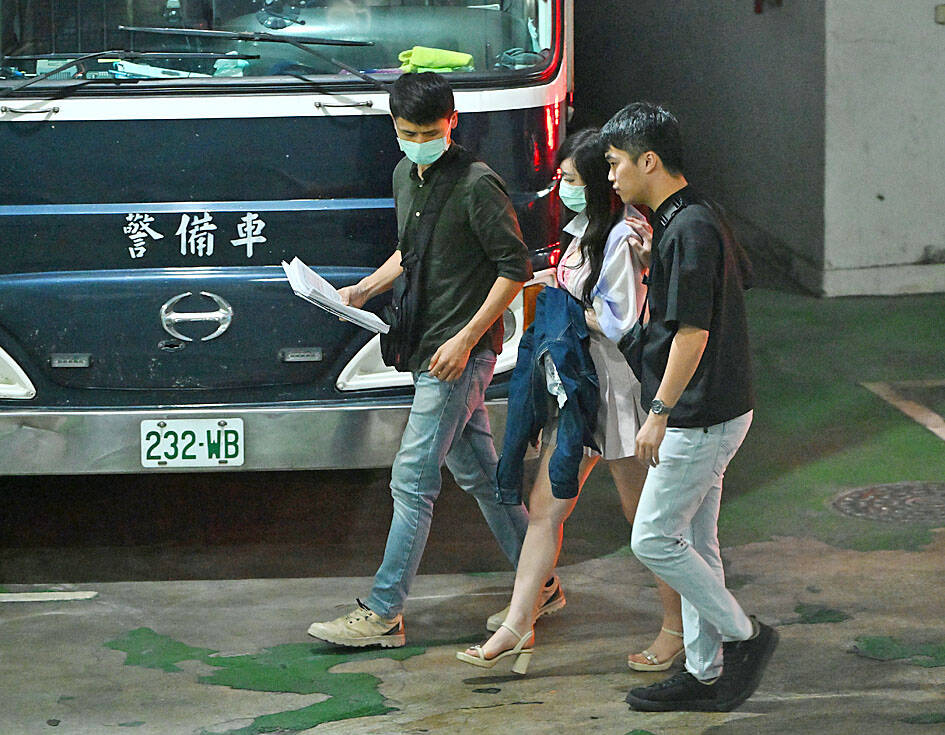
Photo: Tien Yu-hua, Taipei Times
A man surnamed Liu (劉) and his wife allegedly used a large number of fake accounts and computer programs to buy tickets en masse and sell them on online social platforms, while promoting their business with messaging software and guaranteeing they had the tickets, police said.
It is estimated that nearly 100 people have already paid the suspects for tickets to Chou’s concerts, they said.
The couple was transferred to the Taipei District Prosecutors’ Office on suspicion of contravening the Development of the Cultural and Creative Industries Act (文化創意產業發展法), forging instruments and fraud, they added.
Chou is holding concerts for his Carnival World Tour at the Taipei Dome from Dec. 5 to 8, the first time he is to perform in Taiwan in years.
A total of 890,583 users visited the site at once to purchase the 150,000 available tickets on Wednesday afternoon, JVR Music said.
The box office value of the tickets reached more than NT$657 million (US$20.5 million).
The Criminal Investigation Division warned that people who sell concert tickets at inflated prices might face fraud and forgery charges.
Vigilant enforcement action is being taken, it added.
The police urged the public not to fall victim to fraud, as criminals might sell tickets with fake serial numbers.
It would be best for consumers to buy tickets from official Web sites or sales platforms, it added.
Additional reporting by Chen Hui-ling and Kayleigh Madjar
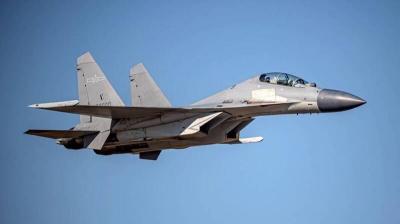
Eight Chinese naval vessels and 24 military aircraft were detected crossing the median line of the Taiwan Strait between 6am yesterday and 6am today, the Ministry of National Defense said this morning. The aircraft entered Taiwan’s northern, central, southwestern and eastern air defense identification zones, the ministry said. The armed forces responded with mission aircraft, naval vessels and shore-based missile systems to closely monitor the situation, it added. Eight naval vessels, one official ship and 36 aircraft sorties were spotted in total, the ministry said.
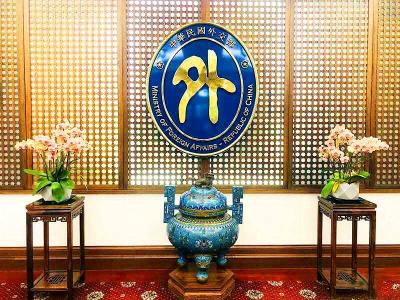
The Ministry of Foreign Affairs (MOFA) today said that if South Korea does not reply appropriately to its request to correct Taiwan’s name on its e-Arrival card system before March 31, it would take corresponding measures to alter how South Korea is labeled on the online Taiwan Arrival Card system. South Korea’s e-Arrival card system lists Taiwan as “China (Taiwan)” in the “point of departure” and “next destination” fields. The ministry said that it changed the nationality for South Koreans on Taiwan’s Alien Resident Certificates from “Korea” to “South Korea” on March 1, in a gesture of goodwill and based on the

Taiwanese officials were shown the first of 66 F-16V fighter jets purchased by Taiwan from the United States, the Ministry of National Defense said yesterday, adding the aircraft has completed an initial flight test and is expected to be delivered later this year. A delegation led by Deputy Minister of National Defense Hsu Szu-chien (徐斯儉) visited Lockheed Martin’s F-16 C/D Block 70 (also known as F-16V) assembly line in South Carolina on March 16 to view the aircraft. The jet will undergo a final acceptance flight in the US before being delivered to Taiwan, the
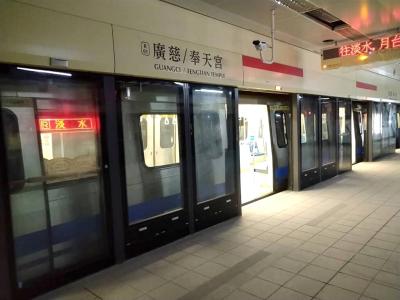
The New Taipei Metro's Sanyin Line and the eastern extension of the Taipei Metro's Tamsui-Xinyi Line (Red Line) are scheduled to begin operations in June, the National Development Council said today. The Red Line, which terminates at Xiangshan Station, would be connected by the 1.4km extension to a new eastern terminal, Guangci/Fengtian Temple Station, while the Sanyin Line would link New Taipei City's Tucheng and Yingge stations via Sanxia District (三峽). The council gave the updates at a council meeting reviewing progress on public construction projects for this year. Taiwan's annual public infrastructure budget would remain at NT$800 billion (US$25.08 billion), with NT$97.3


 RSS
RSS