


Taiwanese medical researchers have developed the world’s first two-in-one stool test that simultaneously screens for stomach cancer and colorectal cancer risks, National Taiwan University Hospital (NTUH) said yesterday.
Combining the test for colorectal cancer-related bleeding and Helicobacter pylori in feces saves time and medical costs, and can potentially reach more patients, NTUH doctor Lee Yi-chia (李宜家) said.
A gastroscopy is typically used to test for H pylori, the bacteria that cause peptic ulcers and stomach cancer, but the procedure’s invasiveness puts many people off, impeding early detection and treatment, Lee said.
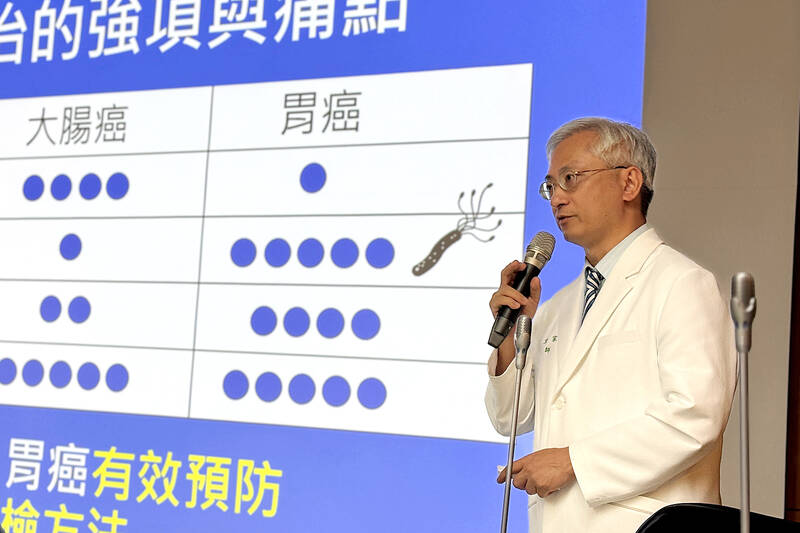
Photo: Chiu Chih-jou, Taipei Times
Stool and breath tests for the bacteria are 95 percent accurate, assuming a good cold chain, he said.
The two-in-one test increased participation in stomach cancer screening by 14 percent compared with separate testing, he said, citing a 10-year trial conducted in Changhua County.
The increased participation decreased stomach cancer by 32 percent and colorectal cancer deaths by 28 percent in the county, he said.
The hospital and the Ministry of Health and Welfare are jointly conducting trials for the new test in nine administrative regions, Lee said, adding that plans are in motion to expand the trials to every jurisdiction.
The novel test is part of the hospital’s effort to reduce abnormally high cancer rates in Taiwan’s medically underserviced mountainous regions and outlying islands, NTUH superintendent Wu Ming-shiang (吳明賢) said.
In 1995, the hospital established H pylori infection screening capability in Lienchiang County, making residents of the outlying county the second-most long-lived among Taiwan’s 22 regions, he said.
The hospital 19 years later expanded that capability to Changhua County and trialed the two-in-one test, which proved effective in reducing gastrointestinal tumors, Wu said.
The study, “Screening for Helicobacter pylori to prevent gastric cancer: A pragmatic randomized clinical trial,” was published last month in the Journal of the American Medical Association.

A magnitude 6.1 earthquake struck off the coast of Yilan County at 8:39pm tonight, the Central Weather Administration (CWA) said, with no immediate reports of damage or injuries. The epicenter was 38.7km east-northeast of Yilan County Hall at a focal depth of 98.3km, the CWA’s Seismological Center said. The quake’s maximum intensity, which gauges the actual physical effect of a seismic event, was a level 4 on Taiwan’s 7-tier intensity scale, the center said. That intensity level was recorded in Yilan County’s Nanao Township (南澳), Hsinchu County’s Guansi Township (關西), Nantou County’s Hehuanshan (合歡山) and Hualien County’s Yanliao (鹽寮). An intensity of 3 was
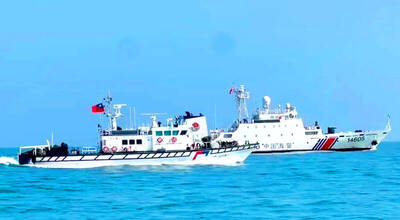
Instead of focusing solely on the threat of a full-scale military invasion, the US and its allies must prepare for a potential Chinese “quarantine” of Taiwan enforced through customs inspections, Stanford University Hoover fellow Eyck Freymann said in a Foreign Affairs article published on Wednesday. China could use various “gray zone” tactics in “reconfiguring the regional and ultimately the global economic order without a war,” said Freymann, who is also a nonresident research fellow at the US Naval War College. China might seize control of Taiwan’s links to the outside world by requiring all flights and ships entering or leaving Taiwan
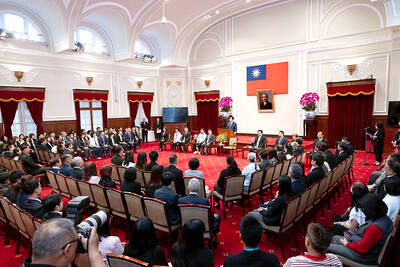
The next minimum wage hike is expected to exceed NT$30,000, President William Lai (賴清德) said yesterday during an award ceremony honoring “model workers,” including migrant workers, at the Presidential Office ahead of Workers’ Day today. Lai said he wished to thank the awardees on behalf of the nation and extend his most sincere respect for their hard work, on which Taiwan’s prosperity has been built. Lai specifically thanked 10 migrant workers selected for the award, saying that although they left their home countries to further their own goals, their efforts have benefited Taiwan as well. The nation’s industrial sector and small businesses lay
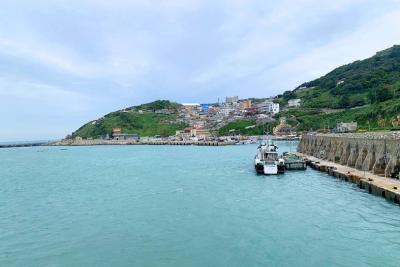
Taiwan has activated backup communications for its northernmost territory, the remote and strategically located island of Dongyin (東引), after poor weather conditions apparently shifted the wreckage of a ship onto an undersea cable causing it to break. The vulnerability of undersea communication cables linking Taiwan with its outlying islands has been a persistent cause of concern for Taipei, whose government has on several occasions blamed Chinese ships for intentionally causing damage. Dongyin, home to about 1,500 people, sits in a strategic position at the top of the Taiwan Strait and the island has a heavy military presence. It does not have an


 RSS
RSS