

Cross-party negotiations to draft a statement on UN Resolution 2758 broke down after heated disagreements about whether to align with other parliamentary statements on the matter or to return to the UN as the Republic of China (ROC).
The Taiwan People’s Party (TPP) caucus held discussions between the three major political parties on the statement, during which all parties put forward their respective proposals.
In July, the Inter-Parliamentary Alliance on China passed a motion clarifying that the resolution does not limit Taiwan’s participation in the UN, and that China has distorted its meaning to align with its own “one China” principle.
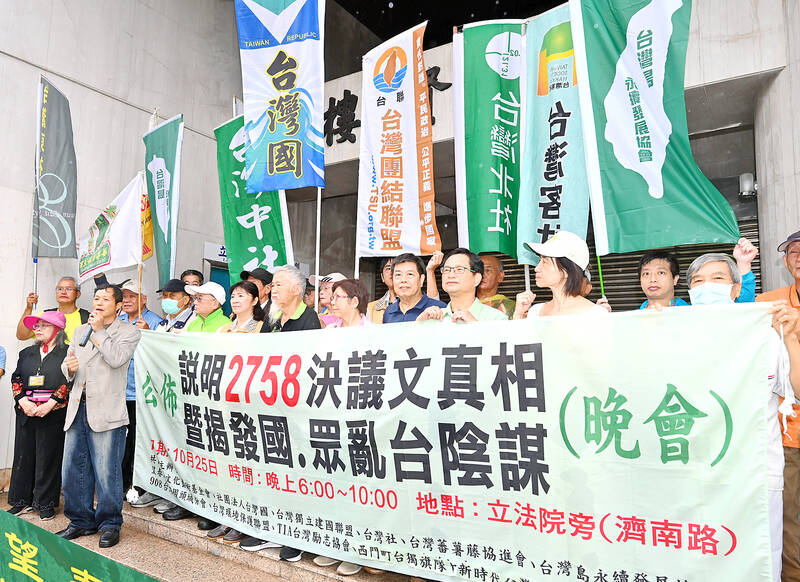
Photo: Tien Yu-hua, Taipei Times
The Dutch House of Representatives, the Australian Senate and the US House of Representatives’ Committee on Foreign Affairs have also passed similar statements.
The Democratic Progressive Party (DPP) suggested that the statement should emphasize how the resolution does not mention Taiwan, and that China has distorted it to block the nation from participating in international affairs.
The Chinese Nationalist Party (KMT) preferred to break with the resolution, and for Taiwan to rejoin the UN under the name the ROC.
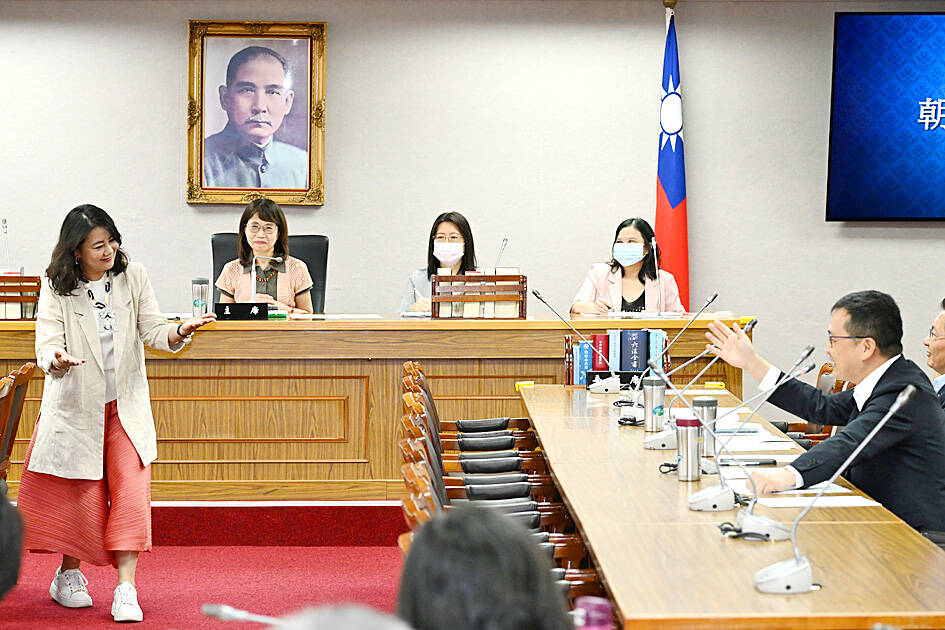
Photo: Chen Yi-kuan, Taipei Times
As no consensus was reached, it would be up to Legislative Speaker Han Kuo-yu (韓國瑜) to hold future negotiations.
TPP Legislator Chen Gau-tzu (陳昭姿), who chaired the meeting, said the TPP hoped that the Legislative Yuan could come to an agreement.
Chen added that the TPP’s proposed statement referred to the country as “ROC Taiwan.”
DPP Legislator Puma Shen (沈伯洋) said that the DPP and TPP proposals were similar, with the key difference being that the DPP sought to condemn China to align with statements from legislatures in other countries.
KMT Legislator Lo Chih-chiang (羅智強), who arrived late, referred to President William Lai’s (賴清德) remarks over the weekend that China cannot be Taiwan’s “motherland” and said that both parties were united in their feelings, and that the DPP has no reason to oppose the KMT’s proposal to rejoin international organizations as the ROC.
DPP caucus chief executive Rosalia Wu (吳思瑤) agreed with Shen that the TPP and DPP proposals were close in terms of historical accuracy and reflected mainstream public opinion, although the former is more domestic-focused and the latter focused internationally.
However, the KMT proposal seeks to negate UN Resolution 2758 entirely and is at odds with the international community, she added.
After further remarks from Lo, the DPP legislators left the meeting.
Wu accused Lo and the KMT of seeking to sow chaos within the Legislative Yuan, adding that such statements could send the wrong signal to the international community.
She said the KMT refused to engage in good-faith negotiations, adding that the DPP would await future talks led by Han.
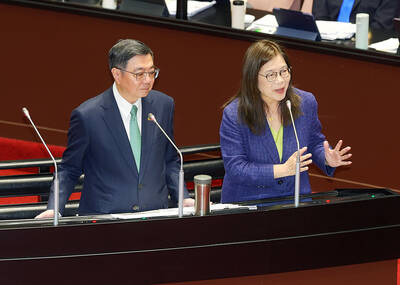
The donation of offshore patrol vessel Kinmen to the Philippines includes provisions that protect Taiwanese fishers and facilitate security cooperation across the First Island Chain, officials said yesterday. The comment was made during the Cabinet’s comprehensive administrative report at the legislature after Chinese Nationalist Party (KMT) Legislator Hsu Yu-chen (許宇甄) expressed concerns about the decision to give a ship to a country whose coast guard had in 2013 fired on a Taiwanese trawler and killed its captain without provocation. The Cabinet should lay out the safeguards that have been established to prevent the Philippine government from using the Kinmen to harass, expel
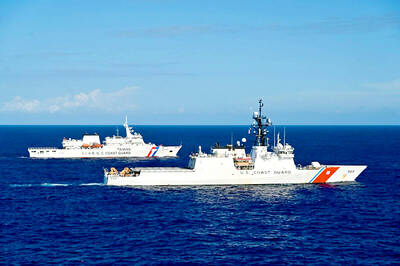
GROWING TIES: The CGA is planning a goodwill mission to the Philippines, in what would be the first time since 1975 a Taiwanese paramilitary vessel has visited the country The Coast Guard Administration (CGA) plans to significantly expand its participation in international security cooperative frameworks and its operational capabilities, a budget proposal for next year showed. The budget indicates a transformation of the CGA from a maritime law enforcement arm into a national defense and intelligence gathering entity capable of tackling larger regional security matters. The proposal showed that personnel from the coast guard’s Intelligence Division and Special Action Support Center are to participate in high-level national security talks with the US. As the CGA has dealt with China’s rising “gray zone” threats around Taiwan, it has become a valuable asset to
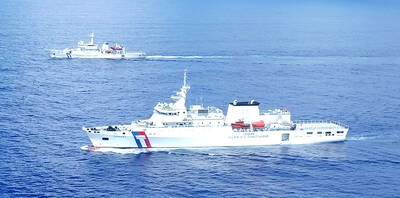
‘FRIENDSHIP FLEET’: A CGA official is scheduled to meet with the president of the Pacific nation, while one of the ships is to host a banquet and National Day event Two Coast Guard Administration (CGA) patrol vessels have docked at Malakal Harbor in Palau as part of an expedition exercise and diplomatic visit, during which a senior official is expected to meet with Palauan President Surangel Whipps Jr, the agency said yesterday. The two vessels, the 4,000-tonne-class Chiayi and the 1,000-tonne-class Penghu, set sail for Palau from Taiwan last week and arrived on Tuesday at Malakal Harbor, the CGA’s Fleet Branch said in a statement. The journey marks the second time the CGA has dispatched a “friendship fleet” to another country, after it sent its first-ever goodwill fleet, comprising the Hualien and
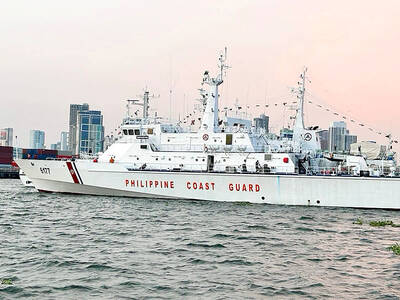
A patrol vessel donated by the Coast Guard Administration (CGA) to the Philippines was commissioned into the Philippine Coast Guard (PCG) on Friday, a Philippine non-governmental organization said. The CGA on Sept. 16 confirmed media reports that Taiwan had donated a retired 500-tonne patrol vessel to the Philippines. The Manila-based We Protect Our Seas (WPS) foundation, which served as an intermediary in the transfer, said that the vessel was formerly the CGA’s 500-tonne petrol vessel Kinmen (CG123). The WPS, in a statement issued on Friday, said the vessel, renamed as the BRP Sarangani, had been commissioned into the PCG the


 RSS
RSS