


The Mainland Affairs Council (MAC) yesterday said it hopes that Taiwanese celebrities who reposted Chinese state media articles celebrating the National Day of the People’s Republic of China would consider public perceptions in Taiwan.
Yesterday, China’s National Day, several Taiwanese celebrities reposted articles from Chinese state media on their personal Sina Weibo profiles about the holiday, including Golden Horse Award-winning actor Wu Kang-ren (吳慷仁), Cyndi Wang (王心凌), Ouyang Didi (歐陽娣娣), Wang Leehom (王力宏) and others.
Artist Jam Hsiao (蕭敬騰) on Monday night performed in a National Day program on China Central Television, with the state media channel calling him an artist from “Taiwan, China.”

Photo: Tapei Times file and screen grab from Sina Weibo
Wu, who on Monday announced he had signed to a new Chinese management company, yesterday reposted a message from the state-run People’s Daily on his Sina Weibo account, adding: “Congratulations to Beautiful China.”
The MAC said in a statement that although entertainers and celebrities might feel pressure from the Chinese Communist Party to make political statements around holidays, it hoped that they would consider public sentiment in Taiwan and appreciate the nation’s hard-won democratic freedoms.
Separately, the council yesterday again asked Taiwanese to be cautious when traveling to China, Hong Kong or Macau, after two people were sentenced to prison under Hong Kong’s National Security Law.
Hong Konger Chiu Kai-pong (諸啟邦), 27, was sentenced to 14 months on Sept. 16 for “performing acts with seditious intent” for wearing a T-shirt with the words “Liberate Hong Kong, revolution of our times” and a yellow mask with the letters “FDNOL,” short for “five demands, not one less” on June 12, the anniversary of clashes between police and protesters during 2019’s democracy protests.
Chung Man-kit (鍾文傑), 29, was sentenced to 10 months for writing “seditious” graffiti on bus seats.
The MAC said it wished to remind Taiwanese that as of June, a travel advisory for China, Hong Kong and Macau was elevated to “orange,” its second-highest alert.
The council’s Web site has up-to-date information on what might be considered a crime that could lead to prosecution in China, as well as other travel advisories, it said.

Yangmingshan National Park authorities yesterday urged visitors to respect public spaces and obey the law after a couple was caught on a camera livestream having sex at the park’s Qingtiangang (擎天崗) earlier in the day. The Shilin Police Precinct in Taipei said it has identified a suspect and his vehicle registration number, and would summon him for questioning. The case would be handled in accordance with public indecency charges, it added. The couple entered the park at about 11pm on Thursday and began fooling around by 1am yesterday, the police said, adding that the two were unaware of the park’s all-day live
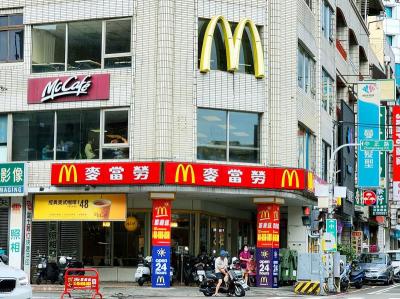
Fast food chain McDonald's is to raise prices by up to NT$5 on some products at its restaurants across Taiwan, starting on Wednesday next week, the company announced today. The prices of all extra value meals and sharing boxes are to increase by NT$5, while breakfast combos and creamy corn soup would go up by NT$3, the company said in a statement. The price of the main items of those meals, if ordered individually, would remain the same. Meanwhile, the price of a medium-sized lemon iced tea and hot cappuccino would rise by NT$3, extra dipping sauces for chicken nuggets would go up

Yangmingshan National Park’s Qingtiangang (擎天崗) nature area has gone viral after a park livestream camera observed a couple in the throes of intimate congress, which was broadcast live on YouTube, drawing large late-night crowds and sparking a backlash over noise, bright lights and disruption to wildlife habitat. The area’s livestream footage appeared to show a couple engaging in sexual activity on a picnic table in the park on Friday last week, with the uncensored footage streamed publicly online. The footage quickly spread across social media, prompting a tide of visitors to travel to the site to “check in” and recreate the

Minister of Digital Affairs Lin Yi-ching (林宜敬) yesterday cited regulatory issues and national security concerns as an expert said that Taiwan is among the few Asian regions without Starlink. Lin made the remarks on Facebook after funP Innovation Group chief executive officer Nathan Chiu (邱繼弘) on Friday said Taiwan and four other countries in Asia — China, North Korea, Afghanistan and Syria — have no access to Starlink. Starlink has become available in 166 countries worldwide, including Ukraine, Malaysia, the Philippines and Vietnam, in the six years since it became commercial, he said. While China and North Korea block Starlink, Syria is not


 RSS
RSS