


Democratic Progressive Party (DPP) legislative caucus secretary-general Rosalia Wu (吳思瑤) yesterday demanded that the government fix loopholes on security measures after former independent legislative candidate Ma Chih-wei (馬治薇), convicted for selling sensitive data to two Chinese people, live-streamed an interpellation session at the Legislative Yuan on Friday.
Formerly a spokeswoman for Taiwan People’s Party’s Taoyuan chapter, Ma was expelled from the party on Jan. 6, a day after she was detained on suspicion of having received NT$1 million (US$31,595) from China to fund her legislative election campaign in exchange for intelligence.
She was indicted in March for allegedly meeting with Chinese “involved in Taiwan’s affairs” during a trip to China in April last year, and the two sides discussed Ma providing intelligence about Taiwan in exchange for funding.

Photo: screen grab from The Grass Media’s YouTube channel
The Taoyuan District Court in August sentenced her to eight months in prison for selling information such as names, titles, telephone numbers of some people working in the Presidential Office, Legislative Yuan, Executive Yuan and National Security Bureau to two Chinese.
Ma has filed an appeal. She does not need to serve the sentence before a final verdict is reached on her case.
Wu yesterday demanded security measures to be increased to prohibit Ma from accessing the Legislative Yuan.
“Ma was convicted for selling private data to China, and she is a serious concern for our national security,” Wu said.
“How can she just get inside, and live-stream from the second-floor gallery inside the legislature?” she asked.
“I found out that she got inside by saying she is a member of the media,” Wu said.
“Stronger security measures are needed to prevent leaking of confidential materials, as she is a convict for selling intelligence by providing names of government officials to China. Her case must be taken very seriously,” she said.
Asked about Wu’s comments, Ma said she was hosting an online political news show for the YouTube channel The Grass Media (草傳媒), so she could enter the Legislative Yuan as a member of the press.
Additional reporting by Lin Che-yuan
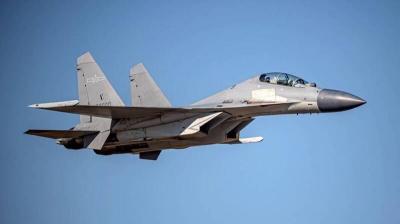
Eight Chinese naval vessels and 24 military aircraft were detected crossing the median line of the Taiwan Strait between 6am yesterday and 6am today, the Ministry of National Defense said this morning. The aircraft entered Taiwan’s northern, central, southwestern and eastern air defense identification zones, the ministry said. The armed forces responded with mission aircraft, naval vessels and shore-based missile systems to closely monitor the situation, it added. Eight naval vessels, one official ship and 36 aircraft sorties were spotted in total, the ministry said.
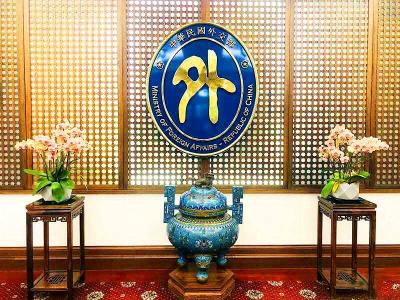
The Ministry of Foreign Affairs (MOFA) today said that if South Korea does not reply appropriately to its request to correct Taiwan’s name on its e-Arrival card system before March 31, it would take corresponding measures to alter how South Korea is labeled on the online Taiwan Arrival Card system. South Korea’s e-Arrival card system lists Taiwan as “China (Taiwan)” in the “point of departure” and “next destination” fields. The ministry said that it changed the nationality for South Koreans on Taiwan’s Alien Resident Certificates from “Korea” to “South Korea” on March 1, in a gesture of goodwill and based on the

Taiwanese officials were shown the first of 66 F-16V fighter jets purchased by Taiwan from the United States, the Ministry of National Defense said yesterday, adding the aircraft has completed an initial flight test and is expected to be delivered later this year. A delegation led by Deputy Minister of National Defense Hsu Szu-chien (徐斯儉) visited Lockheed Martin’s F-16 C/D Block 70 (also known as F-16V) assembly line in South Carolina on March 16 to view the aircraft. The jet will undergo a final acceptance flight in the US before being delivered to Taiwan, the
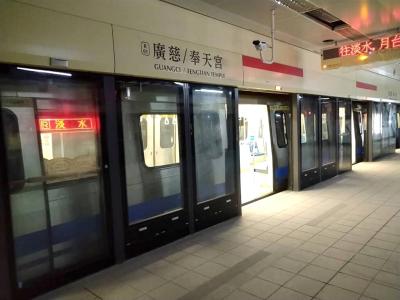
The New Taipei Metro's Sanyin Line and the eastern extension of the Taipei Metro's Tamsui-Xinyi Line (Red Line) are scheduled to begin operations in June, the National Development Council said today. The Red Line, which terminates at Xiangshan Station, would be connected by the 1.4km extension to a new eastern terminal, Guangci/Fengtian Temple Station, while the Sanyin Line would link New Taipei City's Tucheng and Yingge stations via Sanxia District (三峽). The council gave the updates at a council meeting reviewing progress on public construction projects for this year. Taiwan's annual public infrastructure budget would remain at NT$800 billion (US$25.08 billion), with NT$97.3


 RSS
RSS