


Prosecutors today said they decided not to press charges against entertainer Mickey Huang (黃子佼) for sexual offenses due to insufficient evidence.
This year, a woman known as “Miss K” accused Huang of sexual assault occurring in 2006 when she was just 17 years old.
The plaintiff wrote in a Facebook post in April that after attending an acting workshop involving Huang, the two kept in contact until he invited her to his place of residence to model for a photoshoot.

Photo: Taipei Times
The Facebook post alleged that during the photoshoot, Huang asked Miss K to change into swimwear and pose seductively before touching her inappropriately multiple times.
Huang requested that Miss K remove her clothing under the pretense of “artistic integrity,” the post said.
After the alleged sexual abuse, Huang urged her to put her clothes back on and return home, it said.
After the inquiry, the Taipei District Prosecutors’ Office found that the statements provided by the witnesses and the plaintiff were not concurrent, and the plaintiff’s case could not be proved beyond reasonable doubt.
Due to insufficient evidence, the court said it would not charge Huang with crimes of sexual abuse and the case has been dismissed without judicial punishment.
Television presenter Huang has been embroiled in Taiwan’s #MeToo movement since last summer.
The office in a separate case indicted Huang earlier this year after a hard drive was discovered at his residence containing indecent images of multiple women allegedly taken without consent, seven of whom were underage.
Huang’s subsequent sentence of two years of deferred prosecution, a NT$1.2 million (US$36,970) fine to be paid to the public treasury and an apology letter sparked public outcry and calls for reform to Taiwan’s sexual offense legislature after being deemed “too lenient.”
No indecent images were found of Miss K on the USB in question, the office said, a key factor in today’s decision.
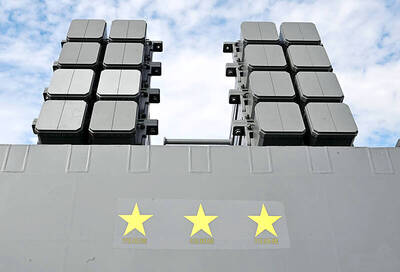
UPGRADE: The Kang Ding-class frigate is replacing its Chaparall missiles with Tien Chien II and Hua Yang VLS, which would provide it with long-range, 360° air defense Taiwan plans to produce 1,200 to 1,376 Hai Chien II missiles (海劍二, Sea Sword II) — also known as TC-2N — to serve as the standard air defense system of the navy’s surface combatant fleet, a source said yesterday. Last week, the Hai Chien II, the naval version of the Tien Kung II missile (天劍二, Sky Sword II), completed a live-fire test in waters off the National Chungshan Institute of Science and Technology’s Jiupeng facility (九鵬) in Pingtung County’s Manjhou Township (滿州). The MIM72 Chaparral and other dated air defense missiles that currently arm Taiwanese ships have inadequate range to combat Chinese

REASONS FOR TRAVEL: An assistant professor said that proposed amendments to penalize drivers if they used drugs overseas would not deter people from traveling People who operate a motor vehicle under the influence of marijuana would have their driver’s license revoked, even if they used the substance while overseas, the Ministry of Transportation and Communications said yesterday, citing proposed amendments to the Road Traffic Management and Penalty Act (道路交通管理處罰條例). The amendments would also authorize the government to revoke the licenses of people determined to have used Category 1 or Category 2 narcotics, even if they were not operating a vehicle while under the influence of drugs, as well as ban them from taking the license test for three years, the ministry said. People aged 18 or

GLOBALGIVING: ‘ Caving to external pressure is not acceptable for an organization that has cultivated justice reform and human rights for 30 years,’ one NGO said A slew of non-government organizations (NGOs) have withdrawn from the GlobalGiving fundraising platform after it announced it would use “Chinese Taipei” instead of “Taiwan” from next month. The Taiwan Good Rice Association wrote on Facebook on Friday that it was informed on April 28 via a teleconference call of the change, which was made because the platform wanted to operate in China. Taiwan Good Rice is to terminate all cooperative relationships with GlobalGiving in response to the platform’s “unilateral and non-negotiable” decision to remove references to Taiwan, the NGO said. “Taiwan is in the official name of Taiwan Good Rice Association and the

HEAVY WEATHER: Typhoon Jangmi is due to crash straight into the Ryukyus as airlines look to shift flights to larger aircraft or cancel flights to Okinawa entirely Taiwan’s international air carriers announced flight adjustments over the weekend as Typhoon Jangmi is forecast to hit the Ryukyu Islands today and tomorrow. The Central Weather Administration (CWA) upgraded Jangmi from a tropical storm to a typhoon at 8am yesterday, with the eye located 580km south of Naha city. It was moving north at 19kph. Today, China Airlines’ CI-120, CI-121, CI-122 and CI-123 flights between Taoyuan and Naha, Okinawa, have been canceled as well as CI-132 and CI-133 between Kaohsiung and Naha. EVA Air’s BR-112, BR-113, BR-186 and BR-185 flights between Taoyuan and Naha are also canceled. Low-cost carrier Tigerair Taiwan canceled IT-230,


 RSS
RSS