


The Ministry of National Defense’s five-year defense plan presented to the Legislative Yuan showed a worrying decrease in the recruitment of voluntary forces, National Policy Foundation associate research fellow Chieh Chung (竭仲) said.
Chieh said the ministry’s budget proposal for next year would decrease the number of total positions in the all-voluntary force by 5,486 people, or about 11 battalions, compared with this year.
The total personnel count for next year would be its lowest, while this year’s numbers were already down 5,187, to 166,235, compared with last year, he said.

Photo: Taipei Times
The cut positions comprised mostly low-level non-commissioned officers (NCOs) and privates first class, he said, adding that the military might lose more than 9 percent of its NCOs and senior soldiers.
It was also worrying that the reductions were often from units preparing for combat duty, he said, citing proposed budget cuts for additional payouts to units on combat duty, down about 9 percent, or NT$368.47 million (US$11.49 million), from NT$4.11 billion this year
The unplanned-for decrease in positions could be due to a personnel shortage within the military’s all-volunteer force, which has been under duress due to increased drills and combat missions, Chieh said.
The military would receive at least 15 types of new equipment over the next three to five years, further taxing an already understaffed military, while the government aims to increase its size and prepare for possible war, he said.
The military has been bleeding personnel at the ground level over the past few years, a situation that would only be exacerbated in the coming years, he said.
In response, the ministry yesterday said that the total number of reduced positions was from all military units and was not a concentrated effort to undercut any single unit.
The ministry also denied that 11 battalions would be removed.
Declining birthrates and the military competing with the private sector to hire staff had affected the all-voluntary force program since 2022, it said, adding that the average personnel-to-division rate was about 78.6 percent, or about 21.4 percent understrength.
The ministry said it is implementing measures to increase personnel retention and recruitment efficacy to mitigate personnel loss.
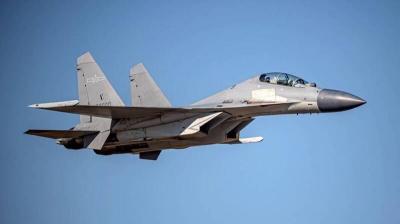
Eight Chinese naval vessels and 24 military aircraft were detected crossing the median line of the Taiwan Strait between 6am yesterday and 6am today, the Ministry of National Defense said this morning. The aircraft entered Taiwan’s northern, central, southwestern and eastern air defense identification zones, the ministry said. The armed forces responded with mission aircraft, naval vessels and shore-based missile systems to closely monitor the situation, it added. Eight naval vessels, one official ship and 36 aircraft sorties were spotted in total, the ministry said.
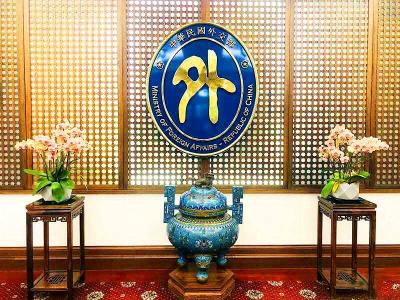
The Ministry of Foreign Affairs (MOFA) today said that if South Korea does not reply appropriately to its request to correct Taiwan’s name on its e-Arrival card system before March 31, it would take corresponding measures to alter how South Korea is labeled on the online Taiwan Arrival Card system. South Korea’s e-Arrival card system lists Taiwan as “China (Taiwan)” in the “point of departure” and “next destination” fields. The ministry said that it changed the nationality for South Koreans on Taiwan’s Alien Resident Certificates from “Korea” to “South Korea” on March 1, in a gesture of goodwill and based on the

Taiwanese officials were shown the first of 66 F-16V fighter jets purchased by Taiwan from the United States, the Ministry of National Defense said yesterday, adding the aircraft has completed an initial flight test and is expected to be delivered later this year. A delegation led by Deputy Minister of National Defense Hsu Szu-chien (徐斯儉) visited Lockheed Martin’s F-16 C/D Block 70 (also known as F-16V) assembly line in South Carolina on March 16 to view the aircraft. The jet will undergo a final acceptance flight in the US before being delivered to Taiwan, the
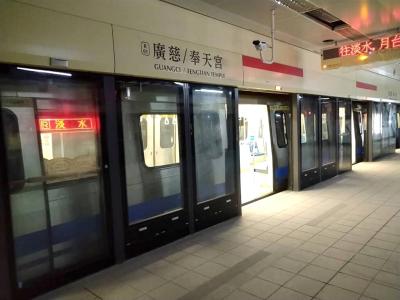
The New Taipei Metro's Sanyin Line and the eastern extension of the Taipei Metro's Tamsui-Xinyi Line (Red Line) are scheduled to begin operations in June, the National Development Council said today. The Red Line, which terminates at Xiangshan Station, would be connected by the 1.4km extension to a new eastern terminal, Guangci/Fengtian Temple Station, while the Sanyin Line would link New Taipei City's Tucheng and Yingge stations via Sanxia District (三峽). The council gave the updates at a council meeting reviewing progress on public construction projects for this year. Taiwan's annual public infrastructure budget would remain at NT$800 billion (US$25.08 billion), with NT$97.3


 RSS
RSS