


The trailer of a new TV series portraying a Chinese attack on Taiwan has prompted a wave of emotional response and discussion in the nation.
The teaser for Zero Day (零日攻擊), a Taiwanese production partly funded by the government and is expected to air next year, has given many viewers a sense of urgency.
Its release this week coincided with annual air raid drills to prepare the nation’s 23 million residents in the event of an invasion by the Chinese military.

Photo: Chen Yi-chuan, Taipei Times
“I burst into tears watching this. I feel heavy-hearted, and it is scary. However, this is what we need to face as Taiwanese,” a person wrote in a comment on YouTube.
“We need to make the best preparation for the worst scenario,” another person said in a comment.
The nearly 18-minute-long trailer depicts a fictitious ploy by the Chinese People’s Liberation Army to mount a naval blockade of Taiwan in the guise of a search-and-rescue mission.
It also shows cyberattacks disrupting infrastructure and sabotages by Beijing’s collaborators in the prelude to war.
“The threat is not something new, but we have been avoiding talking about it due to its sensitivity,” the series’ producer Cheng Shin-mei (鄭心媚) said.
The heightened emotions might help the Taiwanese military recruit more personnel.
Security analysts generally see Taiwan as ill-prepared to deter or resist China, citing Taiwan’s shrinking military and number of volunteer soldiers.
In a sign that it is serious about defending itself, Taiwan in 2022 announced an extension of its compulsory military service from four months to one year, which is to take effect this year.
Funding for the 10-part series came from the Ministry of Culture and Robert Tsao (曹興誠), founder and former chairman of United Microelectronics, Taiwan’s second-largest contract chipmaker.
Tsao has been a vocal advocate of stronger national defense in recent years.
Cheng said her team is in talks with a major international streaming platform to release the series, hoping to draw more global attention to the threats Taiwan faces from China.
She declined to publicly name the company.
The prospect of a cross-strait military conflict has been present for decades, but rarely addressed bluntly in Taiwanese TV shows, partly due to the topic’s sensitivity and commercial implications.
Several actors and directors dropped out of the project due to fears of offending China, Cheng said.
“They usually have to sign contracts with clauses that forbid them to be involved in politically sensitive topics, and violators would need to pay for any loss caused by that,” Cheng said.
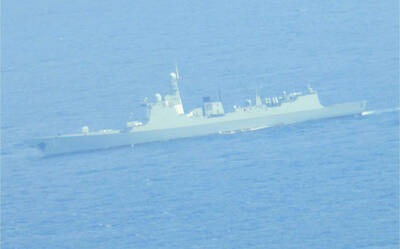
The military has spotted two Chinese warships operating in waters near Penghu County in the Taiwan Strait and sent its own naval and air forces to monitor the vessels, the Ministry of National Defense (MND) said. Beijing sends warships and warplanes into the waters and skies around Taiwan on an almost daily basis, drawing condemnation from Taipei. While the ministry offers daily updates on the locations of Chinese military aircraft, it only rarely gives details of where Chinese warships are operating, generally only when it detects aircraft carriers, as happened last week. A Chinese destroyer and a frigate entered waters to the southwest
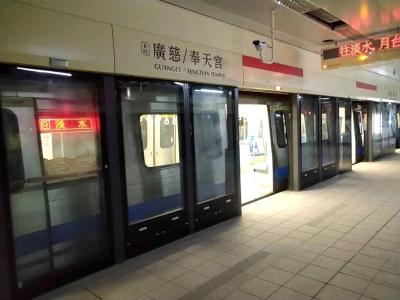
The eastern extension of the Taipei MRT Red Line could begin operations as early as late June, the Taipei Department of Rapid Transit Systems said yesterday. Taipei Rapid Transit Corp said it is considering offering one month of free rides on the new section to mark its opening. Construction progress on the 1.4km extension, which is to run from the current terminal Xiangshan Station to a new eastern terminal, Guangci/Fengtian Temple Station, was 90.6 percent complete by the end of last month, the department said in a report to the Taipei City Council's Transportation Committee. While construction began in October 2016 with an
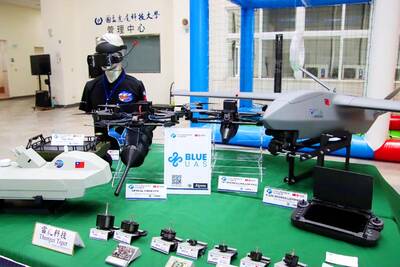
NON-RED SUPPLY: Boosting the nation’s drone industry is becoming increasingly urgent as China’s UAV dominance could become an issue in a crisis, an analyst said Taiwan’s drone exports to Europe grew 41.7-fold from 2024 to last year, with demand from Ukraine’s fight against Russian aggression the most likely driver of growth, a study showed. The Institute for Democracy, Society and Emerging Technology (DSET) in a statement on Wednesday said it found that many of Taiwan’s uncrewed aerial vehicle (UAV) sales were from Poland and the Czech Republic. These countries likely transferred the drones to Ukraine to aid it in its fight against the Russian invasion that started in 2022, it said. Despite the gains, Taiwan is not the dominant drone exporter to these markets, ranking second and fourth
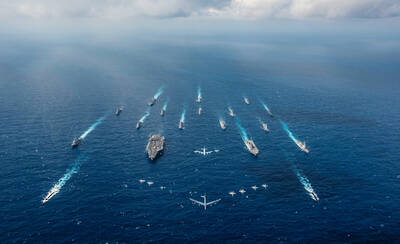
Japanese Prime Minister Sanae Takaichi’s comment last year on Tokyo’s potential reaction to a Taiwan-China conflict has forced Beijing to rewrite its invasion plans, a retired Japanese general said. Takaichi told the Diet on Nov. 7 last year that a Chinese naval blockade or military attack on Taiwan could constitute a “survival-threatening situation” for Japan, potentially allowing Tokyo to exercise its right to collective self-defense. Former Japan Ground Self-Defense Force general Kiyofumi Ogawa said in a recent speech that the remark has been interpreted as meaning Japan could intervene in the early stages of a Taiwan Strait conflict, undermining China’s previous assumptions


 RSS
RSS