


Troops stationed on Penghu Islands early yesterday held an anti-landing drill featuring US-made Stinger and Javelin missile defense systems as part of the ongoing Han Kuang exercises.
Army Penghu Defense Command troops fired from the Dual Mount Stinger, a tripod-mounted launch platform for the Stinger missile, and used Javelin portable anti-tank missiles during the drill held on the beachfront.
Soldiers also fired a 155m cannon, 105mm guns and 120mm mortars during the hour-long drill. This served as covering fire to protect troops as M60A3 tanks and CM-21 armored vehicles advanced on the battlefield.
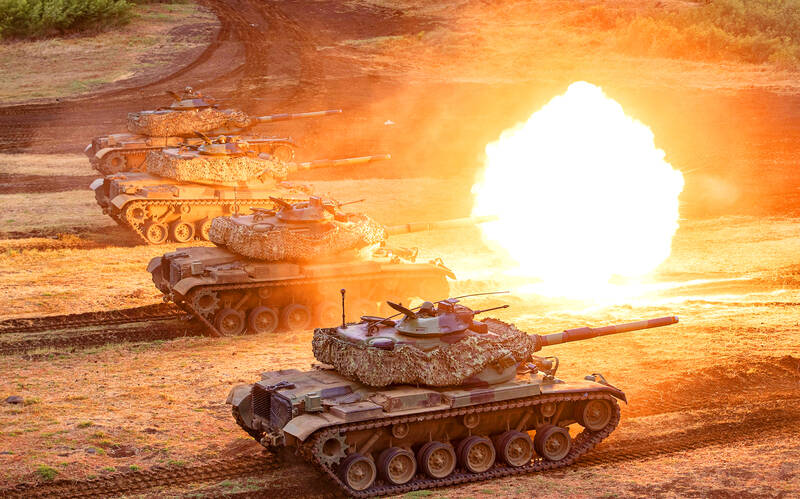
Photo: AP / Military News Agency
The drill was also supposed to include air force jets and naval vessels, but they were canceled due to an approaching typhoon.
Similar live-fire exercises were also held on the Matsu Islands.
Meanwhile, live-fire exercises were canceled in Kinmen, less than 10km from mainland China, as more than 30 merchant vessels were heading to Liaoluo Port (料羅港) so they could anchor and shelter from the typhoon.
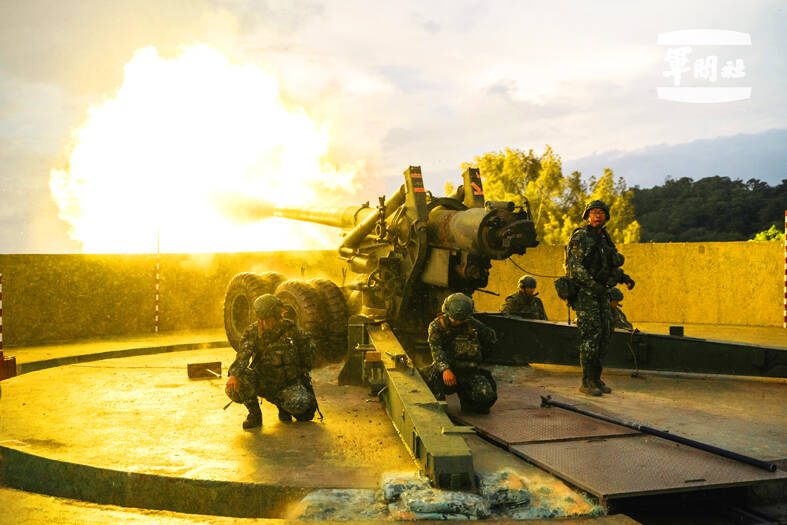
Photo: AP / Ministry of National Defense
Major General Cheng Chieh-yuan (鄭傑元), a spokesman for the Kinmen Defense Command, said the exercises were called off due to the vessels being in the target area.
Yesterday was the third day of the five-day around-the-clock live-fire component of the 40th Han Kuang series of exercises that began on Monday.
Due to the approaching Typhoon Gaemi, which was forecast to bring heavy rain and strong winds to almost all of Taiwan yesterday and today, the Ministry of National Defense yesterday said that all exercises scheduled for the remaining days would be canceled to focus on typhoon disaster preparation.
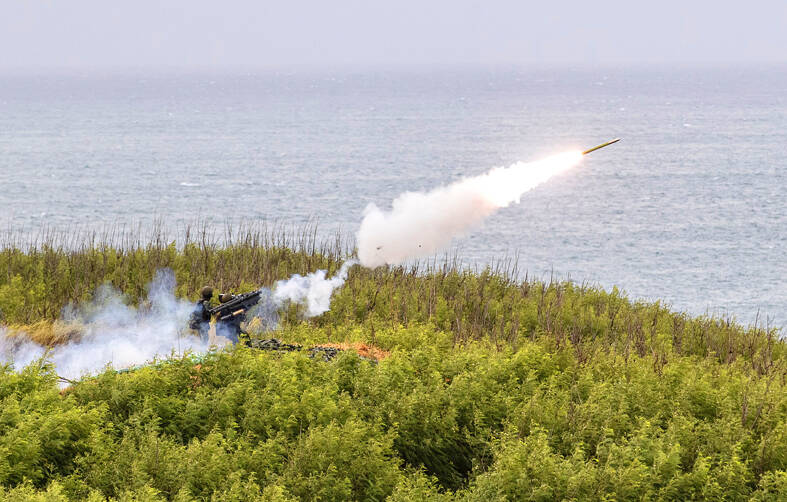
Photo: AP / Military News Agency / Ministry of National Defense
Instead of holding ground drills, troops would hold tabletop war games, the ministry said.
The annual Han Kuang exercises, which have served as Taiwan’s major war games since 1984, consist of live-fire drills and computerized war games, and seek to test Taiwan’s combat readiness in the face of a possible Chinese invasion.
This year’s tabletop exercises were staged in April.

The Ministry of Finance this afternoon announced the winning numbers for the March-April uniform invoice lottery. The winning number for the NT$10 million (US$318,060) special prize is 19531471, and the winning number for the NT$2 million grand prize is 85941329. Three numbers were drawn for the NT$200,000 first prize: 07225810, 20231230 and 83518781. Those with receipts matching the last seven digits of any of the first-prize numbers will win the NT$40,000 second prize, while those matching the last six digits will win the NT$10,000 third prize. Those whose receipts match the last five digits of the first-prize numbers can claim the NT$4,000 fourth prize,
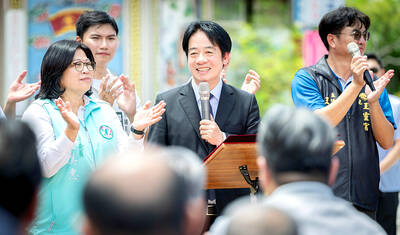
SIX SUBSIDIES: The monthly allowance for older farmers is to increase to NT$10,000, and NT$5,000 is to be given to homemakers under the national pension system, Lai said The government is to implement major welfare policies for disadvantaged groups, including raising the monthly allowance for older farmers to NT$10,000 and providing homemakers with NT$5,000 per month, President William Lai (賴清德) said yesterday. Lai made the remarks during a visit to Wangling Temple in Chiayi County, saying that the planned increases were being introduced amid economic growth and an increase in tax revenue. Touting a policy, in which the government plans to provide a monthly allowance of NT$5,000 for every child under the age of 18 in a bid to address Taiwan’s low birthrate, Lai said that if received for the
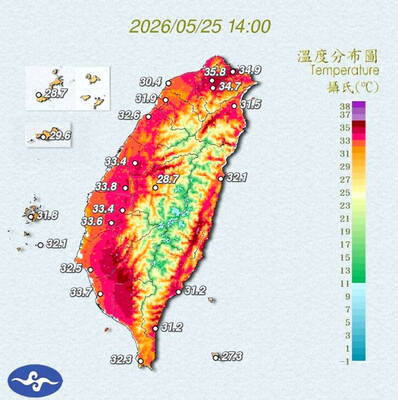
STAY COOL: The HPA recommended that people stay hydrated, use air-conditioning or fans while indoors, wear loose-fitting clothes and walk in the shade while outdoors Employers must implement measures such as installing cooling equipment, and providing drinking water and rest breaks for outdoor workers starting from Monday next week, the Taipei Department of Labor said on Sunday. Employers who fail to comply could face fines of NT$30,000 to NT$300,000 under the Occupational Safety and Health Act (職業安全衛生法), the department said. Businesses in Taipei employing fewer than 100 workers, as well as registered self-employed workers with labor insurance coverage, could receive on-site assessments and guidance from occupational safety consultants to help them apply for central government subsidies to implement or improve heat-protection measures, it said. Under the Ministry of
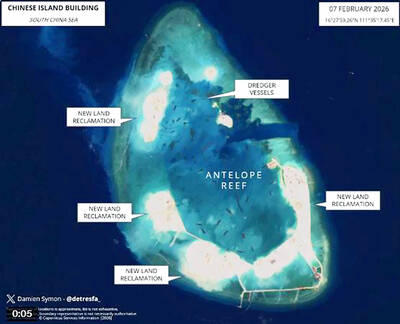
ISOLATION: The outposts would serve as support and backup bases, forcing US forces to either face China head-on or reroute, increasing travel time and operational costs China’s outposts in the South China Sea could be used to delay and constrain foreign forces during a conflict in the Taiwan Strait, giving Beijing a critical window to carry out amphibious landing and blockade operations, a report said. The Chinese Communist Party’s (CCP) forward operating bases on islands and reclaimed features in the South China Sea could delay foreign forces long enough for the Chinese People’s Liberation Army (PLA) to secure a key 48-to-72-hour window in the Taiwan Strait, a report commissioned by the Mainland Affairs Council found. The report, conducted by the Institute for National Defense and Security Research, examined


 RSS
RSS