


Taiwan could become the first Asian nation that is not affected by three major swine diseases next year should the World Organisation for Animal Health (WOAH) approve the government’s application to become a swine fever-free country.
The Ministry of Agriculture applied because no swine fever cases were found for a year after the government stopped requiring domestically grown pigs to be inoculated.
If the application is approved, it would be an important milestone for Taiwan’s pig farming industry and show the nation has eliminated the spread of foot and mouth disease, African swine fever and classical swine fever, the agricultural ministry said, adding that Taiwan could be granted the status of swine fever-free nation next year.
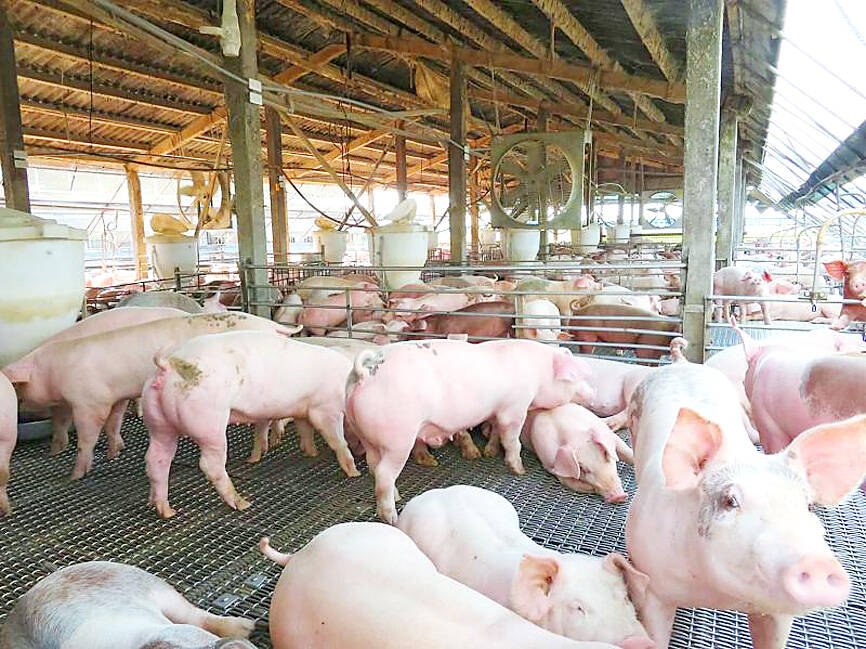
Photo courtesy of Chiayi County Government
The status would also help expand the international market for Taiwanese pork, the ministry said.
Swine fever is a category-A zoonotic disease in Taiwan with a high mortality rate and can cause systemic hemorrhaging and stillbirths in pigs, it said, adding that countries are required to report swine fever cases to the WOAH.
While most Asian nations have been affected by swine fever-related diseases, the last case of swine fever detected in Taiwan was in Changhua County in 2005, the ministry said.
The government planned to make Taiwan a swine fever-free nation in three phases, the ministry said.
During the first phase between 2021 and 2022, all domestically-reared pigs had to be vaccinated against swine fever, it said.
The government also closely monitors environmental risks associated with the disease and communicates with pig farm industry representatives about related issues, the ministry said.
The government last year began the second phase by continuing to monitor environmental risks for the disease and gradually stopping swine fever vaccine injections, the ministry said.
During the third phase, which is to begin this month, the agricultural ministry filed an application to become a swine fever-free nation, it said.
The measure to gradually discontinue vaccinating domestically reared pigs was implemented in two stages, the ministry said.
In the first stage, which lasted from January to June last year, pigs were no longer required to be vaccinated against swine fever, except for breeding pigs, the ministry said.
In the second stage, which began in July last year, all pigs are exempt from vaccination, it said.
“We have found no traces of swine fever field virus strains after closely monitoring their activities for one year, which meets the WOAH’s requirement to apply to become a swine fever-free nation,” the ministry said.
Obtaining “swine fever-free” status would reduce the cost of raising pigs by reducing expenditure on additional personnel and vaccines, the ministry said.
It could also minimize financial losses that pig farmers could sustain from pigs dying of the side effects of vaccination, it said, adding that the global competitiveness of Taiwanese pork could also be enhanced.
The ministry said that it would take further action to help the pork industry cope with the challenges and impacts of free trade, including negotiating with target countries for pork exports and assisting pig farms and slaughterhouses to upgrade their facilities and obtain certifications.
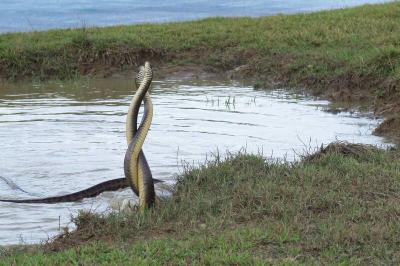
Kenting National Park service technician Yang Jien-fon (楊政峰) won a silver award in World Grand Prix Photography Awards Spring Season for his photograph of two male rat snakes intertwined in combat. Yang’s colleagues at Kenting National Park said he is a master of nature photography who has been held back by his job in civil service. The awards accept entries in all four seasons across six categories: architectural and urban photography, black-and-white and fine art photography, commercial and fashion photography, documentary and people photography, nature and experimental photography, and mobile photography. Awards are ranked according to scores and divided into platinum, gold and
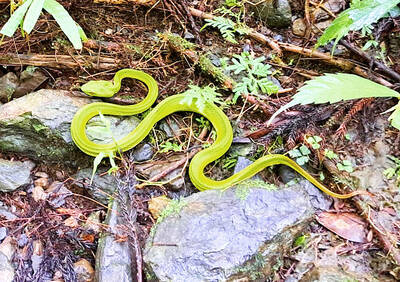
More than half of the bamboo vipers captured in Tainan in the past few years were found in the city’s Sinhua District (新化), while other districts had smaller catches or none at all. Every year, Tainan captures about 6,000 snakes which have made their way into people’s homes. Of the six major venomous snakes in Taiwan, the cobra, the many-banded krait, the brown-spotted pit viper and the bamboo viper are the most frequently captured. The high concentration of bamboo vipers captured in Sinhua District is puzzling. Tainan Agriculture Bureau Forestry and Nature Conservation Division head Chu Chien-ming (朱健明) earlier this week said that the

BREACH OF CONTRACT: The bus operators would seek compensation and have demanded that the manufacturer replace the chips with ones that meet regulations Two bus operators found to be using buses with China-made chips are to demand that the original manufacturers replace the systems and provide compensation for breach of contract, the Veterans Affairs Council said yesterday. Democratic Progressive Party Legislator Michelle Lin (林楚茵) yesterday said that Da Nan Bus Co and Shin-Shin Bus Co Ltd have fielded a total of 82 buses that are using Chinese chips. The bus models were made by Tron-E, while the systems provider was CYE Electronics, Lin said. Lin alleged that the buses were using chips manufactured by Huawei subsidiary HiSilicon Co, which presents a national security risk if the

The National Immigration Agency has banned two Chinese from returning to Taiwan, after they published social media content it described as disrespectful to national sovereignty. The agency imposed a two-month ban on a Chinese man surnamed Liang (梁) and a permanent ban on a woman surnamed Yang (楊), an influencer with 23 million followers, in October last year and last week respectively. Minister of the Interior Liu Shyh-fang (劉世芳) yesterday said on the sidelines of a legislative meeting that Chinese visitors to Taiwan are required to comply with the rules and regulations governing their entry permits. The government has handled the ban and


 RSS
RSS