


The legislature is to vote on recently passed law revisions aimed at improving oversight of the executive branch on Friday next week, following cross-party negotiations yesterday.
The negotiations, which lasted nearly two hours, concluded that the legislature would have Premier Cho Jung-tai (卓榮泰) present the Cabinet’s decision to reject the revisions and take questions from lawmakers on Wednesday and Thursday.
Lawmakers would then vote on Friday morning to decide whether the legislature should uphold the passage of the amendments.
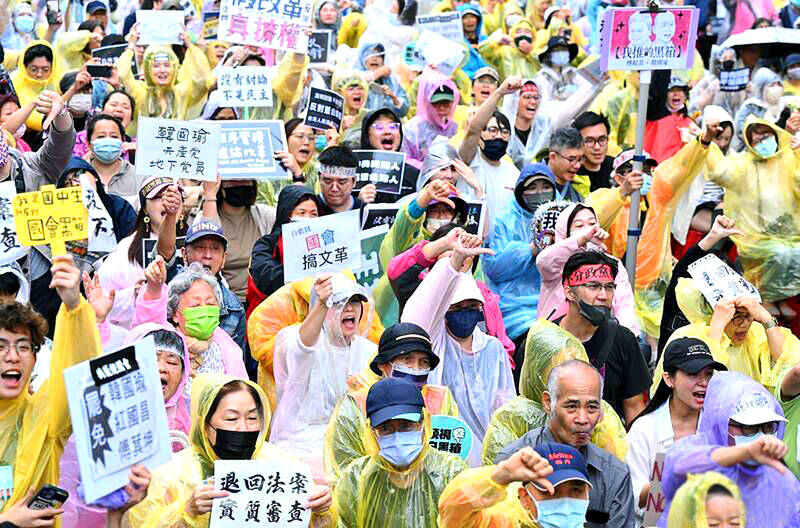
Photo: Taipei Times
Meanwhile, political parties and civil society groups have launched campaigns to garner public support ahead of the vote.
At a news conference, Democratic Progressive Party (DPP) Secretary-General Lin Yu-chang (林右昌) said the amendments pushed through by Chinese Nationalist Party (KMT) and Taiwan People’s Party (TPP) lawmakers on May 28 were not a reform, but an attempt to “expand power.”
Lin said the party’s rank and file would organize speeches across the country starting today to “let the public fully comprehend” that the legislative process of the amendments “lacked sufficient discussion” and rally them to reject the revisions.
President William Lai (賴清德), who concurrently serves as the DPP chair, at a party leadership meeting the same day said that the campaign does not seek to sow division in society or among different parties and their supporters, DPP spokesperson Wu Cheng (吳崢) said.
Rather, the goal is to “clarify the content of the bills” by engaging with the public and providing them with “accurate information,” he added.
The DPP press event came a day after the legislature received the Cabinet’s request to reconsider the revisions to the Act Governing the Legislative Yuan’s Power (立法院職權行使法) and the Criminal Code.
The Cabinet said that the deliberations leading up to the passage of the revisions were “unconstitutional” and “constituted significant flaws,” as they failed to conform to democratic principles, contravened the separation of powers and infringed on human rights enshrined in the Constitution.
At a separate news conference on Wednesday, TPP lawmakers disagreed with the Cabinet’s statement, saying that the Executive Yuan had no right to interfere with the legislature’s deliberations or determine a bill’s constitutionality.
TPP caucus whip Huang Kuo-chang (黃國昌) said the party was committed to pushing for reforms in the legislature and that it would continue communicating with the public.
However, the party has yet to decide whether it would follow in the footsteps of the DPP by launching its own campaign to rally support.
Meanwhile, the KMT is to begin a nationwide tour of public speeches with the first scheduled to take place tomorrow in Tainan.
KMT Legislator Hsu Yu-chen (許宇甄) told local media on Tuesday that the party would seek to provide “accurate information” about the legislative reforms advocated by the opposition and emphasize their necessity.
The KMT and the TPP maintain that the amendments have followed due process and are a necessary reform, particularly in light of allegations of corruption and wrongdoing relating to several major DPP government policies and investment projects.
According to the Constitution, lawmakers must vote on whether to uphold the amendments’ passage no later than June 25.
If they fail to reach a decision before the deadline, the revisions would be void.
If more than half of all sitting legislators, or at least 57 lawmakers in the current legislature, support the measures’ passage, the president would be required to sign them into law.
The DPP has said that it would seek a ruling from the Constitutional Court on the bills constitutionality.
Civil society groups have also launched a similar campaign featuring talks and workshops in the lead-up to the vote.
These activities seek to “engage in dialogue with residents in constituencies that are typically more supportive of KMT and TPP lawmakers,” Taiwan Economic Democracy Union deputy secretary-general Hsu Kuan-tse (許冠澤) told a press event in Taipei on Wednesday.
He added that the objective is to leverage public pressure on opposition lawmakers, forcing them to reconsider the bills they approved at the end of last month.
“We hope that [opposition] lawmakers become aware of ... the public’s concerns” over the amendments and “respond positively to their demands,” he said, added that the groups would not rule out the possibility of holding another protest on the day of the vote.
Polling conducted by the Taiwanese Public Opinion Foundation released on May 24 showed that nearly 58 percent of people supported the bill to punish public officials if they refuse to cooperate in hearings, while about 29 percent opposed it.

The military has spotted two Chinese warships operating in waters near Penghu County in the Taiwan Strait and sent its own naval and air forces to monitor the vessels, the Ministry of National Defense (MND) said. Beijing sends warships and warplanes into the waters and skies around Taiwan on an almost daily basis, drawing condemnation from Taipei. While the ministry offers daily updates on the locations of Chinese military aircraft, it only rarely gives details of where Chinese warships are operating, generally only when it detects aircraft carriers, as happened last week. A Chinese destroyer and a frigate entered waters to the southwest
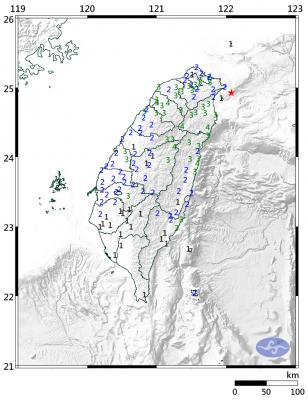
A magnitude 6.1 earthquake struck off the coast of Yilan County at 8:39pm tonight, the Central Weather Administration (CWA) said, with no immediate reports of damage or injuries. The epicenter was 38.7km east-northeast of Yilan County Hall at a focal depth of 98.3km, the CWA’s Seismological Center said. The quake’s maximum intensity, which gauges the actual physical effect of a seismic event, was a level 4 on Taiwan’s 7-tier intensity scale, the center said. That intensity level was recorded in Yilan County’s Nanao Township (南澳), Hsinchu County’s Guansi Township (關西), Nantou County’s Hehuanshan (合歡山) and Hualien County’s Yanliao (鹽寮). An intensity of 3 was

Japanese Prime Minister Sanae Takaichi’s comment last year on Tokyo’s potential reaction to a Taiwan-China conflict has forced Beijing to rewrite its invasion plans, a retired Japanese general said. Takaichi told the Diet on Nov. 7 last year that a Chinese naval blockade or military attack on Taiwan could constitute a “survival-threatening situation” for Japan, potentially allowing Tokyo to exercise its right to collective self-defense. Former Japan Ground Self-Defense Force general Kiyofumi Ogawa said in a recent speech that the remark has been interpreted as meaning Japan could intervene in the early stages of a Taiwan Strait conflict, undermining China’s previous assumptions
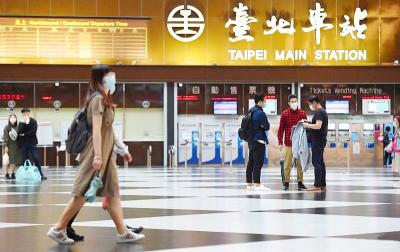
Taiwan Railways Corp (TRC) today announced that Shin Kong Mitsukoshi has been selected as the preferred bidder to operate the Taipei Railway Station shopping mall, replacing the current operator, Breeze Development Co Ltd. Among eight qualified firms that delivered presentations and were evaluated by a review committee, Shin Kong Mitsukoshi was ranked first, while Breeze was named the runner-up, the rail company said in a statement. Contract negotiations are to proceed in accordance with regulations, it said, adding that if negotiations with the top bidder fail, it could invite the second-ranked applicant to enter talks. Breeze in a statement today expressed doubts over


 RSS
RSS