


Taiwan and the Czech Republic are expected to finalize a deal within two weeks to open an advanced center for chip design and bolster semiconductor capabilities in the European country, a Ministry of Foreign Affairs official said yesterday.
Eric Huang (黃鈞耀), head of the Department of European Affairs, said that the two sides have reached an agreement on almost all aspects of the project, to be called the Czech-Taiwanese Advanced Chip Design Research Center.
Among the terms is that the two sides would form a supervisory committee to regularly check on the center’s development to make sure it is on the right track, Huang said in Taipei.
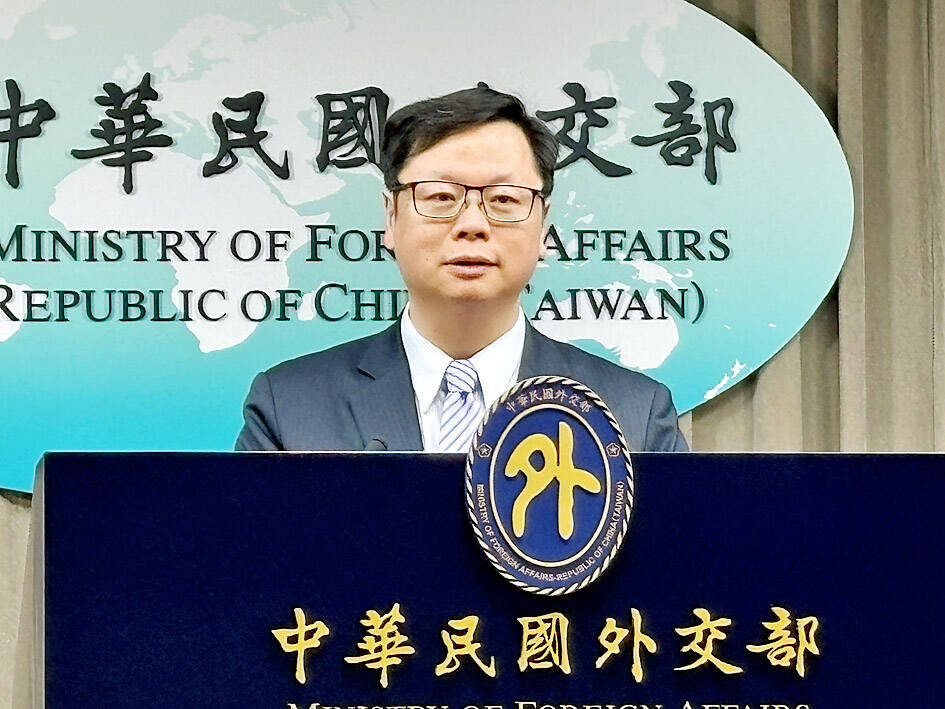
Photo: Yang Yao-ju, Taipei Times
After the deal is signed, the center’s opening ceremony would be held in the Czech Republic, Huang said, adding that the process could take two weeks.
The ministry has not said how much Taiwan would contribute to the project financially or what kind of technology it would provide.
A ministry press release issued last month said that the project is covered by a five-year agreement to build an advanced center for chip design and semiconductor capabilities.
Negotiations between the two governments began at the end of 2022.
The initiative is aimed at helping the Czech Republic, which already has an advanced industrial base, establish a semiconductor industry based on Taiwanese technology, the ministry said.
It would also help Taiwanese semiconductor companies connect with supply chains in Europe, further securing business opportunities for Taiwan in the European market, it added.
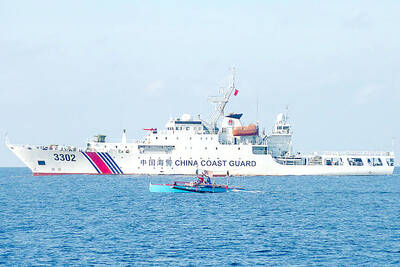
EXPANSIONIST: China deploys an average of 40 to 50 warships and coast guard vessels daily in the South China Sea, despite pledges not to militarize the region, an official said China is attempting to expand its influence across the First Island Chain and increase pressure on Japan by sending coast guard vessels into waters off of Taiwan under the pretext of maritime negotiations with Japan and the Philippines, a national security official said yesterday. China’s recent actions in the waters east of Taiwan and Japan and the Philippines’ exclusive economic zones (EEZ) are attempts to establish dominance in First Island Chain waters, said the official who declined to be named, adding that this is “expansion disguised as law enforcement.” Framing China’s actions solely as a cross-strait issue is a serious misjudgment that
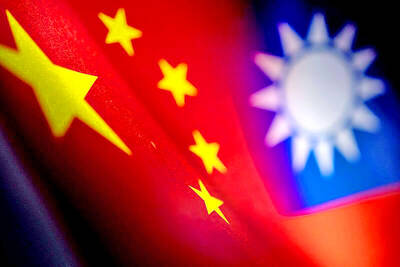
BAIT AND SWITCH: Allowing KMT-run counties to sell to China while the threat of abrupt cancelations hangs overhead is another form of coercion, officials said Beijing is using agricultural purchase offers announced during the Straits Forum to deepen Taiwan’s dependence on the Chinese market, a Taiwanese official said yesterday as they criticized the Taitung County commissioner’s participation in the initiative. During the Straits Forum held in Xiamen on Saturday, Chinese officials announced a sales and purchase agreement for agricultural products from some counties led by the Chinese Nationalist Party (KMT). Taitung County Commissioner Yao Ching-ling (饒慶鈴), who was barred from attending the event in person by the Mainland Affairs Council, participated via video. Under the agreement, China would purchase atemoyas, pomeloes, tea and grouper harvested in Taitung,
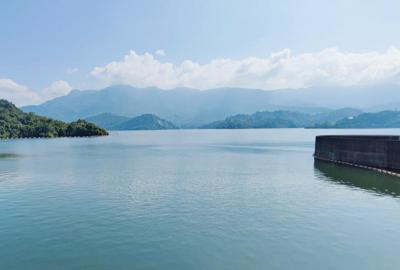
Several major reservoirs are estimated to have received 590 million tonnes of water inflow from June 4 to this morning, with storage levels at Wushantou Reservoir exceeding 50 percent and Zengwen Reservoir approaching 30 percent as of 9am today, data from the Water Resources Agency showed. Of the estimated 590 million tonnes, 450 million have already been stored in reservoirs, the data showed. As of 9am today, Baoshan Reservoir storage levels reached 100 percent, while Baoshan Second Reservoir, Yongheshan Reservoir and Techi Reservoir all exceeded 90 percent, data on the Water Resources Agency’s Web site showed. In addition, the Shimen Reservoir is at
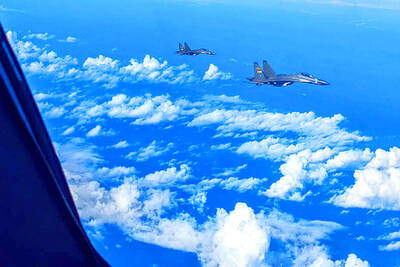
SHIFTING FIRE: While the tempo of purely military exercises around Taiwan has gone down somewhat, Beijing is working to isolate Lai diplomatically from support abroad Chinese President Xi Jinping (習近平) is shifting tactics in his campaign to pressure Taiwan, ramping up diplomatic isolation of the nation while dialing down provocative displays of military aggression. Taiwan recorded a daily average of five Chinese military aircraft crossing the Taiwan Strait’s buffer line with China through May this year — half the number logged in the same period last year. In March, Beijing did not send a single fighter jet near Taiwan for seven days, the longest absence on record outside of typhoon season. In comparison, China sent 153 planes near Taiwan during one day at its peak in


 RSS
RSS