


Taiwanese documentary film Flight-Exploring the Life of Birds, has won a Gold Award and an Award of Excellence at two US film festivals, Taijiang National Park Headquarters said in a statement on Wednesday.
The film won a Gold Award in the Nature & Wildlife, Film & Video Productions category at the WorldFest-Houston International Film Festival, held from April 23 to 28.
It also won an Award of Excellence in the Nature/Environment/Wildlife Documentary Feature category at the Accolade Global Film Competition.

Photo courtesy of National Taichung Theater
The documentary by director Liao Tung-kun (廖東坤) captured birds flying, foraging, migrating, molting and breeding at Taijiang National Park in Tainan. Birds tend to fly south from the park or stay there for the winter, as it is on one of the bird migration routes and has wetland ecosystems such as salt marshes, fishponds, mangroves, coastal forests and lagoons.
The film took more than two years to make, with every frame being the result of endless waiting and repeated shots, the statement said.
This included the crew disguising themselves under the scorching sun for 13 hours a day for more than four consecutive days in an attempt to film a tern hatching, it added.
In addition, the crew also witnessed the drastic impact of climate change, such as drought and heavy rain, on migratory birds, it said.
“What we can do is to give them better habitats, allowing these migratory guests to have a more serene environment with abundant resources,” Liao said.
According to the headquarters, Taiwan is a hub of bird migration with about 700 bird species logged in the country.
The film recorded more than 400 species of birds in Taijiang National Park alone.
In other news, Taiwanese dancer Hsueh Yu-hsien (薛喻鮮) won first prize for solo choreography and best dancer at the 33rd Spanish Dance and Flamenco Choreography Competition in Madrid on Sunday.
The solo dance work, Laughter and Oblivion (Risa y olvido), portrays everyday life experiences as an unbreakable umbilical cord connecting the soul and the earth, Hsueh said. Hsueh on Facebook thanked Taiwan for being “the umbilical cord of her soul.”
She also thanked her boyfriend Taboeh a oebay tataysi, a Taiwanese indigenous dancer, for being her art director and helping her break free from boundaries on her path to Spanish dance choreography.
She also expressed thanks to her mother, Ho Lian-hua (賀連華), a reputed flamenco performer, for being the strongest supporter and best role model in her artistic career.
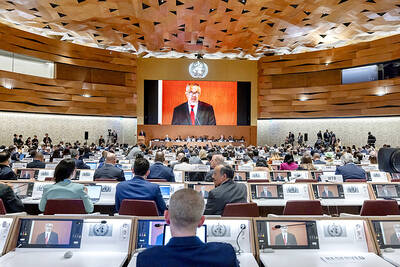
RESOLUTIONS DEBATE: Taiwan’s allies said that UN and WHA resolutions cited by China and other nations ‘do not determine Taiwan’s participation in WHO activities’ A proposal to invite Taiwan to this year’s World Health Assembly (WHA) was rejected on Monday, resulting in Taipei’s absence from the annual meeting for a ninth consecutive year, although partners spoke up for Taiwan’s participation at the first day of the meeting. The first agenda item after the opening was a “two-on-two debate” on a proposal to invite Taiwan to participate at the WHA as an observer. Similar to previous years, two countries made statements in favor of the proposal, while two others expressed their opposition. Philippine Secretary of Health Teodoro Herbosa, president of the 78th WHA, accepted the WHA General Committee’s
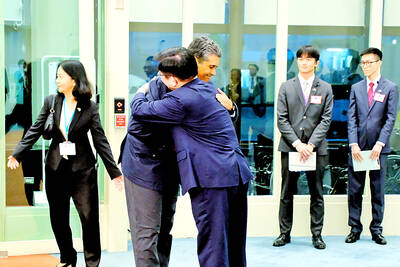
Palauan President Surangel Whipps Jr arrived in Taiwan last night to kick off his first visit to the country since beginning his second term earlier this year. After arriving at Taoyuan International Airport at around 6:30 pm, Whipps and his delegation were welcomed by Minister of Foreign Affairs Lin Chia-lung (林佳龍). Speaking to gathered media, the Palauan leader said he was excited and honored to be back in Taiwan on his first state visit to Taiwan since he was sworn in this January. Among those traveling with Whipps is Minister of State Gustav N. Aitaro, Public Infrastructure
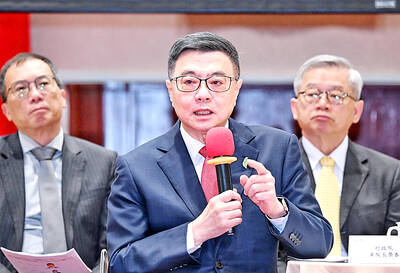
Premier Cho Jung-tai (卓榮泰) on Friday laid out the Cabinet’s updated policy agenda and recapped the government’s achievements ahead of the one-year anniversary of President William Lai’s (賴清德) inauguration. Cho said the government had made progress across a range of areas, including rebuilding Hualien, cracking down on fraud, improving pedestrian safety and promoting economic growth. “I hope the public will not have the impression that the Cabinet only asked the legislature to reconsider a bunch of legal amendments,” Cho said, calling the moves “necessary” to protect constitutional governance and the public’s interest. The Cabinet would work toward achieving its “1+7” plan, he said. The

Nvidia founder and CEO Jensen Huang (黃仁勳) hosted a dinner in Taipei last night with key Taiwanese suppliers to celebrate the successful mass production of the company’s new Blackwell AI systems. Speaking to the media earlier yesterday, Huang thanked Nvidia’s Taiwanese partners for their contributions to the company’s ecosystem, while also sharing his plans to meet with Taiwan Semiconductor Manufacturing Co (TSMC) founder Morris Chang (張忠謀). In response to rumors that Nvidia will launch a downgraded Hopper H20 chip for China in July, Huang dismissed the reports, saying, “That is not true.” He clarified that there


 RSS
RSS