


Taiwan and the US have been looking at a piece of legislation that has guided their unofficial relations over the past 45 years, and they both think it is adequate for their current needs, Minister of Foreign Affairs Joseph Wu (吳釗燮) said on Thursday.
The 1979 Taiwan Relations Act (TRA) provides the US a legal basis to help Taiwan take part in international organizations and to supply Taiwan with weapons systems to boost its self-defense capabilities, Wu said during a legislative hearing, after an American academic called for a revision of the act.
The absence of official diplomatic relations between Taiwan and the US does not affect the application of US laws with regard to Taiwan, Wu said, citing Section 4 of the TRA.
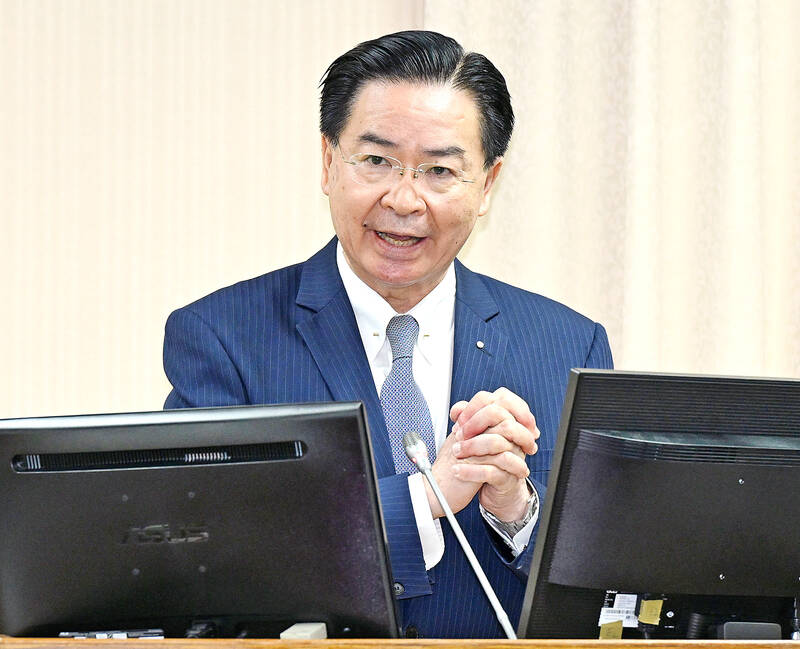
Photo: Liao Chen-huei, Taipei Times
The act extensively covers almost all aspects of Taiwan and US interactions, and there is no need to revise it, he added.
“The key decisionmakers in Taiwan and the US” have agreed that the TRA already offers “adequate flexibility” for both sides and meets their current needs, Wu said in response to Democratic Progressive Party (DPP) Legislator Lo Mei-ling’s (羅美玲) question about whether the recent call for a law revision should be heeded.
The TRA only covers Taiwan proper and the Penghu archipelago, but should also include Kinmen and Lienchiang County, as well as the Taiwan-controlled Pratas Islands (Dongsha Islands, 東沙群島) and Itu Aba (Taiping Island, (太平島), US academic Miles Yu (余茂春) said during an April 13 seminar to commemorate the 45th anniversary of the TRA
Furthermore, the TRA uses the term “the people on Taiwan,” which would include any foreign visitor, so that should be revised to specify “the people of Taiwan” or “the Taiwanese people,” said Yu, who served as the China policy adviser to former US secretary of state Mike Pompeo.
However, US Assistant Secretary of State for East Asian and Pacific Affairs Daniel Kritenbrink on Tuesday said that the TRA serves as a “foundational element” for the US’ “one China” policy and that there is no need to change it.
“We have been able to engage in multiple initiatives and extensive cooperation with Taiwan, because the TRA provides the authorities [a basis] to carry out our unofficial relationship,” Kritenbrink said. “We have the framework we need. We do not need to change it. What we need is to respond to the present moment, using all the tools at our disposal.”
The TRA was enacted in April 1979, after the administration of then-US president Jimmy Carter switched diplomatic recognition from the Taiwan to China and has served as the legal framework guiding the US’ unofficial relations with Taiwan.
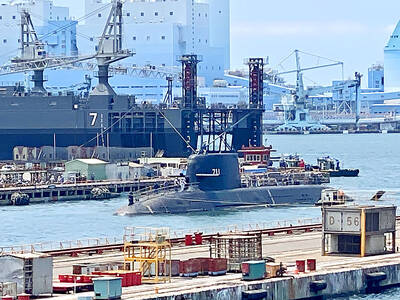
AGING: While Japan has 22 submarines, Taiwan only operates four, two of which were commissioned by the US in 1945 and 1946, and transferred to Taiwan in 1973 Taiwan would need at least 12 submarines to reach modern fleet capabilities, CSBC Corp, Taiwan chairman Chen Cheng-hung (陳政宏) said in an interview broadcast on Friday, citing a US assessment. CSBC is testing the nation’s first indigenous defense submarine, the Hai Kun (海鯤, Narwhal), which is scheduled to be delivered to the navy next month or in July. The Hai Kun has completed torpedo-firing tests and is scheduled to undergo overnight sea trials, Chen said on an SET TV military affairs program. Taiwan would require at least 12 submarines to establish a modern submarine force after assessing the nation’s operational environment and defense
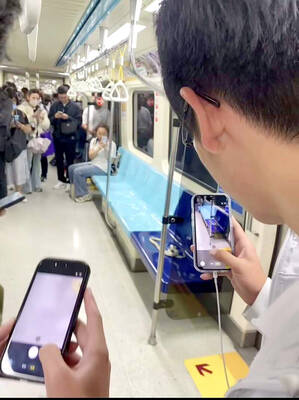
A white king snake that frightened passengers and caused a stir on a Taipei MRT train on Friday evening has been claimed by its owner, who would be fined, Taipei Rapid Transit Corp (TRTC) said yesterday. A person on Threads posted that he thought he was lucky to find an empty row of seats on Friday after boarding a train on the Bannan (Blue) Line, only to spot a white snake with black stripes after sitting down. Startled, he jumped up, he wrote, describing the encounter as “terrifying.” “Taipei’s rat control plan: Release snakes on the metro,” one person wrote in reply, referring
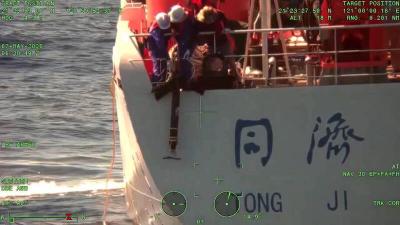
The coast guard today said that it had disrupted "illegal" operations by a Chinese research ship in waters close to the nation and driven it away, part of what Taipei sees a provocative pattern of China's stepped up maritime activities. The coast guard said that it on Thursday last week detected the Chinese ship Tongji (同濟號), which was commissioned only last year, 29 nautical miles (54km) southeast of the southern tip of Taiwan, although just outside restricted waters. The ship was observed lowering ropes into the water, suspected to be the deployment of scientific instruments for "illegal" survey operations, and the coast
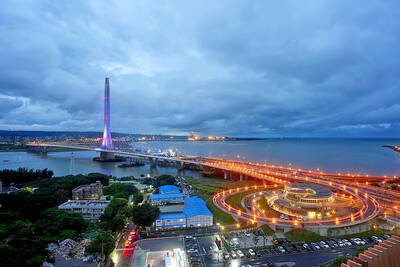
An inauguration ceremony was held yesterday for the Danjiang Bridge, the world’s longest single-mast asymmetric cable-stayed bridge, ahead of its official opening to traffic on Tuesday, marking a major milestone after nearly three decades of planning and construction. At the ceremony in New Taipei City attended by President William Lai (賴清德), Premier Cho Jung-tai (卓榮泰), Minister of Transportation and Communications Chen Shih-kai (陳世凱) and New Taipei City Mayor Hou Yu-ih (侯友宜), the bridge was hailed as both an engineering landmark and a long-awaited regional transport link connecting Tamsui (淡水) and Bali (八里)


 RSS
RSS