

US President Joe Biden on Wednesday signed into law an aid package that is to provide US$95 billion in funding for military assistance to Taiwan, Ukraine and Israel, foreign media reports said.
Under the package, US$8.1 billion is to be allocated for Indo-Pacific security, including US$2 billion in foreign military financing for Taiwan and other key allies in the region; US$1.9 billion to replenish defense articles and defense services provided to Taiwan and regional partners; and US$542 million to strengthen US military capabilities in the region.
It would also provide nearly US$61 billion in military aid to Ukraine, US$26 billion to Israel and funding for humanitarian aid to Gaza and elsewhere.
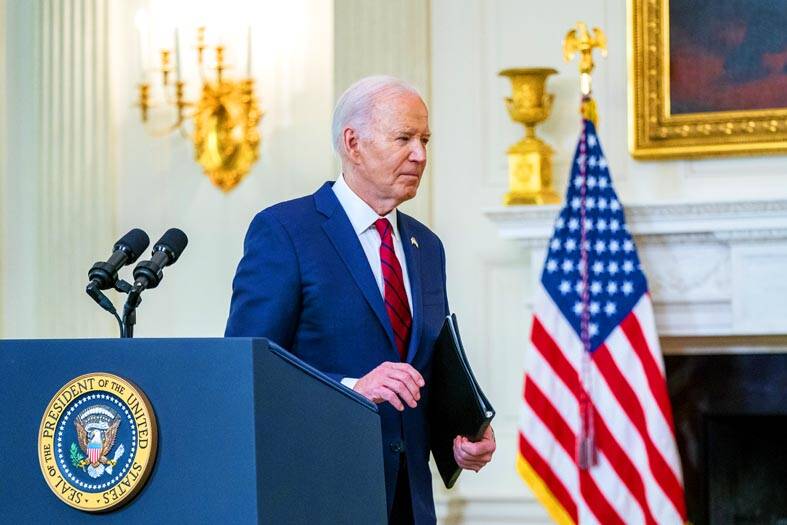
Photo: EPA-EFE
In Taipei, the Ministry of Foreign Affairs yesterday again expressed its appreciation to the US Congress for the importance it places on Taiwan-US security cooperation and maintaining peace and stability in the Indo-Pacific region.
On the 45th year of the Taiwan Relations Act, the US Congress has again honored its rock-solid commitment to Taiwan’s security, the ministry said.
Taiwan will continue to enhance its close cooperation with the US and other like-minded nations to jointly safeguard the rules-based international order, and preserve peace, stability and prosperity across the Taiwan Strait and in the region, it said.
The Presidential Office also thanked the US for demonstrating through concrete actions its support for enhancing Taiwan-US security cooperation, and maintaining peace and stability in the Indo-Pacific region.
Taiwan has the ability and willingness to work with the US and the international community to strengthen democracy and face the expanding threat of authoritarianism, Presidential Office spokesperson Olivia Lin (林聿禪) said yesterday.
The bill was passed in the US Senate on Tuesday with a 79-18 vote, easily clearing the 60-vote threshold needed to pass most legislation in the chamber, after a months-long delay in the US House of Representatives due to disagreements over the issue of foreign aid.
The American Chamber of Commerce in Taiwan (AmCham Taiwan) on Wednesday applauded the aid package, saying that the “decisive” action reinforces the US’ commitment to global leadership and its unwavering support for democracies facing “intimidation from authoritarian regimes.”
“We are particularly gratified by the significant support for Taiwan and regional neighbors included in this package,” AmCham chairman Dan Silver said in a statement. “This vital assistance will contribute to regional stability and help sustain the right environment for economic and business growth.”
Additional reporting by Chen Yun

The donation of offshore patrol vessel Kinmen to the Philippines includes provisions that protect Taiwanese fishers and facilitate security cooperation across the First Island Chain, officials said yesterday. The comment was made during the Cabinet’s comprehensive administrative report at the legislature after Chinese Nationalist Party (KMT) Legislator Hsu Yu-chen (許宇甄) expressed concerns about the decision to give a ship to a country whose coast guard had in 2013 fired on a Taiwanese trawler and killed its captain without provocation. The Cabinet should lay out the safeguards that have been established to prevent the Philippine government from using the Kinmen to harass, expel
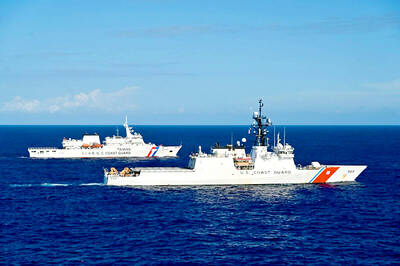
GROWING TIES: The CGA is planning a goodwill mission to the Philippines, in what would be the first time since 1975 a Taiwanese paramilitary vessel has visited the country The Coast Guard Administration (CGA) plans to significantly expand its participation in international security cooperative frameworks and its operational capabilities, a budget proposal for next year showed. The budget indicates a transformation of the CGA from a maritime law enforcement arm into a national defense and intelligence gathering entity capable of tackling larger regional security matters. The proposal showed that personnel from the coast guard’s Intelligence Division and Special Action Support Center are to participate in high-level national security talks with the US. As the CGA has dealt with China’s rising “gray zone” threats around Taiwan, it has become a valuable asset to

The National Police Agency’s Third Special Police Corps yesterday said that from May to July, it intercepted five smuggling operations from China, seizing more than 70,000 counterfeit Beyblades with an estimated infringement value of NT$34.45 million (US$1.08 million). It added that any bootleg unit that reached the local market could present hidden health hazards to players. Beyblades, a line of spinning toy tops used in competitive gaming and developed in Japan by toy company Takara Tomy, have become popular in Taiwan, making them a target for fraudsters. The Third Special Police Corps, dedicated to safeguarding maritime borders and trade lines,
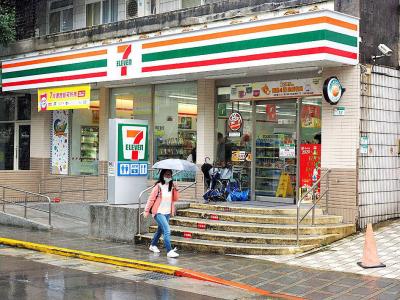
Five customers who made purchases at 7-Eleven stores across Taiwan won the top NT$10 million (US$313,716) special prize in the July-August uniform invoice lottery, including one who spent just NT$27 on photocopying, the convenience store chain said today. The five special prize winners made their purchases at stores in Taoyuan, Taipei, Taichung and Kaohsiung, 7-Eleven operator President Chain Store Corp said. The five winning purchases included NT$29 spent on snacks at a store in Taoyuan's Zhongli District (中壢), NT$27 on photocopying at a store in Taipei's Zhongzheng District (中正), NT$139 on City Cafe coffee and daily necessities at a store in Taipei's


 RSS
RSS