


A National Taiwan University (NTU) study has concluded that docosahexaenoic acid (DHA) combined with a small-molecule medicine eradicates bacteria biofilms on catheters, which could help prevent catheter-associated infections common among hospital inpatients.
Biofilms are a collection of different species of bacteria DHA could prevent, that can gather on the surfaces of artificial implants or medical devices, said Chiu Hao-chieh (邱浩傑), a professor at the university’s Department of Clinical Laboratory Sciences and Medical Biotechnology.
When biofilms form on surfaces such as urinary catheters or pacemakers, they become difficult to remove due to shields that block attacks from the immune system or antibiotics. This significantly raises the chances of infections such as catheter-associated urinary tract infections (CAUTIs), Chiu said.
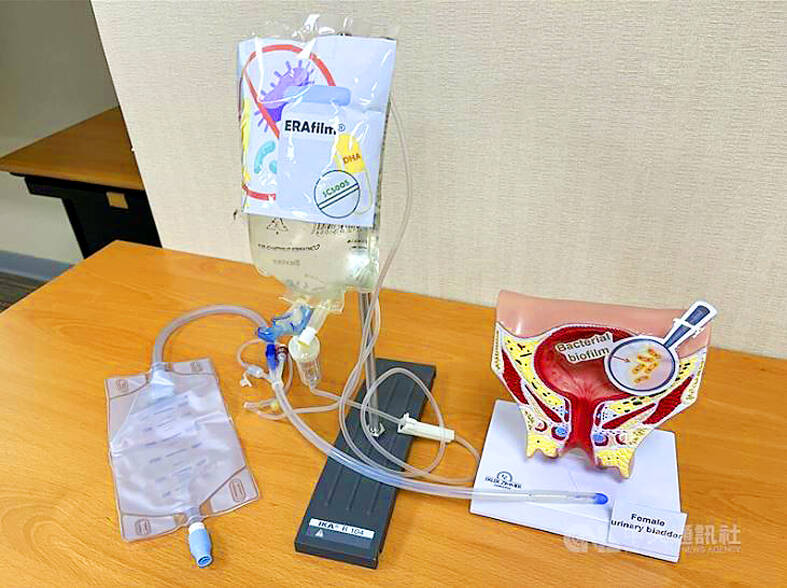
Photo: CNA
“For adult patients who are hospitalized, about one-quarter require urinary catheters during their stay,” he said, adding that there is a 75 percent chance of developing a CAUTI after having a catherer inserted.
Citing data from the US, Chiu said that CAUTIs cost the US an extra US$450 million in medical expenses each year and have a 2.3 percent mortality rate.
Chiu’s team, funded by the National Science and Technology Council, found that DHA, a fatty acid that is widely used as a dietary supplement, combined with SC5005, a small-molecule medicine that was first synthesized by his team, can penetrate biofilms.
Together they display synergistic bactericidal activity — the ability to kill the bacteria.
Within 10 minutes, the combination of DHA and SC5005 can effectively eradicate more than 95 percent of biofilms on urinary catheters collected from patients who developed CAUTIs, regardless of the species of the bacteria or their drug resistance, Chiu said.
While no detectable cytotoxicity toward human cell lines was observed, the team also tested whether Staphylococcus aureus, a common bacterial species in biofilms, would develop drug resistance after long-term exposure to the combination.
After 35 consecutive days of using the combination, no resistance appeared to have built up, regardless of whether the Staphylococcus aureus strain was resistant to other drugs, Chiu said.
“This indicates that our combination can be safely used for the long term,” he said, adding that the team has decided to name the combination “ERAfilm.”
Chiu said he expects saline containing “ERAfilm” — which is still in the nonclinical development stage — could be injected into patients’ bladders. It would then remove biofilms on the urinary catheters daily to prevent CAUTIs.
Asked about other medications that can remove biofilms, Chiu said that there is only one competitor abroad that has developed a drug with similar effects.
It has entered the clinical stage, and uses bacteriophages, he said.
“However, bacteriophages can only infect specific bacteria, unlike our approach, which is broad-spectrum,” Chiu said.
Aside from Taiwan, the team has also obtained or is in the process of applying for patents for SC5005 and its derivatives in other countries and regions, such as the US, China and the EU, he said.
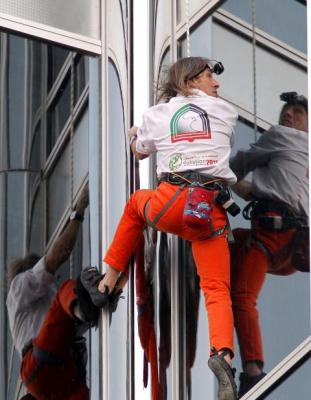
Alain Robert, known as the "French Spider-Man," praised Alex Honnold as exceptionally well-prepared after the US climber completed a free solo ascent of Taipei 101 yesterday. Robert said Honnold's ascent of the 508m-tall skyscraper in just more than one-and-a-half hours without using safety ropes or equipment was a remarkable achievement. "This is my life," he said in an interview conducted in French, adding that he liked the feeling of being "on the edge of danger." The 63-year-old Frenchman climbed Taipei 101 using ropes in December 2004, taking about four hours to reach the top. On a one-to-10 scale of difficulty, Robert said Taipei 101
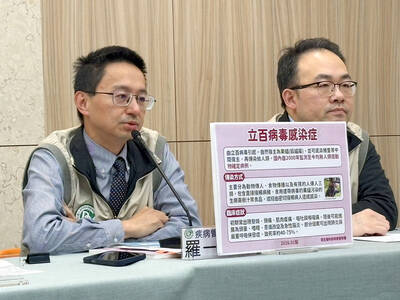
Nipah virus infection is to be officially listed as a category 5 notifiable infectious disease in Taiwan in March, while clinical treatment guidelines are being formulated, the Centers for Disease Control (CDC) said yesterday. With Nipah infections being reported in other countries and considering its relatively high fatality rate, the centers on Jan. 16 announced that it would be listed as a notifiable infectious disease to bolster the nation’s systematic early warning system and increase public awareness, the CDC said. Bangladesh reported four fatal cases last year in separate districts, with three linked to raw date palm sap consumption, CDC Epidemic Intelligence
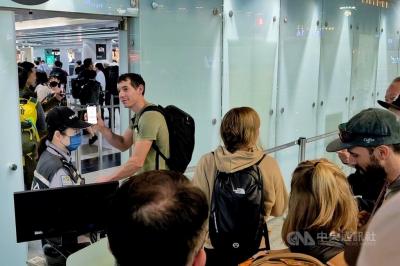
US climber Alex Honnold left Taiwan this morning a day after completing a free-solo ascent of Taipei 101, a feat that drew cheers from onlookers and gained widespread international attention. Honnold yesterday scaled the 101-story skyscraper without a rope or safety harness. The climb — the highest urban free-solo ascent ever attempted — took just more than 90 minutes and was streamed live on Netflix. It was covered by major international news outlets including CNN, the New York Times, the Guardian and the Wall Street Journal. As Honnold prepared to leave Taiwan today, he attracted a crowd when he and his wife, Sanni,

Taiwanese and US defense groups are collaborating to introduce deployable, semi-autonomous manufacturing systems for drones and components in a boost to the nation’s supply chain resilience. Taiwan’s G-Tech Optroelectronics Corp subsidiary GTOC and the US’ Aerkomm Inc on Friday announced an agreement with fellow US-based Firestorm Lab to adopt the latter’s xCell, a technology featuring 3D printers fitted in 6.1m container units. The systems enable aerial platforms and parts to be produced in high volumes from dispersed nodes capable of rapid redeployment, to minimize the risk of enemy strikes and to meet field requirements, they said. Firestorm chief technology officer Ian Muceus said


 RSS
RSS