


The Supreme Court has rejected an appeal by Hao Jyh-hwa (郝治華), who is the husband of Representative to Brunei Vanessa Shih (史亞平), and sentenced him to 10 years and 11 months for importing and selling unapproved cosmetic injectables, the court said on Tuesday.
The verdict is final, but the execution of the sentence is to be determined by prosecutors’ request to the court, it said in a statement.
Hao was convicted on 28 criminal counts, including importing and selling banned cosmetic injectables, and sentenced to 13 years and 11 months by the Taichung District Court.
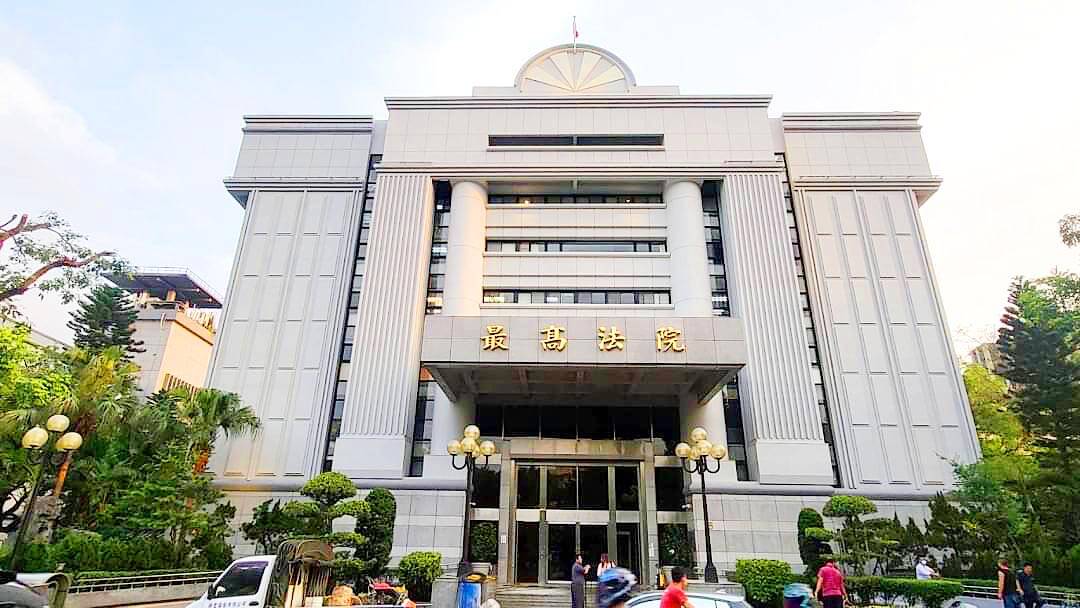
Photo: Chang Wen-chuan, Taipei Times
The district court said in its ruling that Hao, then-director of a cosmetic clinic in Taichung, instructed his employees from 2009 to 2012 to purchase injectable drugs from a German company that were not approved by Taiwan’s health authorities and offered anti-aging treatment plans to promote the injectables.
After an appeal by Hao, the second instance was heard by the Taiwan High Court’s Taichung branch.
However, the High Court quashed the district court ruling based on the Food and Drug Administration’s opinion that there was insufficient evidence to determine that the liquid ingredients sold by the German company were “drugs” that could affect the structure and physiological functions of human body as stipulated in the Pharmaceutical Affairs Act (藥事法), and acquitted Hao of all charges.
The prosecutors appealed the case to the Supreme Court, which revoked the second ruling and ordered a new trial.
The High Court’s Taichung branch found in the new trial that Hao claimed the German Vitorgan ingredient had anti-aging effects and planned a course of treatment covering invasive procedures, proving the product was medication used to diagnose, treat, alleviate or prevent human diseases, as defined in the Pharmaceutical Affairs Act.
The court handed down a sentence of 10 years and 11 months in prison.
Hao filed an appeal against the decision, which was rejected by the Supreme Court.
The verdict is final.
Three years ago, Hao was sentenced to two years and eight months for contravening the Criminal Code — by injecting a hydrogel substance containing polyacrylamide, a suspected carcinogen, into the breasts of multiple women for breast enhancement — for fraud and the offense of importing drugs and medical devices without approval under the Pharmaceutical Affairs Act.

Yangmingshan National Park authorities yesterday urged visitors to respect public spaces and obey the law after a couple was caught on a camera livestream having sex at the park’s Qingtiangang (擎天崗) earlier in the day. The Shilin Police Precinct in Taipei said it has identified a suspect and his vehicle registration number, and would summon him for questioning. The case would be handled in accordance with public indecency charges, it added. The couple entered the park at about 11pm on Thursday and began fooling around by 1am yesterday, the police said, adding that the two were unaware of the park’s all-day live

Fast food chain McDonald's is to raise prices by up to NT$5 on some products at its restaurants across Taiwan, starting on Wednesday next week, the company announced today. The prices of all extra value meals and sharing boxes are to increase by NT$5, while breakfast combos and creamy corn soup would go up by NT$3, the company said in a statement. The price of the main items of those meals, if ordered individually, would remain the same. Meanwhile, the price of a medium-sized lemon iced tea and hot cappuccino would rise by NT$3, extra dipping sauces for chicken nuggets would go up

Yangmingshan National Park’s Qingtiangang (擎天崗) nature area has gone viral after a park livestream camera observed a couple in the throes of intimate congress, which was broadcast live on YouTube, drawing large late-night crowds and sparking a backlash over noise, bright lights and disruption to wildlife habitat. The area’s livestream footage appeared to show a couple engaging in sexual activity on a picnic table in the park on Friday last week, with the uncensored footage streamed publicly online. The footage quickly spread across social media, prompting a tide of visitors to travel to the site to “check in” and recreate the

Minister of Digital Affairs Lin Yi-ching (林宜敬) yesterday cited regulatory issues and national security concerns as an expert said that Taiwan is among the few Asian regions without Starlink. Lin made the remarks on Facebook after funP Innovation Group chief executive officer Nathan Chiu (邱繼弘) on Friday said Taiwan and four other countries in Asia — China, North Korea, Afghanistan and Syria — have no access to Starlink. Starlink has become available in 166 countries worldwide, including Ukraine, Malaysia, the Philippines and Vietnam, in the six years since it became commercial, he said. While China and North Korea block Starlink, Syria is not


 RSS
RSS