


The Ministry of Labor yesterday announced that this year’s Equal Pay Day fell on Friday last week, four days earlier than last year, based on its estimate that women needed to work until this point in the year to achieve the same salary as men last year.
Women had to work an average of 54 more days than men to earn the same income because their salaries were on average 14.7 percent lower than their male counterparts last year.
The average hourly salary for female employees last year was NT$318, compared with NT$373 for male employees, the ministry said.
Photo: Lee Chin-hui, Taipei Times
While the gender pay gap has narrowed long term, the impact of the COVID-19 pandemic slightly widened the gap from 14 percent in 2020 to the 15.8 percent in 2021 and 2022, it said.
However, last year the pay gap decreased to 14.7 percent, primarily due to the service industry requiring more workers, with most of those roles filled by women, it said.
Meanwhile, the ministry highlighted that Taiwan fares better on gender pay equality compared with other nations in the region and worldwide.
In 2022, the pay gap between men and women was 30.2 percent in Japan, 30 percent in South Korea and 17 percent in the US, it said.
The concept of Equal Pay Day was established in 1996 by the National Committee on Pay Equity in the US to raise public awareness about the gap between male and female wages.
The ministry has announced Equal Pay Day every year since 2012.
MEDICAL: The bills would also upgrade the status of the Ethical Guidelines Governing the Research of Human Embryos and Embryonic Stem Cell Research to law The Executive Yuan yesterday approved two bills to govern regenerative medicine that aim to boost development of the field. Taiwan would reach an important milestone in regenerative medicine development with passage of the regenerative medicine act and the regenerative medicine preparations ordinance, which would allow studies to proceed and treatments to be developed, Deputy Minister of Health and Welfare Victor Wang (王必勝) told reporters at a news conference after a Cabinet meeting. Regenerative treatments have been used for several conditions, including cancer — by regenerating blood cells — and restoring joint function in soft tissue, Wang said. The draft legislation requires regenerative treatments
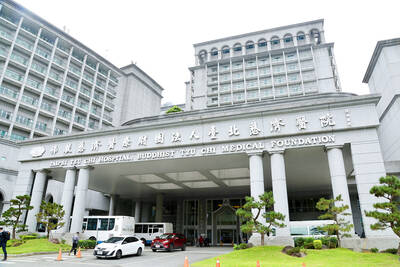
POLICE INVESTIGATING: A man said he quit his job as a nurse at Taipei Tzu Chi Hospital as he had been ‘disgusted’ by the behavior of his colleagues A man yesterday morning wrote online that he had witnessed nurses taking photographs and touching anesthetized patients inappropriately in Taipei Tzu Chi Hospital’s operating theaters. The man surnamed Huang (黃) wrote on the Professional Technology Temple bulletin board that during his six-month stint as a nurse at the hospital, he had seen nurses taking pictures of patients, including of their private parts, after they were anesthetized. Some nurses had also touched patients inappropriately and children were among those photographed, he said. Huang said this “disgusted” him “so much” that “he felt the need to reveal these unethical acts in the operating theater

Taiwanese should be mindful when visiting China, as Beijing in July is likely to tighten the implementation of policies on national security following the introduction of two regulations, a researcher said on Saturday. China on Friday unveiled the regulations governing the law enforcement and judicial activities of national security agencies. They would help crack down on “illegal” and “criminal” activities that Beijing considers to be endangering national security, according to reports by China’s state media. The definition of what constitutes a national security threat in China is vague, Taiwan Thinktank researcher Wu Se-chih (吳瑟致) said. The two procedural regulations are to provide Chinese

WARFARE: The PLA aims to use space-based capabilities to enhance its force projection to make the Indo-Pacific region too costly for the US to protect, experts said China is rapidly building space capabilities to be able to launch precision strikes on Taiwan, the US and its allies, US Space Force leaders said at a recent conference in London. China is developing counterspace warfare capabilities including GPS jamming systems and anti-satellite missiles at “breathtaking speed,” said General Stephen Whiting, commander of the US Space Command. In the past six years, Beijing tripled its number of dedicated intelligence, surveillance and reconnaissance satellites, while rapidly fielding dual-use satellites, Whiting said, adding that the capabilities are honed for detecting movements at sea. The Chinese People’s Liberation Army (PLA) might have already achieved substantial benefits


 RSS
RSS