


The Highway Bureau yesterday imposed a high-occupancy vehicle (HOV) rule on Provincial Highway No. 9 starting from 168.2k north of the Taroko Bridge in response to heavier northbound traffic as the Lunar New Year holiday neared an end.
Starting yesterday, HOVs were allowed to access bus priority lanes (inner lanes), while non-HOVs were directed to the outer lanes, the bureau said.
HOVs are defined as private vehicles and taxis with three or more passengers, vehicles on public business and buses, it said.
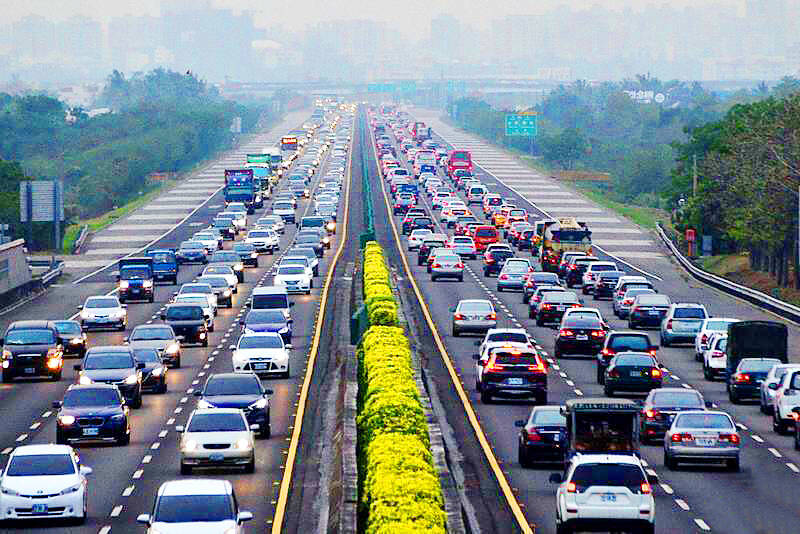
Photo: Taipei Times
Northbound traffic has grown significantly since 10am yesterday, as people headed back north ahead of the end of the holiday today, the bureau’s Eastern region Branch Office said.
Yesterday, about 15,000 northbound vehicles traversed the Suhua Highway, a subsection of Provincial Highway No. 9, the office said, adding that the traffic jams were expected to last until 2pm today.
Bumper-to-bumper traffic was observed along multiple highway sections, with driving speeds falling below 40kph, it said.
According to Highway 1968, the live traffic service promoted by the Freeway Bureau, heavy congestion was seen in Yongkang District (永康) in Tainan, Kaohsiung Science Park to Lujhu District (路竹), Nanzih District (楠梓) to Gangshan District (岡山), Yunlin to Dounan Township (斗南), Beidou Township (北斗) to Yuanlin City (員林), Nantun Township (南屯) to Taichung City and Fongyuan District (豐原) to the Taichung exchanges on the Sun Yat-sen Freeway (Freeway No. 1).
The northern parts of the Sun Yat-sen Freeway, especially the Hukou Service Station to Hukou Township (湖口), Neihu District (內湖) to the Donghu area (東湖), Sijhih (汐止) exchange to Sijhih District, were all congested as well, the Highway 1968 service said.
On the Formosa Freeway (Freeway No. 3), congestion was seen from the Shanhua Township (善化) to Guantian Township (官田) section, the Jiouru Township (九如) to Yanchao Township (燕巢) section, and the Shueishang exchange to Jhongpu (中埔), the service said.
To the north, the Formosa Freeway saw congestions from the Guansi Service Station to Gaoyuan Township (高原), the Hsinchu exchange to Baoshan Township (寶山), Jhunan Township (竹南) to the West Coast Expressway (西濱公路) and Dashan Township (大山) to Jhunan Township, it said.
On the Chiang Wei-shui (蔣渭水) Freeway (Freeway No. 5), traffic was heavy from Yilan to Toucheng Township (頭城), Toucheng Township to Pinglin Township (坪林), and along the southbound sections of the Nangang exchange to Shihding Township (石碇), it said.
On Freeway No. 4, congestion was seen along Tanzih Township (潭子) to Fongshih Township (豐勢) and Fongshih to Houfong Township (后豐), as well as the westbound roads from Taiyuan Township (太原) to Songjhu Township (松竹) and Songjhu to Tanzi on Provincial Highway 74, it said.
Traffic was also slow on the eastbound Yanchao Township to Yanchao exchange section on Freeway No. 10, it said.


UPGRADE: The Kang Ding-class frigate is replacing its Chaparall missiles with Tien Chien II and Hua Yang VLS, which would provide it with long-range, 360° air defense Taiwan plans to produce 1,200 to 1,376 Hai Chien II missiles (海劍二, Sea Sword II) — also known as TC-2N — to serve as the standard air defense system of the navy’s surface combatant fleet, a source said yesterday. Last week, the Hai Chien II, the naval version of the Tien Kung II missile (天劍二, Sky Sword II), completed a live-fire test in waters off the National Chungshan Institute of Science and Technology’s Jiupeng facility (九鵬) in Pingtung County’s Manjhou Township (滿州). The MIM72 Chaparral and other dated air defense missiles that currently arm Taiwanese ships have inadequate range to combat Chinese

REASONS FOR TRAVEL: An assistant professor said that proposed amendments to penalize drivers if they used drugs overseas would not deter people from traveling People who operate a motor vehicle under the influence of marijuana would have their driver’s license revoked, even if they used the substance while overseas, the Ministry of Transportation and Communications said yesterday, citing proposed amendments to the Road Traffic Management and Penalty Act (道路交通管理處罰條例). The amendments would also authorize the government to revoke the licenses of people determined to have used Category 1 or Category 2 narcotics, even if they were not operating a vehicle while under the influence of drugs, as well as ban them from taking the license test for three years, the ministry said. People aged 18 or
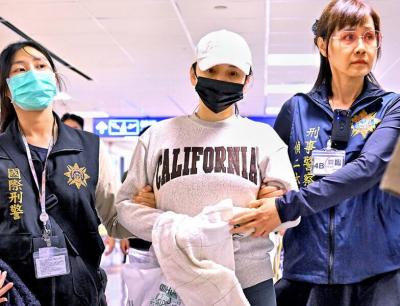
Johanne Liou (劉喬安), a Taiwanese woman who shot to unwanted fame during the Sunflower movement protests in 2014, returned to Taiwan last night after being deported from the US. She is to stand trial in Taiwan for charges involving embezzlement, fraud and drug crimes. The Criminal Investigation Bureau (CIB) said it took her into custody at Taiwan Taoyuan International Airport and would first question her before transferring her to the New Taipei District Prosecutors’ Office. She was arrested upon disembarking a flight from San Francisco that landed shortly before 7pm. Liou absconded to the US in 2019 after jumping bail
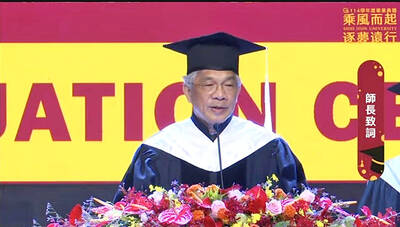
Shih Hsin University President Chen Ching-he (陳清河) yesterday issued a public apology for comments made in his commencement speech last week, stating that he has asked the school to suspend his duties and halt his wages for two months as a show of contrition. At the commencement ceremony on May 30, Chen said, “If you don’t manage your time well, or your own emotions, or your health, then I am telling every one of you — put a quick end to ‘you,’ because the world has no need for ‘you.’” The comments have sparked significant controversy online, and Chen through an open


 RSS
RSS